By Kevin O'Marah | April 10, 2015
CSCO Outlook for 2027: Cloudy With a Chance of Moderate Growth
October 09 2026


By Kevin O'Marah | April 10, 2015
Following in the footsteps of other big employers like Wal-Mart and Target, recent salary concessions by McDonald’s to those at the bottom of its hourly-rate pyramid were met by activists and employees with cries for more. Building on demands that businesses pay according to “living wage” standards, they hope to shame or scare employers into conceding a $15/hour minimum wage through protests planned across the US for 15 April. But this movement is doomed to fail and could even bring down the golden arches with it, unless the people strategy changes.
Wages and salaries are paid by employers in return for useful work. In the early days of agriculture and industry, this included lots of unskilled jobs. Scaling operations and adding technology inevitably means devaluing these entry-level positions, if not eliminating them altogether. McDonald’s restaurants are an obvious example of such scaling, and yet the company’s people strategy is stuck in the past.
Stellar financial performance at McDonald’s was based for most of its history on precise standardisation of food preparation. The notion of “platforming” – as seen in automotive and other industries – is well established in fast food, with McDonald’s as a pioneer. In recent years, however, complexity has crept into its menus, resulting in deteriorating service levels at both the counter and drive-through.
The people part of the company’s operational excellence formula may be contributing to the problem. Jobs at McDonald’s are meant for unskilled, replaceable human bodies. This Tayloristic approach to job design assumes no real development of human capital and therefore very low wages. In today’s digitally enabled consumer supply chain, this approach leaves McDonald’s stuck in the middle – with complexity driving up cost while customer perceptions of personalisation actually worsen.
Maybe it’s time to split the work between much better people and true automation.
We surveyed over 200 retail operations executives back in 2011 to understand how technology might change the role of the store associate. The interesting finding was that future plans imply fewer store staff, but higher skill and pay levels for those who remain. In part, this is an essential reaction to the endless aisles of e-commerce and the resulting importance of someone who really knows his or her stuff and can solve a shopper’s problem.
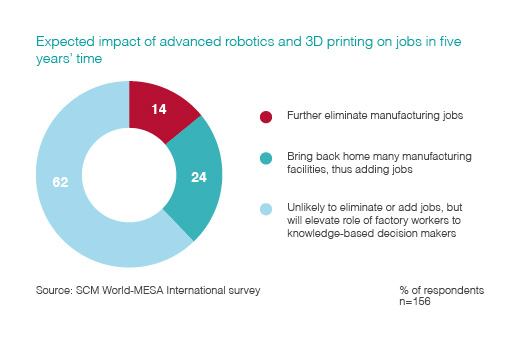
A similar study was conducted in 2014, looking at the impact of automation on jobs in manufacturing. The finding, which echoed what we heard in retail, is significant job changes to come, but a clear need for higher skill levels in those jobs that remain or are newly created. As every generation since the original Luddites has learned, technology doesn’t mean unemployment, but it does require workers to up their game.
Costco is well known for investing in its people. It has much lower staff turnover than other retailers and operational excellence supporting strong margins for its limited selection. Personnel are helpful and committed – and shoppers know it. Starbucks recently announced tuition grants for employees taking online degree courses at Arizona State University. Service most certainly matters at Starbucks and investments in talent attach to that mission.
McDonald’s also offers tuition support for employees and – as a long-recognised innovator in operations – has hosted countless learning events at its Hamburger University, outside of Chicago. The DNA is clearly there for a proactive cycle of investment in people that could pay off, but the headcount in stores needs to be lower, with more automation for high-frequency orders and greater leeway for enhanced customer service on special requests.
The end game could be some hybrid of robotic burger machines cranking out product and barista-style servers adding a human touch. This may sound crazy, but McDonald’s is still a huge draw for consumers and its basic hamburger-fries-chicken nuggets menu dominates sales. Why not automate this element completely and free up cash for career-track service jobs?
It is such a cliché to hear business leaders say “people are our most important resource” that many just roll their eyes. This truism is valid, but it splits into people who bring or build human capital and those who offer only labour.
$15/hour won’t work for anyone.
Beyond Supply Chain
Subscribe on LinkedIn to receive the biweekly Beyond Supply Chain newsletter.