By Kevin O'Marah | January 16, 2015
Navigating the Supply Chain AI Fog
September 18 2026


By Kevin O'Marah | January 16, 2015
A little over a year ago, missed shipments by UPS left a lot of disappointed customers on Christmas morning. Amazon and other retailers took the heat, and in turn blamed the failure on their logistics partners. Twelve months later, complaints are noticeable by their absence and everyone seems happy, with the likes of JC Penney (US) and House of Fraser (UK) experiencing a seasonal uplift in online sales.
2015 kicked off in Las Vegas with CES featuring the latest hi-tech gadgets. CNBC summarised the vibe in a headline reading “Wearables, 3-D printers, and virtual reality dominate CES”. What caught my eye is the shift away from software, cloud and other back-end data management technologies and toward hardware and humanisation of data. Manifesting information for deeper sensory consumption is now all the rage.
One week later at NRF in New York, the angles sound very similar. The event’s homepage opens to a video featuring Nordstrom’s President saying “today’s stores could take a page from what’s happening online… in essence the customer wants a rich experience across all these channels”. Sessions featuring digital signage, mobile payments, electronic shelf labels, sensors, and detailed location tracking all promise a shopping experience that mirrors the virtual reality getting gamers revved up in Vegas.
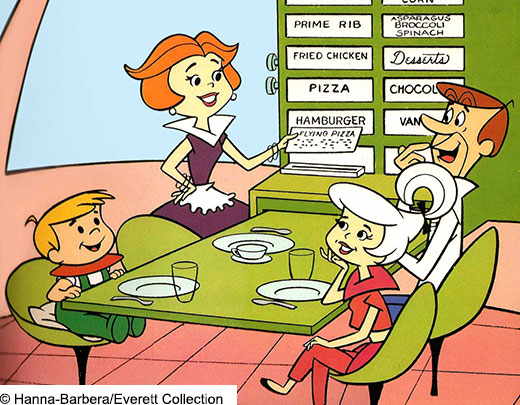
We are beginning to see a convergence of science fiction dreams from the Jetsons to the Matrix, with reality just a few steps behind fantasy. E-commerce is now more than just omnichannel retail. It is a nascent version of the ultimate digital supply chain which senses demand constantly and responds instantaneously with personalised products.
I recently stumbled into a book written in 1960 about the phenomenon of Television, then sweeping the world. Its opening chapter, titled “It took 131 years”, was meant to prove that this wasn’t really as new as people thought. It described an experiment in 1931 using closed circuit TV to connect a manufacturer and a retailer saying that “at least two large department stores immediately applied for TV operating licenses on the theory that eventually people would shop the electronic way rather than visit the stores in person”. These retailers were prescient indeed, but obviously premature.
Now is definitely the time. In fact, if any retailers are still on the sidelines they’re probably not long for this world.
More worrying, however, is the relative inertia seen in some corners of the CPG world. Isolated as many are from consumers by their “customers”, big CPG is still very much operating a traditional physical supply chain. They are addicted to full truckloads and long production runs, even as marketing teams add SKUs and commercial teams agree to impossible delivery terms. Most volume still moves in traditional ways, but consumer behaviour is already well down the road to where the Jetsons live.
Interestingly, retail’s budding leadership here may hide an inferiority complex. We surveyed 214 retailers way back in 2011 about who they thought had the edge in brand loyalty among digitally empowered consumers. Betraying fear of powerful product brands owned by the likes of Unilever, P&G, Kellogg’s and others, nearly a third conceded that manufacturers would likely win.
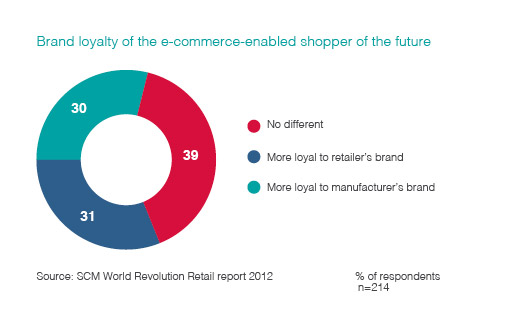
This data suggests retailers’ belief that consumer demand is in equal parts shopping experience and product performance. In other words, CPG manufacturers are crazy to leave retailers in sole possession of the consumer relationship, now that interaction is ubiquitous. Direct-to-home shipping sounds insane to CPG supply chain strategists, and yet retailers won’t be surprised to see it happen.
I have pitched a few crazy ideas that apply. One of them is consumer pallets shipped directly from CPG distribution centres to homes. 90 days’ worth of non-perishable high value-to-cube items across, say, 25 brands eliminates the retailer from the picture and ties consumer to manufacturer for life –similar to an internet service provider.
Another is the formulate-and-fill-on-demand idea. This works for Coke Freestyle machines; why not for shampoo? It is environmentally friendly, cheaper, and personalised – like Invisalign braces for teeth straightening. I know these things don’t work now, but they wouldn’t surprise Jane Jetson.
We are done taking baby steps. It’s time to get aggressive.
Beyond Supply Chain
Subscribe on LinkedIn to receive the biweekly Beyond Supply Chain newsletter.