By Stan Aronow | June 12, 2020
CSCO Outlook for 2027: Cloudy With a Chance of Moderate Growth
October 09 2026


By Stan Aronow | June 12, 2020
It has been nearly three weeks since George Floyd was brutally killed by police in Minneapolis, adding to a shameful list that has grown steadily over many lifetimes.

Protests are continuing across the United States, where I live, but also globally as, in our connectedness, this horrific act has touched a raw nerve and served as a tipping point where many feel they cannot remain silent witnesses.
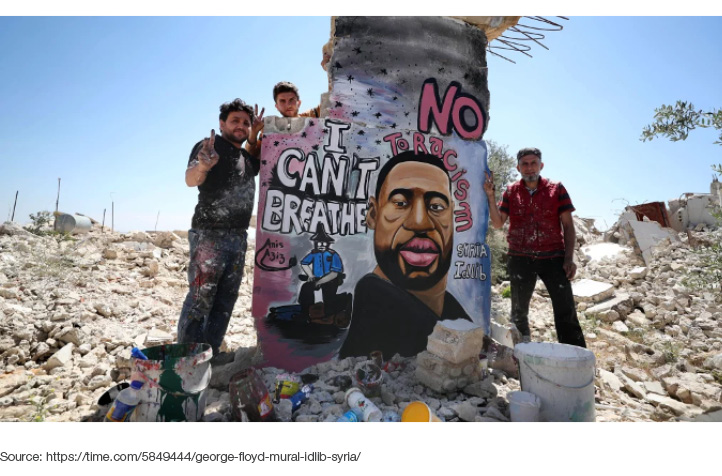
I was inspired to see that a mural of George Floyd had even been painted, in solidarity, in war-torn Syria.
A Catalyst for Change
As a white male, I have not experienced the systemic racism that many people of color describe as they go to school, work and play in the world, each day. This makes me feel horribly unsuited to speak out on the topic, but I am also realizing that my past decision to “not go there,” combined with the silence of many others, allows the world to stay stuck in a very unjust place.
Sometimes, a catalyst is required to shift our collective consciousness. Recent events have shocked many who would normally be quiet into saying something. Military and corporate leaders, along with the broader community, have since spoken out against institutional racism and the need for changes in our systems and relationships.
There are many examples to highlight from our business community. Nike and P&G have spoken about it through recent advertisements. CEOs from General Mills to General Motors have issued formal statements on the topic, spelling out their guiding principles, as well as tangible ways they will invest in programs supporting underserved communities, build diverse/inclusive workforces and seek to influence policy and legislation eliminating racial discrimination.
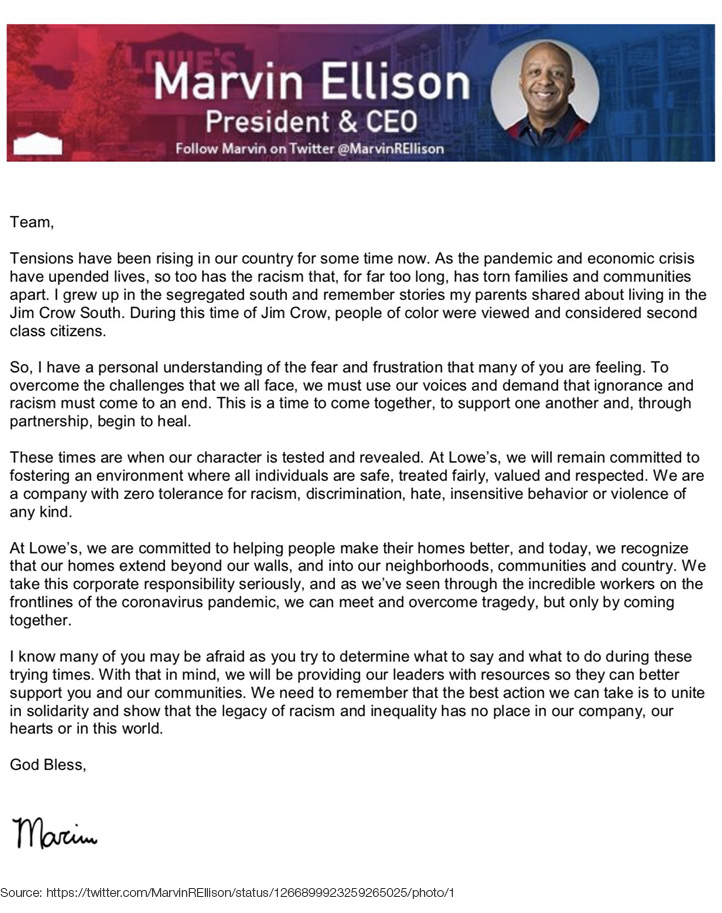
While shorter on actions, in some ways, I prefer the from-the-heart message from Lowe’s CEO, Marvin Ellison:
Closer to the world of supply chain, I also loved Renee Ure’s (Lenovo Data Center Group) recent post on what we can collectively do in our personal spheres.
To summarize her recommendations:
Change is Uncomfortable
I’ve spent a lifetime in the belief that if you can help people feel accepted and comfortable, they will make more loving choices toward others. This approach has generally worked, but I see that sometimes the loving thing to do is to make people uncomfortable. Not as a weapon, but as a mirror. Introspection and change are inherently uncomfortable.
This week, my wife and I were sharing the history behind the recent protest marches with our kids. My 18-year-old son, who is a non-speaking autistic, but now able to communicate through a letter board device, said, “the work to end this oppression is a must” and that he is interested in attending a Black Lives Matter event.
Coming from someone who has been misunderstood by most of the world, his entire life, I was struck that I could learn a thing or two about bravery from him. Looking forward, there are no easy answers here, but I am ready to take a harder look in the mirror. I hope you are too and would love to hear about any approaches that are gaining traction or even those that are not.
Thank you for listening.
Stan Aronow,
VP Distinguished Advisor,
Gartner Supply Chain
Stan.Aronow@gartner.com
Beyond Supply Chain
Subscribe on LinkedIn to receive the biweekly Beyond Supply Chain newsletter.