By Heather Wheatley | May 06, 2022
CSCO Outlook for 2027: Cloudy With a Chance of Moderate Growth
October 09 2026


By Heather Wheatley | May 06, 2022
The evidence that our world is experiencing a changing climate is now undisputed. In the past year, the Intergovernmental Panel on Climate Change (IPCC) has issued a string of reports, each more depressing reading than the last.1 The message is stark: climate change is affecting every inhabited region across the globe.2 This includes the United States, which experienced 20 separate billion-dollar weather events in 2021, and Australia, which has seen a 16% decline in rainfall since 1970.3,4
What to do about the impacts of climate change poses a dilemma for supply chains. Should we act now or wait to see what might happen? Our research tells us that the impacts are being felt now. These transcend the environmental impacts of wildfires, floods and freezes that traditionally come to mind.
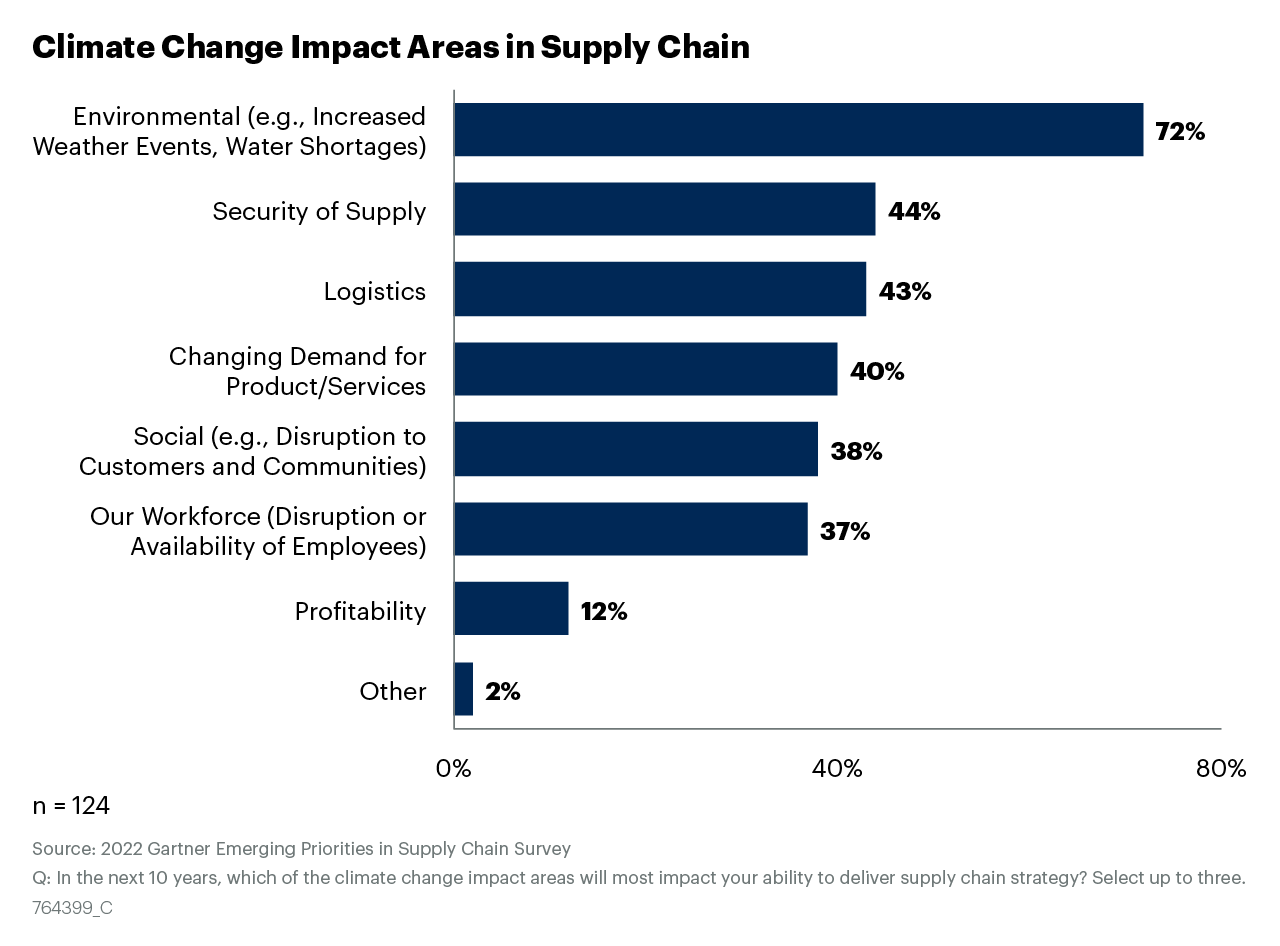
The impacts of climate change are typically split into three groups:
I acknowledge that it can be overwhelming to consider all the risks and opportunities, but doing nothing is not an option. The impacts of climate change are only going to increase.
As Michael Goltzman, vice president, global policy and sustainability, at the Coca-Cola Company, says: “We all realize that climate change is here already, and we need to ensure that we are investing to be resilient and to adapt our business for the future.”
So where do supply chain leaders start? In a recent report, Gartner introduced three key actions supply chain leaders can take to move the dial on the climate change risk and action. The three actions are:
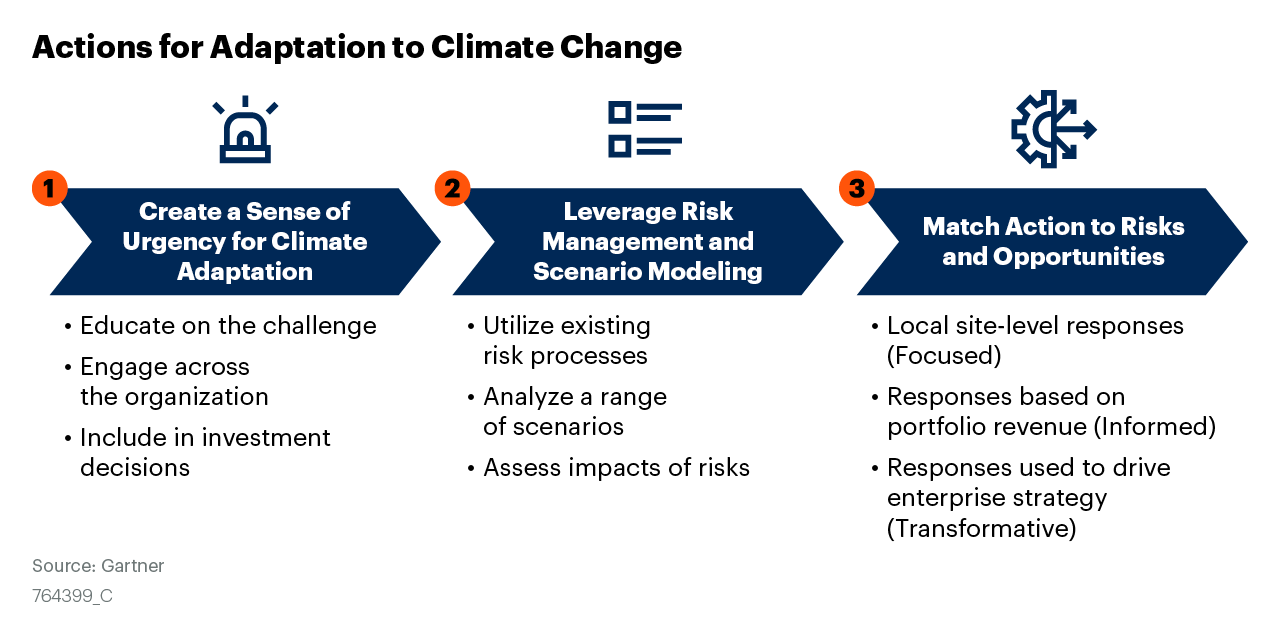
Informed adaptation comes next, with both an assessment based on revenue generated and the impacts of different scenarios on both the product portfolio and footprint. The supply chain and the wider enterprise focus actions based on revenue protection, not on location or site.
Finally, those organizations that are both responding to risks and seizing opportunity are moving toward transformative adaptation approaches. Climate change is informing company strategy. These organizations take a long-term view of the business, with each decision weighed against climate change impact. In this case, climate change is seen as both a near and long-term threat and an opportunity for differentiation to achieve competitive advantage.
We explore Supply Chain Adaptation Responses to a Changing Climate in the April executive report (available to Gartner clients) and in the accompanying podcast, which is available on Spotify, Apple Podcasts and Google Podcasts.
Heather Wheatley
Senior Director Analyst
Gartner Supply Chain
Heather.Wheatley@gartner.com
Beyond Supply Chain
Subscribe on LinkedIn to receive the biweekly Beyond Supply Chain newsletter.