By Stan Aronow | August 17, 2018
Navigating the Supply Chain AI Fog
September 18 2026


By Stan Aronow | August 17, 2018
I am an Englishman living near San Francisco, so earlier this month I jumped at the chance to deliver one of the keynotes at the annual University of Southern California Global Supply Chain Excellence Summit.
This event has grown to attract several hundred supply chain leaders from across the U.S. to come together to listen to each other and discuss their experience.
I was there to share Gartner research on what we see as the key supply chain trends in 2018. I focused on three:
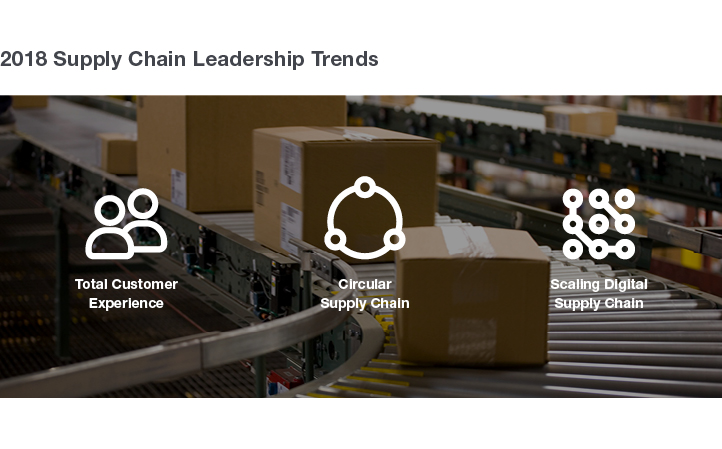
The first trend is that customer experience is no longer just about delivering physical goods to the customer, but about more holistic solutions. A good example is Hewlett-Packard’s Instant Ink program. HP addressed the threat of losing sales to cut-price suppliers by creating a capability that solves the customer problem of running out of ink at exactly the wrong time. HP recognized that it had access to the ink levels of its printers over the internet, so it created a replenishment program in which it will ship replacement cartridges based on consumers’ projected level of ink consumption.
PepsiCo is another company that is focusing on customer experience by using a variety of mechanisms and technologies to get shelf visibility at a very granular level. One example is connected cooler cases. When the door to one of these cases is opened, photos of the inside of the case are captured and analyzed to understand the placement and quantity of contents to aid replenishment. The cases also have sensors that monitor internal environmental conditions as part of preventative maintenance.
The second key supply chain trend is about an increasing investment in circular supply chain solutions. The essence of a circular economy is that leading-edge companies are not only reducing the amount of inputs required by their products/packing and enabling recycling of these assets post-use by customers, but are now designing their supply chains so that waste materials can flow back as inputs to new products.
I mentioned Unilever as a company with a long-term commitment to the environment. The company has an initiative called “Sustainable Living Plan” that seeks to decouple business growth from its environmental footprint. Here, Unilever is trailblazing coordination and partnership with governments and NGOs on policies that promote ethical and sustainable practices in the areas where it operates.
The third key trend we see is the way that leading-edge companies are scaling a digital approach to supply chain. Creating digital supply chain capabilities was a theme of our research in 2017. This year the angle is that leading companies’ initial experiments in digital supply chain are complete, so now they are starting to scale them up.
In my home country of the U.K., Ocado, the nation’s largest online grocery company, is pioneering the digitization of its warehouse management with what it calls the “Ocado Hive.” Imagine a warehouse grid that is three to four times the size of a football field and a dozen baskets deeper. Intelligent algorithms control the X-Y coordinates of the many robot pickers in line with the latest orders coming through the system.
In China, Haier, the home appliances manufacturer, is driving an IoT revolution in its “connected” factory in Shenyang. Most people think of IoT as just being about connected homes. One of the most exciting applications that Haier has exploited is the creation of digital ecosystems linking factories, products, services and processes.
So what do these leading-edge companies have in common to stay ahead?
First, they make room in their budgets and resourcing for ongoing experimental work. This might represent 5 or 10 percent of the total budget that is set aside like venture capital funds for proofs of concepts and pilots.
Secondly, they focus on finding talent. This might be through the intentional investment in specialized resources such as data scientists in an advanced analytics center of excellence, or it could be by crowdsourcing creative improvement ideas from operators.
And finally, they set the right culture of innovation that allows them to flourish. This means rewards and recognition both for the operator that enabled the company to make its numbers this quarter and the team-building experimental tools that may or may not yield value in the immediate term.
Chris Poole is a managing vice president at Gartner, leading the Supply Chain Planning and Customer Fulfillment team.
Stan Aronow, a vice president in Gartner’s Supply Chain Research group, contributed to this report.
Beyond Supply Chain
Subscribe on LinkedIn to receive the biweekly Beyond Supply Chain newsletter.