By Kevin O'Marah | February 27, 2015
Navigating the Supply Chain AI Fog
September 18 2026


By Kevin O'Marah | February 27, 2015
You already know this. Companies we admire for their supply chain excellence are constantly showcasing progress toward better social and environmental performance in their massive physical networks.
Intel pushes to eliminate conflict minerals; Disney insists on social justice for workers; Coca-Cola and PepsiCo engineer processes to reduce water use; Unilever, P&G, Clorox and many other CPG companies pound away steadily at their carbon footprints through energy savings, package redesign, and other material efficiency initiatives. The list goes on and on.
Still, the world keeps hurtling toward trouble. Boston, where I live, is buried under 100 inches of snow – with more promised soon. Miami, where I am at the moment, regularly reports on rising sea levels with the realistic expectation that parts of the city will flood within decades, if not years.
Beijing, to quote 92-year-old urban planner Wu Liangyong, has an environment that is “unfit for daily life”, with smog so bad that Seoul shares in the pleasure. Mexico City chokes, Los Angeles is parched, and Budapest drowns. The planet is a system and it badly needs our attention.
You already know this. And yet, it’s slipping down our agenda and I am worried.
We’ve become accustomed to the hyper-fast pace of ideas’ birth, maturation, and death. As demand driven as we are in supply chain, second-guessing the customer is not something that comes naturally. A few years ago environmental sustainability was trending hot, with supply chain leaders racing to green up their operations, convinced it would win new consumers.
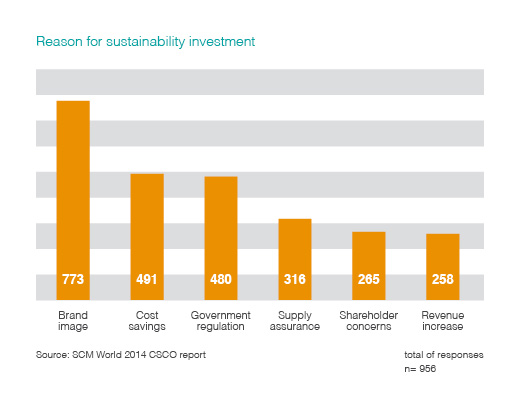
Unfortunately, people’s actions don’t always follow their words and green products mostly flopped. Of six motivations to invest in sustainability, “increasing sales revenue” came last among 956 supply chain executives surveyed last year. Being demand driven clearly won’t get the sustainability problem solved.
More recently, social justice was trending hot. The collapse of Rana Plaza in Bangladesh caught the public’s attention and many in supply chain saw a new demand-driven reason to embrace social and environmental responsibility.
Less than a year later, however, Primark, the bargain UK retailer most prominently implicated as a customer of the Bangladesh suppliers in Rana Plaza, had smashing results. Shoppers were not dissuaded by the scandal at all and may even have been drawn by the whiff of a killer bargain.
The point here is that we can’t count on customers, shareholders or even regulators to remain focused long enough to see us through to a sustainable global supply chain. It is a massive challenge in systems engineering that no one truly understands except supply chain strategists. We need not be climate scientists or sociologists to know that waste is bad and that fairness breeds collaboration.
Don’t wait to be told what to do. Just do it.
The SCM World community is the most thoughtful, cohesive collection of supply chain leaders in the world. I feel privileged every day to work with you on what I know has gigantic impact on your companies and our planet. But I’m disappointed by the gradual sinking of sustainability to the bottom of our collective to do-list.
Our content is organised in eleven modules, each of which comprises webinars and Best Practice Insights by community faculty members, research reports by SCM World staff and data snapshots from our extensive survey database. The good news is that you used this content over 45,000 times in 2014 to accelerate your learning. The bad news is that the sustainability & supply chain integrity module is in last place.
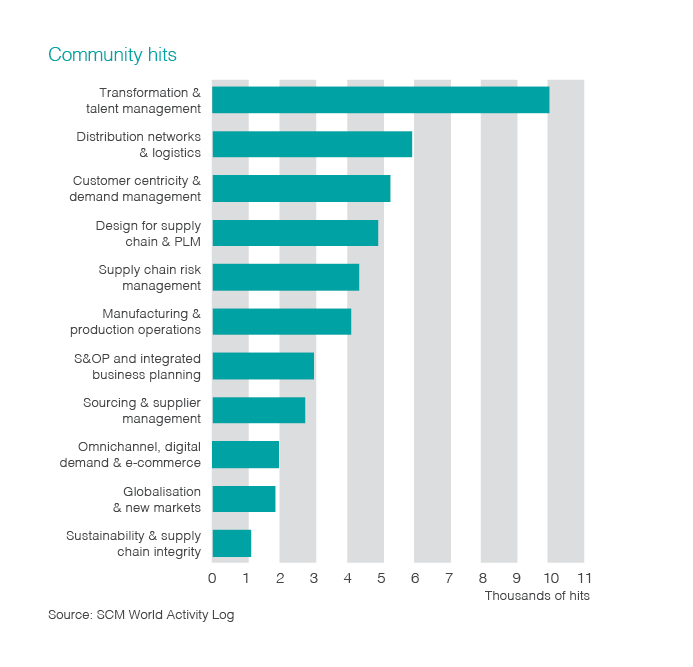
For anyone who attended last year’s Leaders Forum at Gleneagles and heard CEO Paul Polman of Unilever speak, this ranking should come as a shock. Passion for the topic runs high in almost all conversations I have with SCM World members, and I know that the knowledge is there to tackle this challenge.
Sourcing expertise gives us visibility upstream to where materials come from and how they are handled. Manufacturing expertise lets us make stuff with ever less energy and scrap. Distribution expertise means moving the greatest amount of value with the minimum possible effort. Planning expertise is about seeing the whole thing as a huge supply-demand balancing system.
It’s our job.
Beyond Supply Chain
Subscribe on LinkedIn to receive the biweekly Beyond Supply Chain newsletter.