By Kevin O'Marah | November 06, 2015
Navigating the Supply Chain AI Fog
September 18 2026


By Kevin O'Marah | November 06, 2015
Org charts are an indispensable artefact of big companies. At the top we have a CEO who has an essentially singular focus on increasing shareholder value. Other C-level roles are usually pretty clearly defined – sales delivers revenue, finance keeps the money straight, legal guards against culpability.
Supply chain, however, is stuck with an ambiguous, conflicting set of operating metrics that shadow those of the CEO. Cost control is tops, but right behind is customer delivery, and just in case this balancing act isn’t tricky enough, supply chain also owns “enablement” of everything from innovation to sustainability.
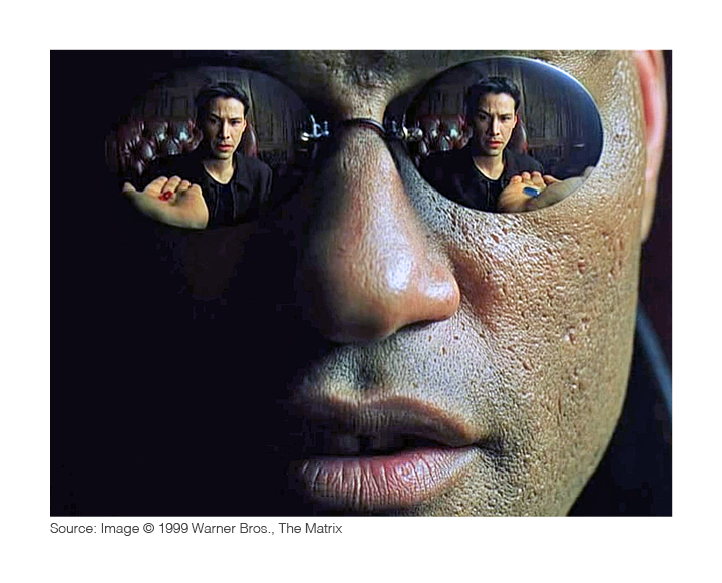
We have only ourselves to blame. Rather than keep it simple by limiting the scope of supply chain to its traditional place as a cost centre, we have taken the red pill and now are seeing how deep the rabbit hole goes (a reference to The Matrix, for those who don’t recognise it).
We embrace the design-for-X principle that pulls us into stage-gate meetings with product development. We believe in the potential of S&OP to streamline operations, so we collaborate with marketing and sales. We believe that supply chain, managed as an end-to-end process, will drive profitability and we hope the CEO appreciates it. Unfortunately, the scorecard for end-to-end supply chain ultimately comprises nearly everything in the P&L.
The result, from an organisational design perspective, is a constantly shifting pile of sand. Top supply chain executives are in some cases actually called “Chief Supply Chain Officer” – a title not uncommon in consumer packaged goods and some hi-tech companies. Such executives often have direct control over procurement, manufacturing and distribution. These are the lucky ones. They own cost and service and are taken seriously by their board-level colleagues.
Far more common, however, is the SVP of supply chain, which in some cases is effectively a sourcing role, in others a logistics function. The goal in most of these situations is decisively cost biased, but with an overhanging duty to assure supply. End to end is still a reality that is obvious to these supply chain leaders, but too often other executives don’t understand it and end up confounding your best efforts.
Many top supply chain executives lead via some kind of centre of excellence or matrix overlay structure. In these cases, CEO-style goals can usually be managed to, but only with a liberal use of councils, panels and dotted-line accountabilities.
Whatever the structure in place, supply chain often lacks the goal clarity inherent in sales, marketing, engineering and even human resources. For people working in these organisations the combination of constant reorganisation and conflicting goals leaves many confused about their mission and even the chain of command.
Data from our 2015 Future of Supply Chain survey shows just how confused our teams are. Only 10% of companies with two or more respondents in our sample agreed with each other as to whether their supply chain functions were centralised, decentralised or managed in a matrix.
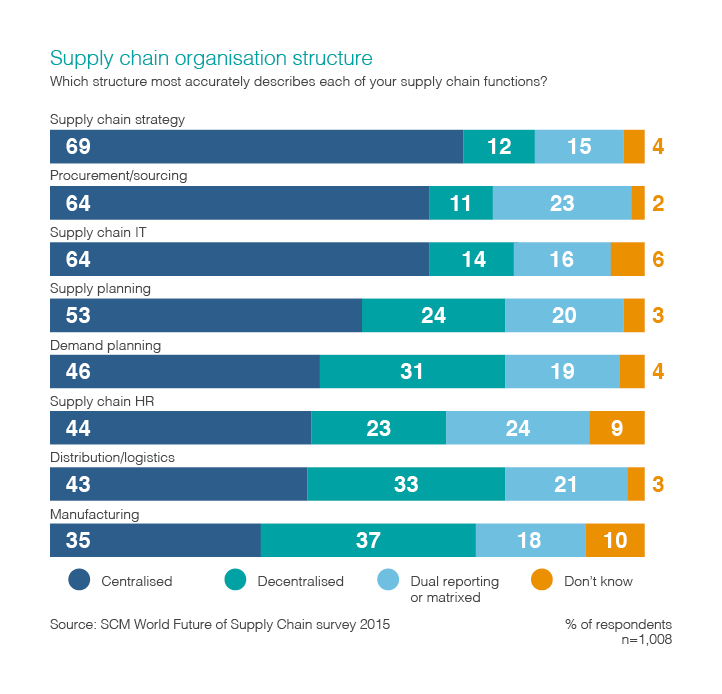
The takeaway is not that we should revert backward to our siloed past, but forward to a structure that underpins the same measure of success applied to the CEO – operating profitability. It is classically cross-functional and depends on constantly making good business decisions about when and where to spend on supply, capacity, inventory and transportation in order to grab the most operating margin possible.
This means managing ambiguity. Customers are not all equally deserving of platinum service and not all plants and warehouses can or should be 100% lean. To think like a CEO is to accept some lost battles while winning the war.
Structure is critical, but there is no single right answer. Some like BASF manage very effectively with a complex shared service overlay model that complements business units. Others like Colgate-Palmolive leverage a robust central command structure that is truly end to end. In both of these cases, supply chain leadership sits firmly at the table and contributes massive shareholder value.
Success for supply chain leaders depends on building an organisation that not only works as an end-to-end profit machine, but also that can translate its performance into clear goals aligned with the CEO.
Beyond Supply Chain
Subscribe on LinkedIn to receive the biweekly Beyond Supply Chain newsletter.