By Kevin O'Marah | June 25, 2015
CSCO Outlook for 2027: Cloudy With a Chance of Moderate Growth
October 09 2026


By Kevin O'Marah | June 25, 2015
The defining reality of our information age is its impact on the pace of learning. For working professionals in supply chain, this often feels like an accelerating treadmill with ever-shorter request-to-response cycles driven by digitally empowered customers.
Many find that the traditional comfort zone of continuous improvement can’t keep up with this steepening learning curve. It is hardly surprising that some people just can’t make it.
For kids in school, however, this same tornado of learning is not only natural, but bracing. Raised, as they have been, in the sensory cacophony of perpetual fresh information, today’s university students seek challenge and change. For those pursuing careers in supply chain, the greatest thrill is tackling complex problems across the extended network.
In fact, one gets the sense that the last thing they want is a perfect forecast.
Learning to love change
Each year, we survey hundreds of supply chain executives around the world and ask, among other things, which universities they look to as “markers of talent”. The tally of this data, collected from 528 respondents in 2014, boils down to a ranking of how employers view the talent pools coming from graduates entering the workforce.
The list is dominated by universities with practical – rather than philosophical – approaches; in particular, it seems biased towards those able to keep pace with industry, where almost all of the real innovation is happening.
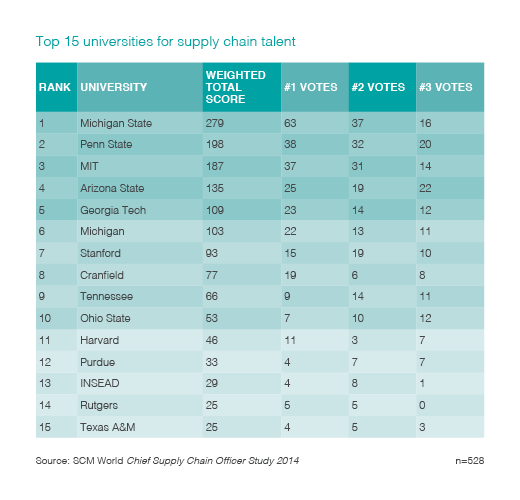
It is an odd but important fact about supply chain that, unlike many disciplines taught in universities, thought leadership usually comes from the field, not academia. As such, those universities with close ties to industry – and a willingness to swallow their pride in order to learn – fare well in this ranking.
The list is neither a strict reflection of raw student IQ levels nor of reductionist vocational training proficiency: it is the image we hope to see in the mirror when we think about our own futures.
Leadership here is not about mastering supply chain, so much as keeping up with the real world.
The kids are all right
Having seen since 2011 how hiring professionals view the universities, we decided, this year, to focus on the students. In our 2015 supply chain university study, we interviewed two students from each of the top 10 schools in order to get a sense of their interests and values. What emerged is a picture that is part altruism, part ambition and part appetite for challenge.
Very few are focused on money, power or influence for its own sake, but all embrace the idea of supply chain having a huge footprint. They believe they can change the world, but not as lone rangers. The most common thread running through their stories is a deep sense of the connectedness that supply chain brings to business. Many are keen to improve the environmental and social impacts of business on the world, but within the game of the profit-making enterprise.
In short, most start life already as firm believers in the end-to-end supply chain view that so many organisational transformations strive to achieve. They are natural-born change agents, with the energy, tools and audacity to rebuild your supply chains quickly.
Maintain the learning momentum
Research on millennials by PwC finds the amazing fact that 22% of millennials value training and development as the top benefit they seek from employers – well ahead of third-ranked cash bonuses (14%) and a slew of other classic job perks employers tend to offer.
The young obviously grasp how much the game has changed from where it was 30 years ago at the dawn of supply chain. Learning isn’t something they limit to the school days, but something baked into life.
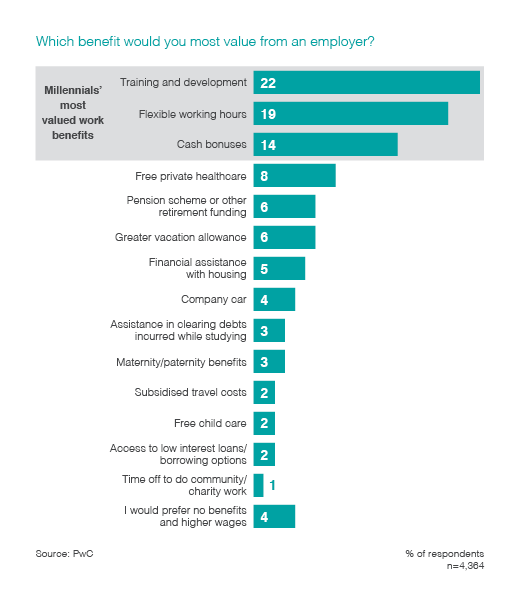
The 20 students we profiled are living it now with a mix of internships, business co-operative projects and simulation games during their studies that blends almost seamlessly into careers with job rotations, new geographic postings and high-impact cross-functional projects. They want to keep learning, even as they start doing.
For hiring managers and supply chain leaders looking to build great teams, the most important thing to offer is not another thousand dollars cash but perpetual investment in them as people.
Beyond Supply Chain
Subscribe on LinkedIn to receive the biweekly Beyond Supply Chain newsletter.