By Stan Aronow | September 17, 2021
CSCO Outlook for 2027: Cloudy With a Chance of Moderate Growth
October 09 2026


By Stan Aronow | September 17, 2021
It’s been decades since Johnny Paycheck dropped his fiery anthem about being fed up with work, but lately it’s in fashion again. Among the COOs and CSCOs in our community, nearly all of them have shared the challenges they face, this year, when it comes to employee retention. If traditional office-based functions have it bad (~10-15% annualized turnover rates), then front-line roles are a nightmare (~80-140% annualized attrition rates, in some cases). It’s so extreme that the term “war for talent” is now commonplace.

It’s also a large enough economic phenomenon to have a name: The Great Resignation or the Big Quit. Different surveys place the number of employees looking for a new job at somewhere between 40 and 65%. The more important question beyond the “what” and “how many” is “why.”
Some point to the fact that these large percentages represent those who are “only looking.” They say this is not a Great Resignation, but a Great Reprioritization. Anecdotally, this sounds about right. People are rethinking the rhythms of their daily lives, how they want to spend their time and what they want out of their jobs and careers.
And, at some point if there is significant misalignment … they will leave.
Gartner’s HR practice proclaims that we need to reinvent the Employee Value Proposition (EVP) as a new deal: The Human Deal (subscription required). One that recognizes the whole person and is designed to provide an exceptional life experience, with a focus on the feelings and features that match employee needs. These researchers recommend using the following framework to define an expanded set of employee needs that, when addressed, lead to higher rates of satisfaction (+15%), retention and performance.
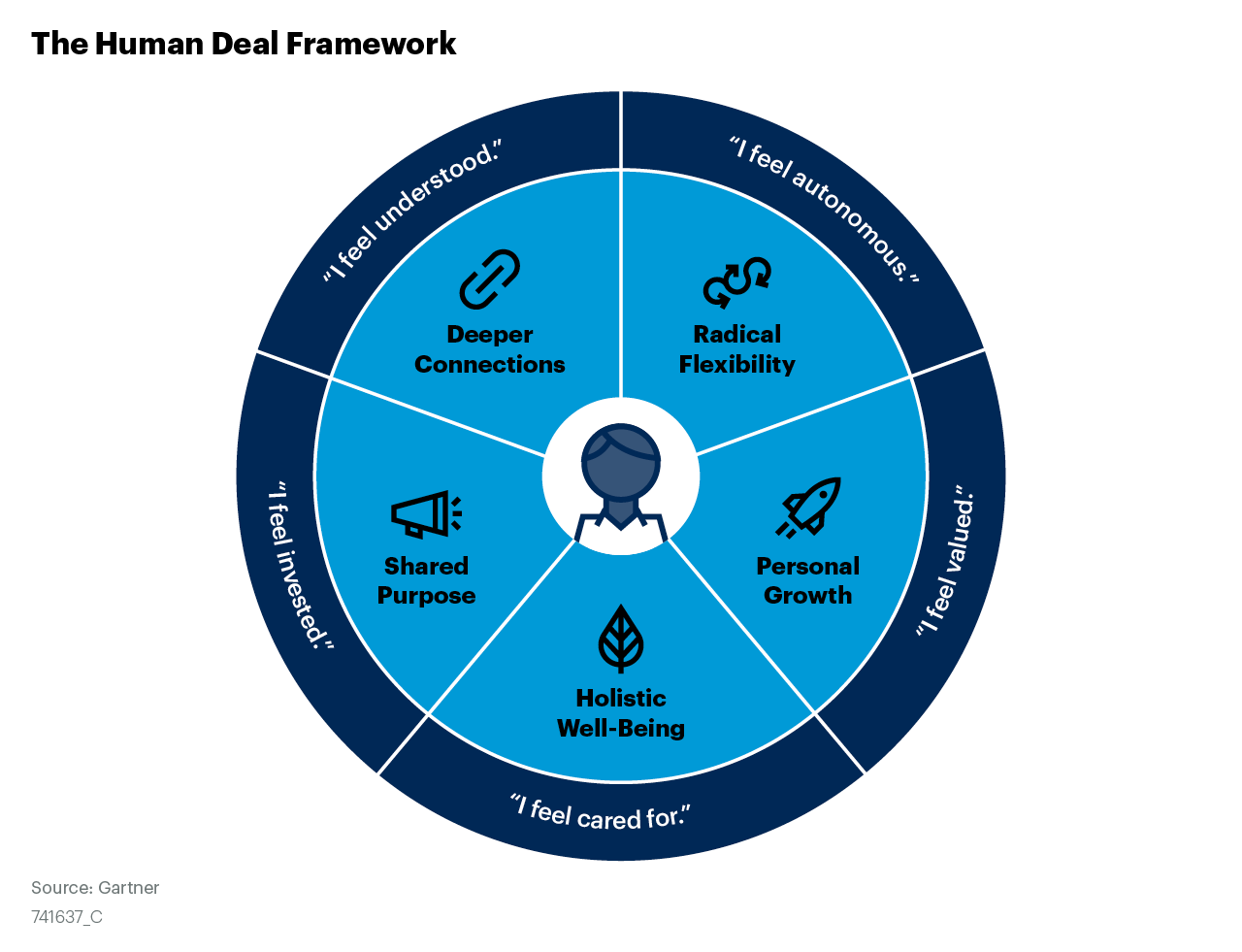
From the perspective of someone evaluating a new company and role, this expanded EVP feels a bit like Maslow’s Hierarchy of Needs. More basic needs like compensation and other core benefits fall toward the bottom. Psychological needs such as esteem and belonging equate to deeper connection and opportunities for personal growth through expanded roles. Holistic well-being, or feeling cared for as a whole person, also fits into this middle layer. Radical flexibility relates to more control over all the ways the work gets done. When paired with shared purpose, this represents the self-actualization pinnacle of the hierarchy.
A final thought as you consider what your new EVP will look like. Not everyone is offering this new, expanded proposition. Not even close.
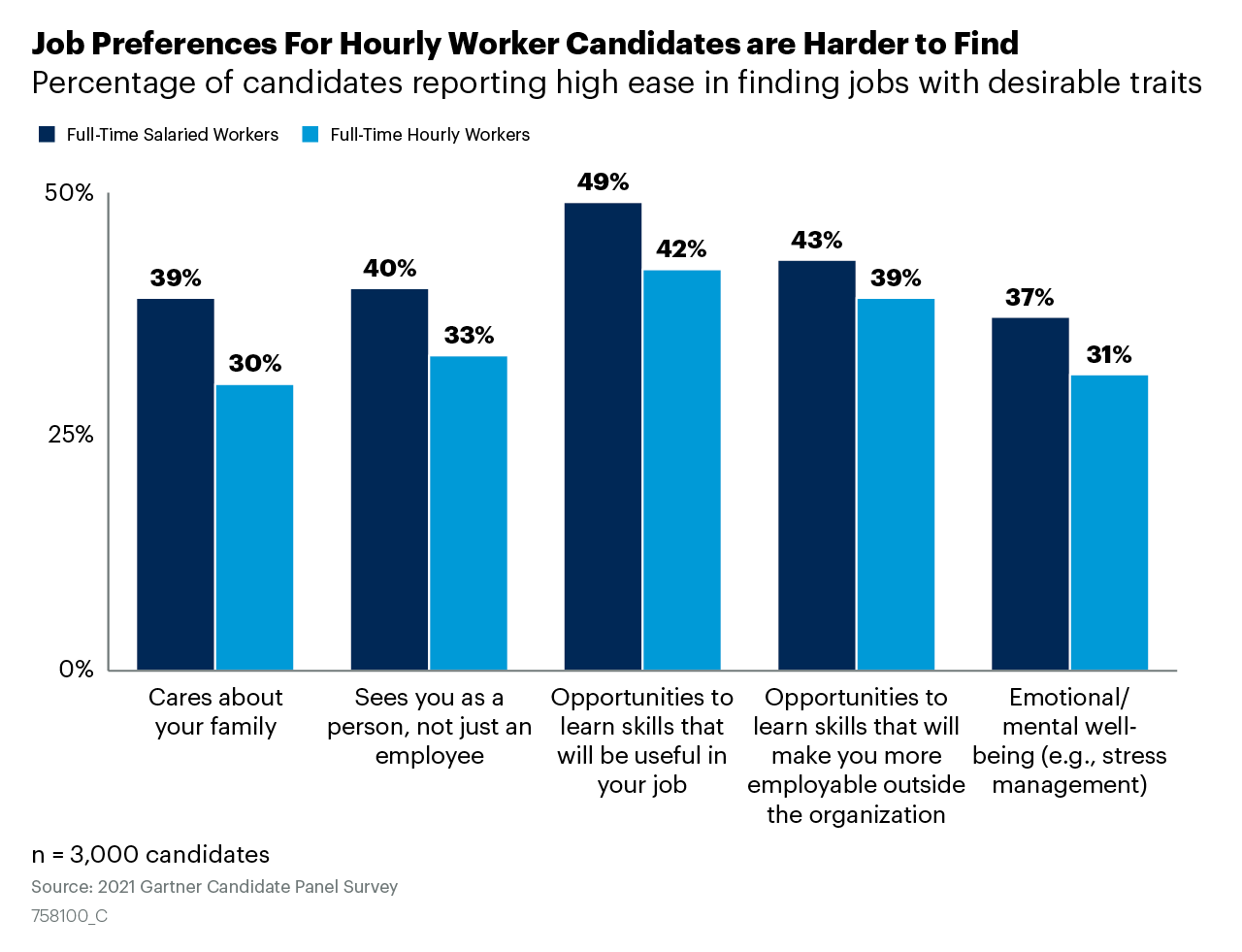
Our latest research shows that well under half of enterprises address these middle and top of the hierarchy types of needs. For front-line roles — currently, our most challenging positions for retention — these benefits are offered even less often.
While significant changes may be required to bring your EVP in line with the most compelling offer in the marketplace, if played right, you might just be exclaiming, “Take this job and love it!” to your new recruits.
Stan Aronow
VP Distinguished Advisor
Gartner Supply Chain
Stan.Aronow@gartner.com
Beyond Supply Chain
Subscribe on LinkedIn to receive the biweekly Beyond Supply Chain newsletter.