By Kevin O'Marah | August 07, 2015
Navigating the Supply Chain AI Fog
September 18 2026


By Kevin O'Marah | August 07, 2015
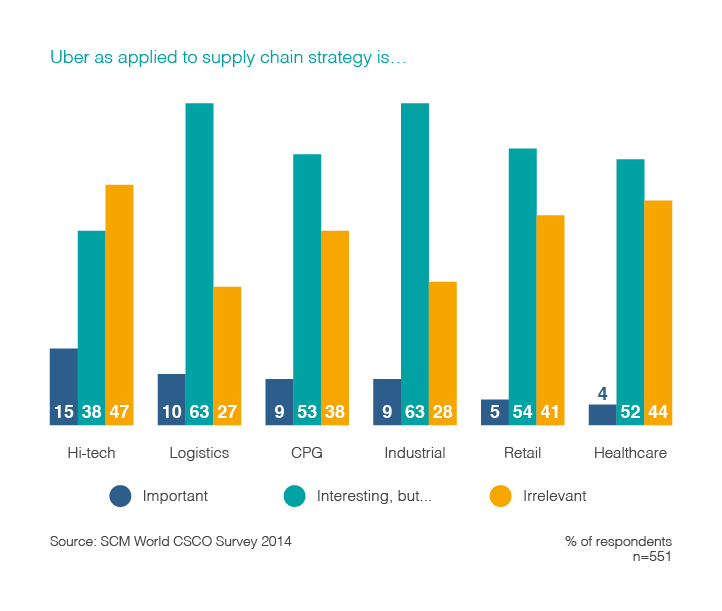
Last week saw Uber’s market valuation break $50 billion, a milestone reached two years faster than Facebook did it in 2011. Is it a tech phenomenon? Is it a social revolution? Is it a supply chain breakthrough? Yes to all of those. Yet for some reason, too many in operations roles don’t see it that way.
At its most basic, Uber works by matching underutilised resources with needy customers. For consumers, the idea of an Uber for everything seems perfectly reasonable, with laundry, cooking, massages and even marijuana delivery all there for the asking. The killer app, of course, is ridesharing, which is disrupting taxis worldwide by matching drivers and riders in real time.
This layer of Uberisation is all about labour market efficiency, which is a function traditionally played by trade unions and temp services. It is technically superior because it matches workers with jobs not only geographically and in terms of skill needs, but also at a deal-specific level. This means both parties are free to bid up or down the price according to circumstance.
No more mass-market wage setting means steadily better labour utilisation. It also means weaker unions.
The big win in supply chain, however, comes when labour utilisation and asset utilisation are both improved by the Uber phenomenon. A perfect example of this blend is Instacart, which now serves 16 metropolitan areas in the United States with an Uber-like shopping service tapping Costco and Whole Foods, among others.
The customer enjoys an e-commerce grocery experience, but the retailer doesn’t need to add inventory, staff or space. Instacart relies on shoppers, who like Uber drivers, are both available and equipped with their own car to take the order, do the shopping and deliver to the customer. Everyone wins.
The typical passenger car in the United States is driven 13,476 miles per year, according to the Department of Transportation. If the average speed driven is 40 miles per hour, then the asset utilisation rate for passenger cars is less than 4%. No doubt utilisation is much higher for pickup trucks, excavators and other expensive work equipment; but as anyone who has ever worked in construction can attest, it is nowhere near the 80+% considered acceptable in manufacturing operations.
One study of the drayage business in Los Angeles found for instance that truck utilisation was around 30%. A study done by General Electric reportedly found medical equipment utilisation rates of 40% to be typical. Work I’ve done myself in the landscaping business suggests utilisation rates for equipment like chippers, stump grinders and skid steer mini tractors are often as low as 25%. Money is being wasted.
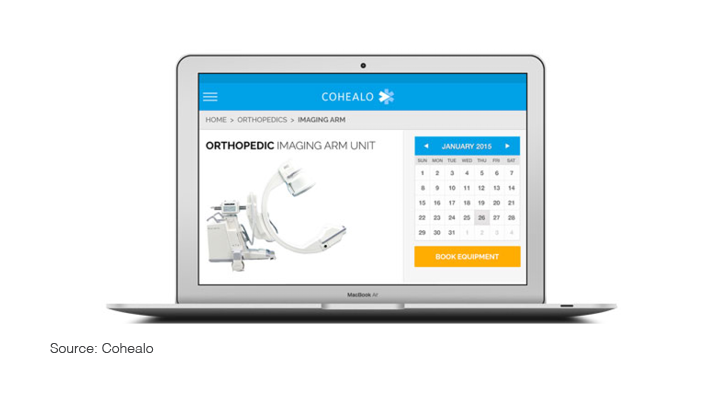
But Uber for trucks (Cargomatic, Transfix, Moov), private jets (Jetsmarter), construction equipment (Getable) and medical equipment (Cohealo) are all now up and running. The best of these do much more than simply offer a Craig’s List style want-ad service, offering management reporting and analytics built in to facilitate users scaling up. Cohealo in particular is different because it blends sharing economy principles with classic enterprise supply chain management functionality for healthcare systems.
Given the ingredients currently stewing in the Uberisation pot, how can anyone in supply chain dismiss this phenomenon? Capital equipment, especially easily reusable things like vehicles, machine tools, power generation equipment and such are largely underused. People, increasingly carefully vetted, are on call and ready to work. Investment capital is everywhere and the enabling technologies (GPS, mobile apps, internet of things, electronic payments, etc.) are exploding.
I was asked by a semiconductor executive about the possibility of Uber for fabrication plants. The concept bears almost no resemblance to a black sedan making a pickup in London, and yet it’s the right question to ask. Why not Uber for cold chain? How about Uber for merchandise displays in retail? What about Uber for field service?
The sharing economy, as Uberisation is sometimes called, is a misnomer. What’s really happening is an explosion in market making for work. It is a muscular and rapidly evolving successor to the almost forgotten B2B trading exchange movement of the first internet bubble. Supply chain executives should be all over this now.
Beyond Supply Chain
Subscribe on LinkedIn to receive the biweekly Beyond Supply Chain newsletter.