By Stan Aronow | July 12, 2024
![[ALT TEXT]](https://emt.gartnerweb.com/ngw/globalassets/en/supply-chain/blog/beyond-supply-chain/images/bsc120701.jpg)
CSCO Outlook for 2027: Cloudy With a Chance of Moderate Growth
October 09 2026


By Stan Aronow | July 12, 2024
Several years ago, well before the pandemic, I was part of a team delivering a Gartner Supply Chain Executive Conference themed on thriving in a volatile, uncertain, complex and ambiguous (VUCA) environment. After living through the operating environment of the last five years, many in the supply chain community might find this quaint. But the reality is there have always been uncertainties and disruptions in our world.
What’s so different now? It is really a confluence of factors.
Geopolitical, trade and regulatory uncertainties are at an all-time high. Supply chains need to maintain some of their pandemic-era risk investments and, at the same time, CEOs and CFOs are driving supply chains toward greater productivity and efficiency. With new tools on offer, there has been a tremendous push toward new AI solutions, but it is uncertain whether these new investments will drive the required outcomes in the business.
Add to that increasing climate disruption risks. There is a greater number of more powerful storms leaving impacted properties uninsurable, extreme heat driving some locales toward an expanded nighttime economy and, in many cases, too much, or too little, rain disrupting agriculture and transportation. There are also risks tied to a less reliable electrical grid as electrification increases, particularly as technology comes online faster than grid supply.
What can global supply chains do when faced with such an environment?
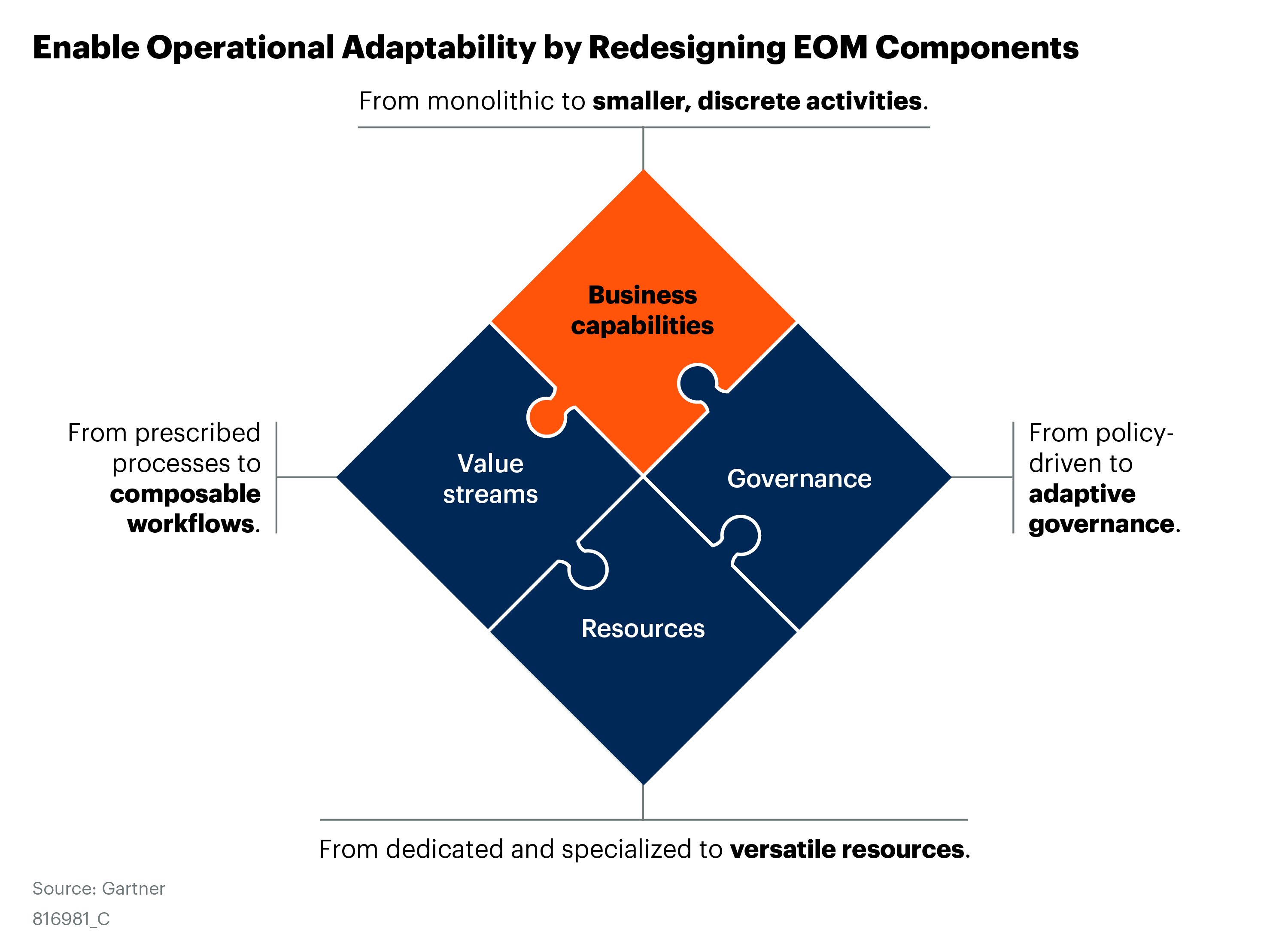
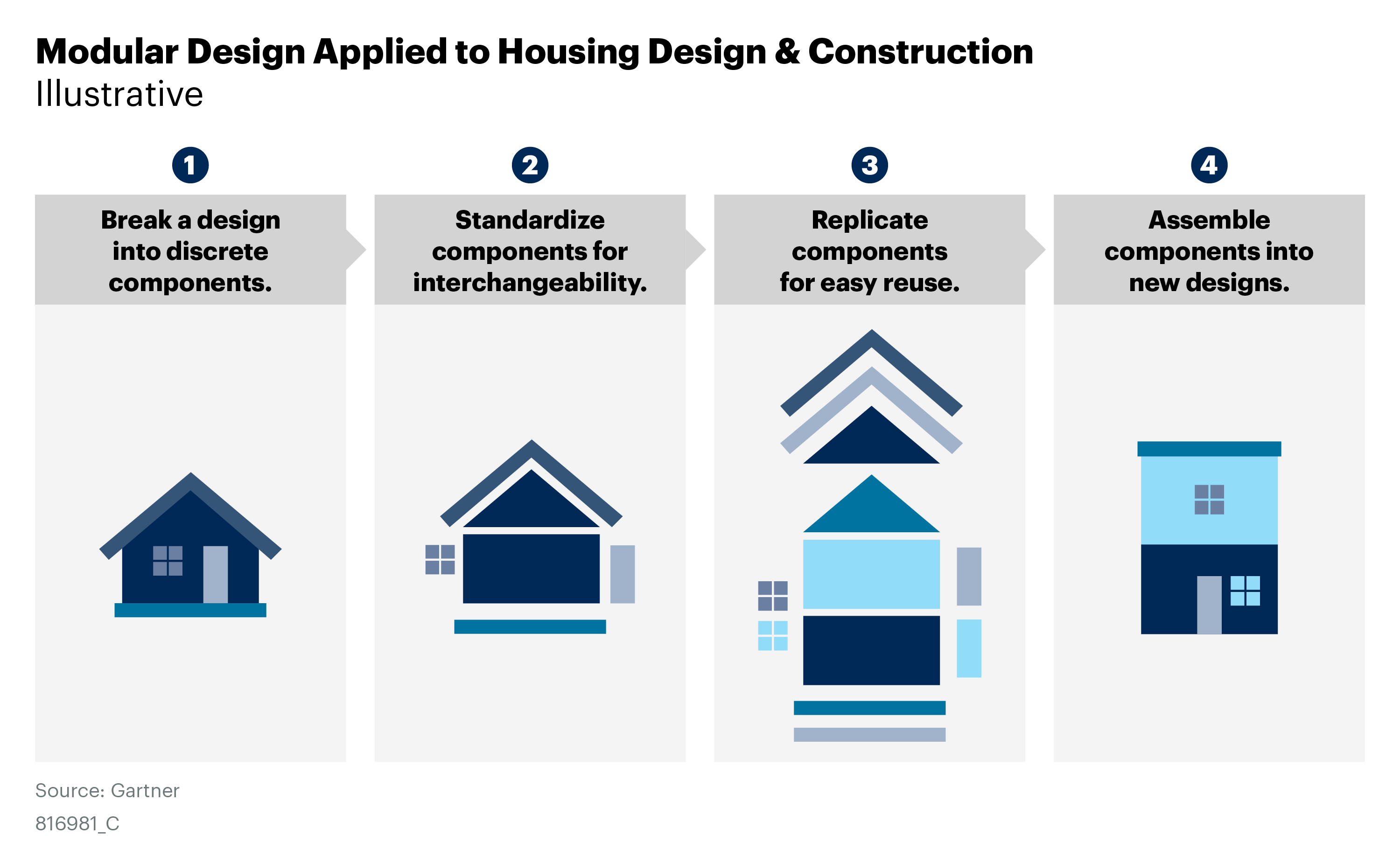
In their recent report, titled Transform Your Enterprise Operating Model With Modular Design to Be Future-Fit (subscription required), Gartner analysts Janelle Hill and Maddie Otter note that enabling the operational agility to roll with a shifting set of disruptors means going deeper than tactical resilience. And it requires recreating your enterprise operating model (EOM) in a way that allows for greater adaptability in shorter time horizons.
Hill and Otter call out that typical operating model transformations take too long to realize value. A full redesign to a target model generally takes three to five years, meaning it will likely be obsolete before it is delivered.
Instead, they propose building with more modular, interchangeable and adaptive elements versus shifting from one monolithic and rigid model to another. In practice, this means:
In the current environment, having an agile and flexible operating model is as important as operational excellence and the concept of modular design is a critical ingredient.
When design modularity is combined with other elements promoting faster change, organizations are better equipped to deal with the latest tariff declaration or an unexpected storm knocking out a supplier’s local manufacturing capacity.
In a physical supply network this might come from streamlining supplier/partner onboarding capabilities or the time required to establish a new country-based corporate legal entity. Adaptive planning might provide the ability to quickly shift volumes across a virtual, global network.
Hopefully in another five years, we won’t view our present-day situation as “that quieter time in supply chain.” But whatever the future holds, more adaptability in our operating models can only be our friend.
Stan Aronow
VP Distinguished Advisor
Gartner Supply Chain
Stan.Aronow@gartner.com
Learn about Gartner’s Supply Chain Organizational Design Decision Tool
Learn how Gartner for Supply Chain can support your top priorities.
Beyond Supply Chain
Subscribe on LinkedIn to receive the biweekly Beyond Supply Chain newsletter.