By Kevin O'Marah | September 25, 2015
CSCO Outlook for 2027: Cloudy With a Chance of Moderate Growth
October 09 2026


By Kevin O'Marah | September 25, 2015
I was in Frankfurt this week when the Volkswagen scandal broke, kicking off a round-the-clock news cycle of epic proportions. “Damage to the German economy on par with Greek insolvency… a threat to the auto industry worldwide… ” Much of the talk was overwrought and meant for stock traders feeding on volatility.
For supply chain professionals, however, the VW scandal illuminates two important things:
New data collected from over 1,000 supply chain executives shows a surging desire for the first ‘A’: heightened awareness of everything from customer demand spikes to the exact location and condition of individual shipments. The top three disruptive technologies are big data analytics, digital supply chain, and the internet of things. Combined, these three represent an inflection point in companies’ ability to know and control exactly what is happening in the physical world.
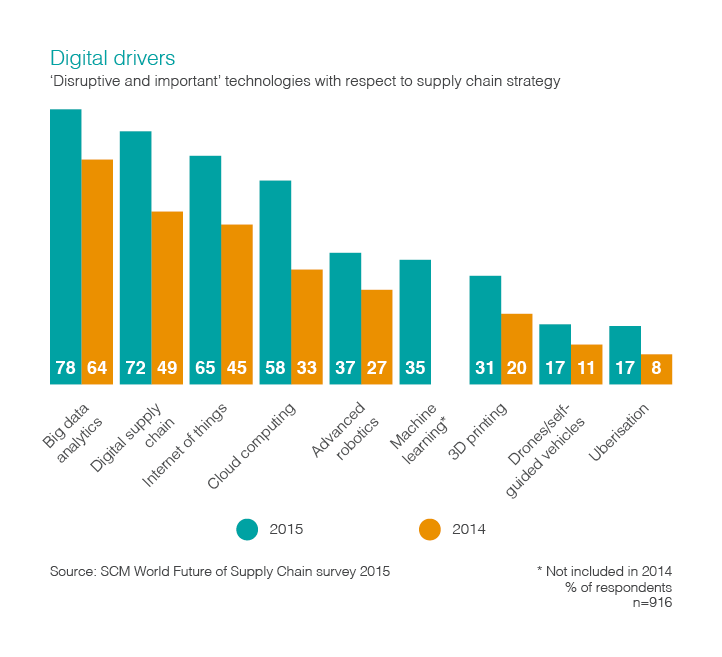
In the case of VW, this kind of hyper-aware technology allowed vehicles to know they were being tested for emissions and react with a mechanical response that turned on its nitrogen oxide trap to secure a pass. Intentionally using this trick is obviously a crime and VW is paying dearly for it now, but the fact that it’s possible in the first place is good news. Add in the reality of connected vehicles and an honest desire to do the right thing – in this case, cut greenhouse gases – and we have a winner.
Which brings us to the second ‘A’: accountability. Supply chain people believe to an astonishing extent that their supply chains have a substantial impact on the global challenge of ensuring long-term environmental sustainability. Case studies abound of big concerted efforts to lessen negative environmental impacts and, increasingly, to effect good. The problem remains that our masters in the intentionally insensitive world of high finance never stop pushing for an edge.
The result is a long history of regulatory cheating that dates back well before the arrival of digital technology. The auto industry has been caught and fined dozens of times in the past 50 years for similar infractions. And it is not alone.
Everything from child labour to adulterated foods and conflict minerals come from the same dirty bucket of extended supply chains that make it easy to ignore or even hide bad behaviour. Accountability depends on visibility, which is expanding by leaps and bounds. Supply chain professionals believe they can and should own this.
When General Motors got taken down last year over its knowing and irresponsible use of inadequate ignition switches in some of its cars, the accountability was like a hot potato. No one wanted to touch it. Awareness then was a matter of engineering documentation (or lack thereof), which pointed to corporate pressure to cut costs at the expense of safety. New CEO Mary Barra eventually took the hit, but only after the truly guilty bureaucracy animating the company had faded into the mist.
History is full of such stories where faceless financial forces “decide” to cut a corner and pay the fine so long as the risk-adjusted net present value is positive. This is the original sin of the limited liability corporation, whose separate existence from the people running it isolates executives’ humanity from their fiduciary responsibility. Shareholders demand profit and regulation can only go so far in containing this force.
Supply chain leaders, however, are suddenly equipped with sensors, analytics and software-controlled machinery all over the planet. We can quickly build and deploy a hyper-sensitive, ultra-responsive network of plants, distribution channels and end products that are aware of whether they are safe, clean and reliable.
I suspect that CEOs, who just like Mary Barra or VW’s ousted boss Martin Winterkorn never intended to hurt anyone, will appreciate the awareness and accountability we can offer in response to the insatiable and uncaring power of Wall Street.
We’re going to be forced to do it anyway since consumers now expect an app for everything.
Beyond Supply Chain
Subscribe on LinkedIn to receive the biweekly Beyond Supply Chain newsletter.