By Kevin O'Marah | November 29, 2013
CSCO Outlook for 2027: Cloudy With a Chance of Moderate Growth
October 09 2026


By Kevin O'Marah | November 29, 2013
“Women students in general are not as good as men in quantitative analysis. However, they are better in purchasing, especially when it requires good communication skills and English speaking.”
This is a direct quote from an academic respondent to our quick poll this summer on the question of women in supply chain degree programmes. I chose it to start this week’s blog because it aligns with prejudices many have about gender and capabilities. If we’re lucky, the objections it will no doubt elicit won’t drown out the questions it begs.
Question 1: Are men and women really different and does it matter?
We ran a survey on this earlier in 2013 and heard a resounding “yes” to both questions (see my blog post from June for more details). The really interesting point, however, was that massive majorities of both sexes said they thought the differences were good for supply chain.
Scientific research on the topic points to differences in brain function, including better multi-tasking among women. Organisational studies, including one on oil rigs, have shown that macho behaviour increases risks and damages productivity. The implication for supply chain is non-trivial: balance in approaches to work between traditionally female and traditionally male traits offers an edge.
Question 2: Does supply chain lack appeal to entry-level women?
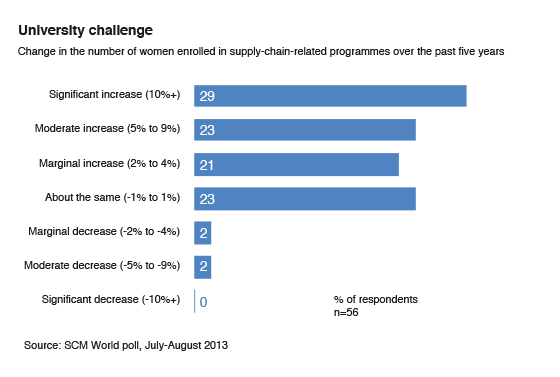
The problem is not the front of the pipeline. Responses from more than 50 of SCM World’s university partners to the poll mentioned above showed that three-quarters of supply chain programmes saw an increase in female enrolment over the past five years. The largest single group of respondents, in fact, said the increase had been more than 10%.
Asked about the next five years, most expect continued gains. Supply chain is undoubtedly picking up momentum in general, and trends suggest it could end up even more gender balanced than other disciplines like finance or accounting.
Question 3: Where are the women going?
The median percentage of female enrolment in supply chain programmes was 37% in our survey. This figure is much like that of MBA programmes, suggesting that supply chain is not any more or less appealing than other subjects. And yet when we did a manual count of supply chain executives in the Fortune 500, we found only 22 women among 320 companies that had a true supply chain function.
The class starts out more than a third female and ends up 93% male by the time “E” gets appended to the VP title. We want more women in supply chain, but we seem unable to keep them.
Question 4: What can be done about it?
The answer here no doubt touches on family structure, cultural norms and even financial reporting protocol. While such hurdles may be too high to clear in one jump, supply chain has a few tricks up its sleeve that could make a difference.
Consider first the 24×7 nature of the job, which unlike marketing, HR and finance has no true “end” to the workday. This could be turned to advantage for ambitious people needing to balance family with work. Rare is the supply chain meeting that doesn’t include someone dialling in from home. Plus, a 10.30am doctor’s appointment in one time zone will no doubt sync up with someone else’s ready availability in another.
Supply chain is also inherently a team sport. R&D, sales and even marketing are functions that lend themselves to singular superstars. No one gets anything done in supply chain without relying on others. The issue of stepping away to have a baby, for instance, could be less vexing to employers if team cohesion and interdependence is fostered from the start.
Finally, supply chain tends to be less of a winner-takes-all game than some other functions where advancement is based on winning the tournament, as it often is in sales or engineering. Balancing supply and demand involves making trade-offs and the best know how to take a little bad with the greater good.
To seize this edge, bosses must consciously seek out those who demonstrate such balanced judgment and ability to multi-task. Look for someone who put the team first, listened to counsel, admitted mistakes and ultimately won the war, not just the battle. This is your best bet for success at the next level.
Chances are good that you’re looking at a woman.
Beyond Supply Chain
Subscribe on LinkedIn to receive the biweekly Beyond Supply Chain newsletter.