Supply Chain Cost Excellence in 2026

Introduction

Macroeconomic uncertainty threatening enterprise performance has led 76% of CEOs and senior business executives to pursue cost efficiency. It’s little surprise then that 71% of chief supply chain officers (CSCOs) cite short-term cost control as their top priority.

Pressure to deliver on supply chain cost performance expectations is nothing new for CSCOs: Only 54% described their supply chain organization’s cost targets over the past three fiscal years as achievable.

But the same economic headwinds that precipitated the CEO’s current mandate – namely tariffs and geopolitical instability – are significantly challenging CSCOs’ efforts, leaving only one in five (21%) feeling confident in their ability to deliver in the short term.

And the road ahead doesn’t look any clearer: Only 40% of CSCOs feel confident in their ability to secure the funding needed for long-term cost optimization initiatives. CFOs, by and large, agree with the sentiment: Just 39% say their CSCO has been effective in using capital investments to reduce supply chain costs.

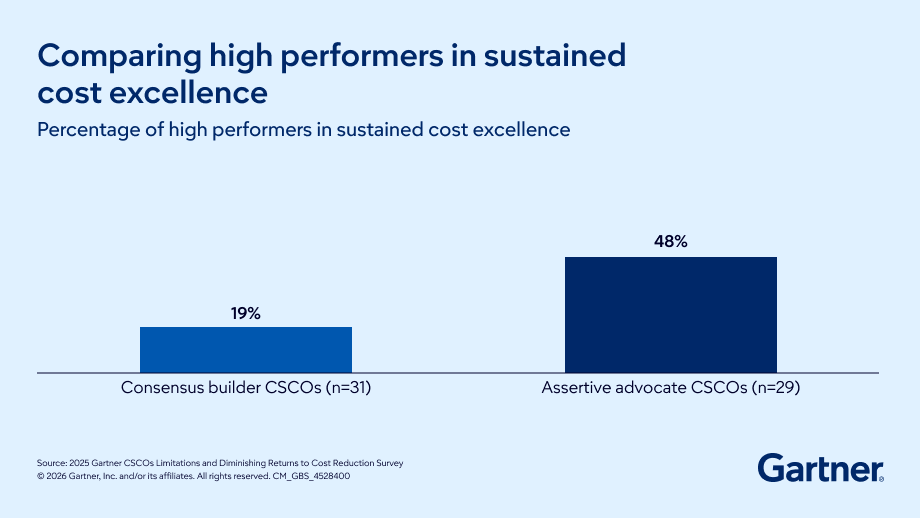
Still, there are some CSCOs successfully weathering the storm, outperforming their cost expectations and demonstrating sustained cost excellence. These supply chain leaders practice proactive cost management or “assertive advocacy”, and as a result, are more than twice as likely to be high performers on sustained cost excellence when compared to those who rely on consensus-building (see Figure 1).

Here we explore three keys to proactive supply chain cost management:
Strategy 1

Master the P&L

If your CEO and CFO view the supply chain organization as merely an order-taking, operational function, you’ll keep getting fed unrealistic cost targets.

Change the narrative. Track and report margin and growth improvements to explain to the CEO and CFO that supply chain’s value goes beyond cost avoidance.

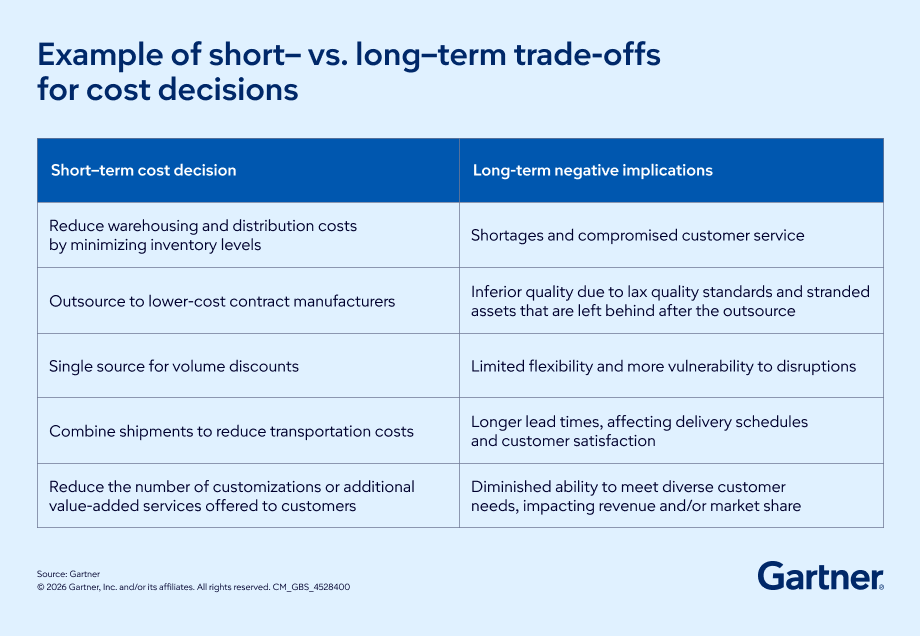
Also, instead of just accepting their aspirational, aggressive targets in the hopes of fostering goodwill, build real credibility with a formal, structured approach to cost target negotiation. Educate the CEO and CFO on supply chain tradeoffs and long-term business risks to negotiate realistic targets (see Table 1).

Strategy 2

Scale supply chain's impact

We get it: It’s hard to influence cost decisions if they have indirect impact on supply chain cost performance, and you’re wary that using your hard power would result in you being perceived as a “difficult” peer and leader. But it’s not strategic nor sustainable to use one-off favors in the hopes of notching wins on cost optimization where you can.

The better approach is to embed supply chain insights in the cross-functional decision-making processes that have a material impact on the supply chain cost structure. Frame decision tradeoffs in terms of enterprisewide, rather than solely supply chain, outcomes.

Strategy 3

Make cost efficiency the default

Avoid reacting to cost mandates with one-off cost cuts of low-hanging fruit. Quick wins may (temporarily) improve credibility with business stakeholders, but they don’t fix bad processes and poor oversight. If anything, they invite inefficiencies and cost overruns to come back.

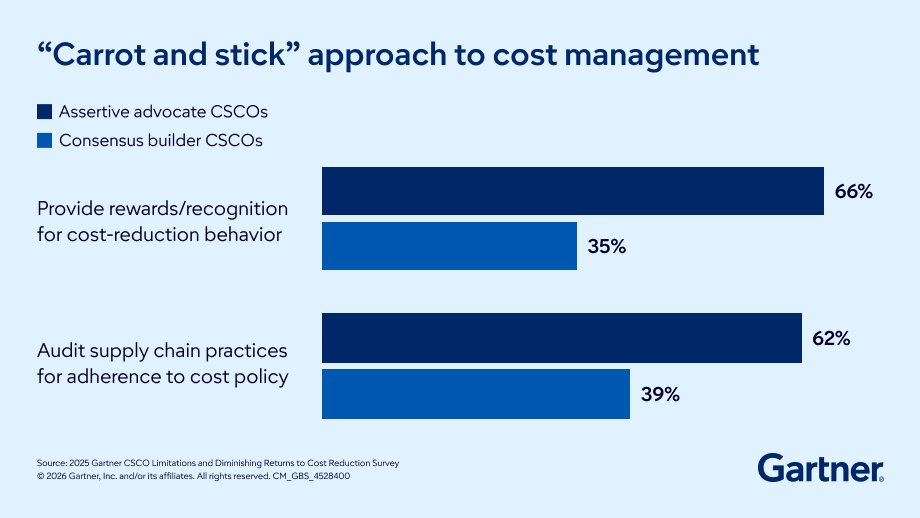
Instead, develop processes and governance around cost control. Arm staff with automated tools and dashboards that improve visibility into cost drivers and cost savings opportunities. Make cost excellence the standard across the supply chain through a combination of incentives and audits (see Figure 2).

Sources:

  • 2026 Gartner CEO & Senior Business Executive Survey
  • 2025 Gartner CSCO Community Outlook Survey
  • 2025 Gartner CSCO Limitations and Diminishing Returns to Cost Reduction Survey

This document is based on "Supply Chain Executive Report: Deliver Sustained Cost Excellence". Clients may access the full Supply Chain Executive Report on the client portal.

Explore more

Lead Your Organization Toward Cost Excellence

Partner with Gartner to strengthen cost performance, influence enterprise decisions, and build a resilient, efficiency‑driven supply chain.