Drive lasting, enterprisewide impact by aligning with strategic corporate goals.
- Gartner client? Log in for personalized search results.
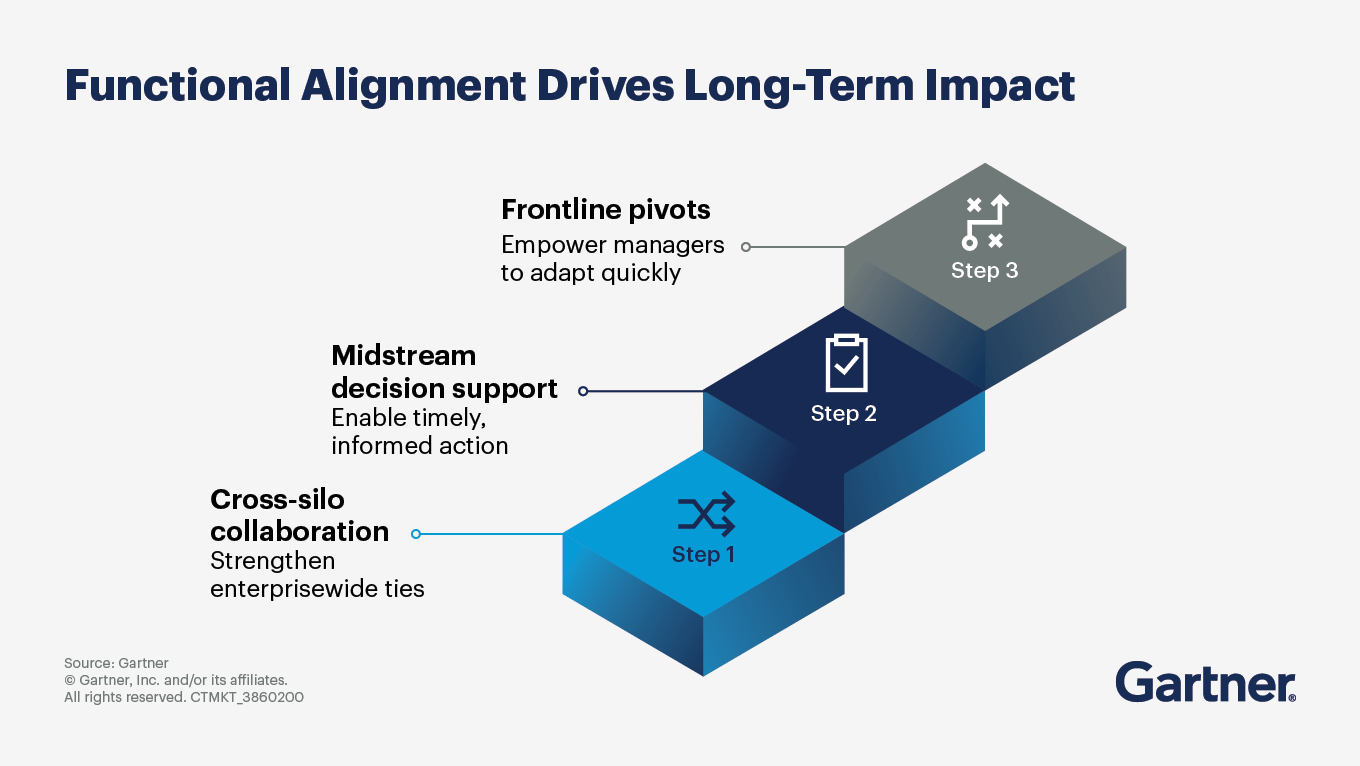
For new executives, functional alignment supports long-term operational stability
Nearly 40% of VP-level-and-below managers say they don’t fully understand how their work affects others — and fewer than half believe their efforts align with corporate strategy. To ensure their function can adapt to the corporate strategy and evolving priorities without sacrificing operational stability, new executives must quickly adopt a sustainable approach to functional alignment. This approach expands managers’ understanding, supports decision making, enables execution amid disruption and elevates the right talent.
Learn more about Gartner Executive FastStart™, which gives you full and immediate access to everything you need to make a real impact — right from the start.
Extend strategic alignment beyond the first 90 days
Lay the foundation for execution excellence and long-term operational stability with these steps.
Step No. 1: Strengthen cross-silo connections
Enterprisewide plans demand unified action, making strong, cross-functional ties between middle and frontline managers essential. As you move beyond your first 90 days, prioritize building this kind of collaboration.
Encourage managers to shift from task-based planning to true business partnering early in the strategic planning process. As you shape your stakeholder engagement strategy, guide your leadership team to strengthen project partnerships, assess their networks and work across silos.
Another key tactic is to encourage horizontal information sharing. While vertical cascades help clarify strategy and drive initial alignment, they often provide only a limited view. To deepen understanding and uncover interdependencies across departments, integrate cross-silo messaging into your communications.
Here are a few ways to do that:
Highlight interdependencies in team updates — show how one team’s work affects another (e.g., how marketing timelines impact product launches).
Share cross-functional success stories in newsletters or town halls.
Ask coordination questions in project kickoffs, like “Who else could be affected?” or “What overlaps should we flag?”
Use strategy updates to spotlight shared goals, not just department-specific ones.
This broader perspective helps those below you connect their work to the enterprise strategy and make more informed decisions.
Step No. 2: Build scalable midstream decision support
Nearly two-thirds of surprise events are unfamiliar and demand a response within a month. Gartner analysis shows that giving managers the tools to interpret and act on these developments midexecution is the single biggest driver of long-term strategic alignment.
From your first 90 days onward, think about how to position your managers to operate effectively midflight.
Go deep. Partner with other C-suite leaders to identify projects most vulnerable to misalignment. When a surprise event could significantly impact outcomes, provide hands-on, targeted support.
Go broad. When misalignment risk is widespread, teams need simple ways to know when they have enough information to act. One effective method is helping them separate what they know from what they assume. This “assumptions-to-knowledge” check helps teams focus on what’s essential, ignore distractions and decide when — and how — to move forward.
Step No. 3: Enable frontline pivots
Middle managers are closest to the day-to-day events, projects and issues that cause misalignment. However, realignment efforts are typically managed by senior leaders through formal performance cycles, which often occur infrequently. This lag means that middle managers are left to navigate misalignment on their own, forcing them to make trade-offs and shift project focus prematurely — decisions that can ultimately perpetuate or even worsen underlying problems.
As a New To Role executive, you have the opportunity to break this cycle. Give leaders the authority to make timely changes through self-directed pivots.
A successful pivot has four essential components:
Enterprise visibility. Be sure leaders know about cross-silo interdependencies, data and metrics in a fluid environment.
Collaboration structure. Leaders need a 360-degree view of a business problem to look for mutually beneficial solutions.
Mental model. Be mindful that staff need to update their mental models to account for changes while fighting the change fatigue that can follow multiple readjustments.
Reprioritization tools. Organizations need mechanisms to ensure that changes reflect strategic intent and that teams are kept honest about new resource requests.
First-90-days plan FAQs
Where does functional alignment fit within a first-90-days plan?
Transparent communication, relationship building and setting clear performance expectations are foundational to any executive transition. In the first 90 days, new executives can weave alignment best practices into these efforts to ensure their teams are set up to execute strategy effectively.
What is the best way to integrate functional alignment into a first-90-days plan?
While functional alignment is an ongoing effort that supports long-term operational stability, new executives can lay the groundwork early by embedding it into their relationship-building strategy. This might include:
Proactively engaging key stakeholders
Identifying opportunities to support at-risk projects
Gaining insight into current decision-making dynamics
Attend a Conference
Accelerate growth with Gartner conferences
Gain exclusive insights on the latest trends, receive one-on-one guidance from a Gartner analyst, network with a community of your peers and leave ready to tackle your mission-critical priorities.

Drive stronger performance on your mission-critical priorities.