Cyber threats are evolving fast. AI, identity risks and cryptographic change demand urgent action.
- Gartner client? Log in for personalized search results.
Why these cybersecurity projects matter in 2026
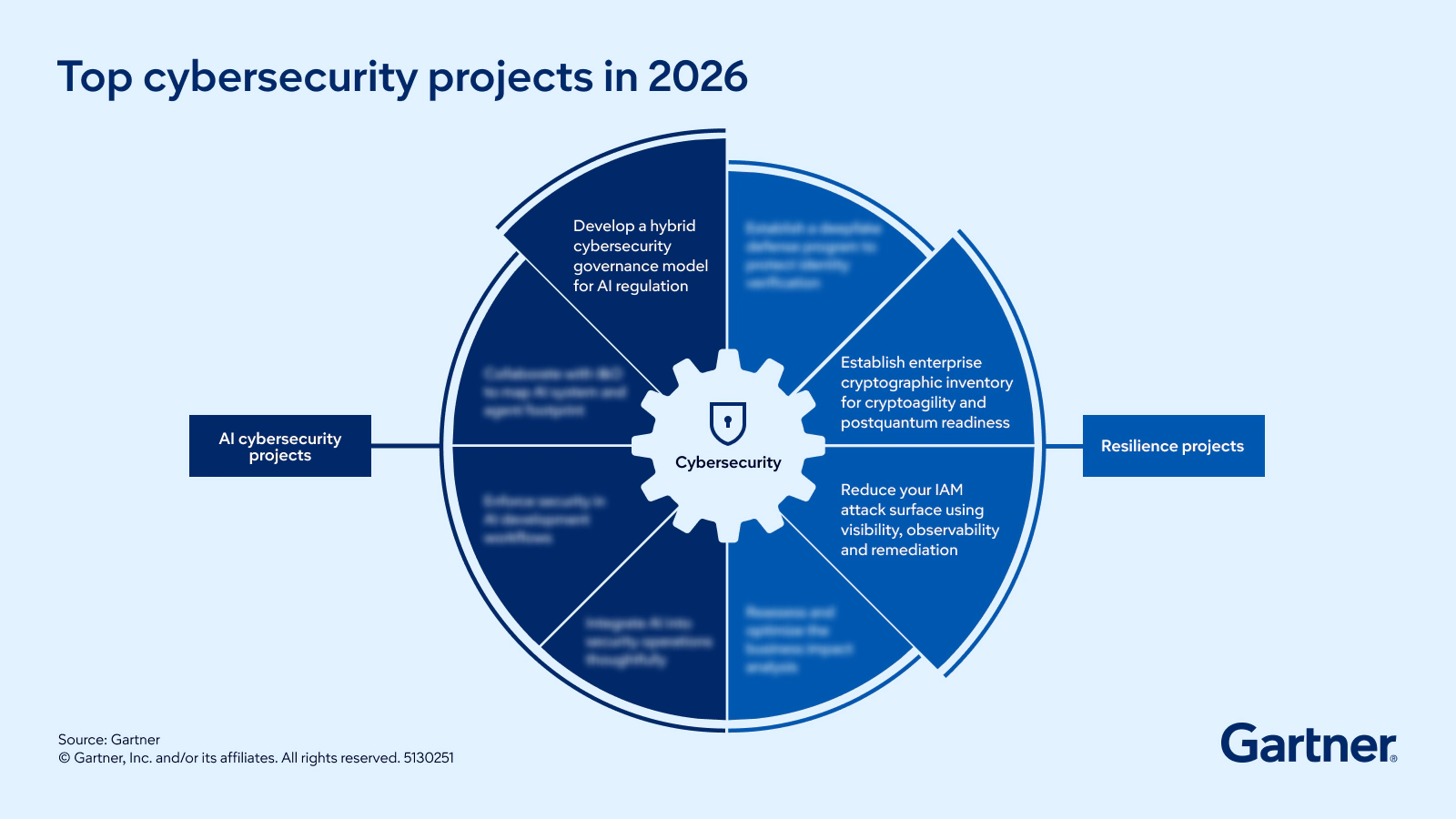
There are eight pivotal cybersecurity projects for 2026, each designed to address the urgent challenges posed by rapid AI adoption, emerging identity and cryptographic vulnerabilities and rising demands for organizational resilience. These projects are unified by a focus on outcome-driven metrics, cross-functional collaboration and automation, ensuring organizations can strengthen their security posture, comply with evolving regulations and build scalable operations. By prioritizing these initiatives, leaders can prepare for accelerated technological change and resource constraints, positioning their organizations for sustained security and resilience.
You might also like this webinar: Top Trends in Cybersecurity for 2026
The three cybersecurity projects to prioritize
CISOs should focus on three projects that address the most urgent risks for 2026. Each tackles a distinct challenge — AI governance, IAM protection and cryptoagility — and together they form a foundation for resilient, compliant and future-ready security.
Develop a hybrid cybersecurity governance model for AI regulation
AI adoption is surging, and so are regulatory demands. As Gartner Senior Director Analyst Wayne Hankins notes, CISOs must “integrate AI life cycle management with cybersecurity frameworks and automate compliance for unified governance.” Without a clear governance model, organizations risk falling behind on both security and legal obligations. AI introduces new vulnerabilities, accountability gaps and oversight challenges that legacy frameworks cannot address.
Gartner analysts recommend building governance models that map to emerging AI regulations and internal risk tolerances. This means defining roles and responsibilities for AI oversight, setting clear policies for data use and model management, and integrating AI risk into broader enterprise risk frameworks. By proactively addressing AI-specific risks, organizations can maintain trust, reduce exposure and support sustainable growth in a fast-changing environment.
Reduce your IAM attack surface using visibility, observability and remediation
Digital identities are multiplying, and attackers are targeting them with increasing sophistication. It’s critical that organizations achieve unified visibility across all identity and access management (IAM) systems and proactively remediate vulnerabilities to minimize attack surfaces. This approach isn’t just limited to technology — it requires cross-functional collaboration, automation and continuous monitoring.
To effectively minimize IAM attack surfaces, focus on three core strategies: unified identity visibility and proactive remediation, cross-functional collaboration and increased automation.
Integrate identity data from cloud and on-premises environments for a single view of access.
Continuously detect and remediate risky configurations, such as unused accounts or weak authentication.
Automate IAM processes to reduce manual errors, speed up response times and free up staff for higher-value work.
Involve stakeholders from IT, security and business units to ensure IAM policies are practical and aligned with organizational goals.
Prioritizing IAM attack surface reduction helps organizations address one of the most common entry points for cyber threats, reduce breach risk and support secure, efficient operations.
Establish enterprise cryptographic inventory for cryptoagility and postquantum readiness
Cryptographic threats are evolving, with postquantum risks on the horizon. Organizations must build enterprisewide cryptographic inventories as a foundation for cryptoagility. This project enables enterprisewide cryptographic agility by identifying and inventorying cryptographic assets, evaluating cryptographic risk and establishing a prioritized transformation roadmap.
Cataloging cryptographic systems and algorithms allows organizations to:
Assess exposure to outdated or vulnerable cryptography
Plan for upgrades as standards evolve, including postquantum cryptography
Respond rapidly to new threats or regulatory changes
Demonstrate compliance to regulators and stakeholders
Cryptoagility ensures that organizations can adapt to new cryptographic requirements without disruption, maintaining both current and future security.
What’s next in cybersecurity trends
Rapid technological change and emerging security risks require cybersecurity leaders to make deliberate choices about where to focus resources. By prioritizing AI governance, IAM attack surface reduction and cryptographic readiness, organizations can strengthen critical security processes while enabling adaptive, future-ready capabilities. This is a critical step in cybersecurity’s mandate to build and evolve a resilient and agile cybersecurity program.
Top cybersecurity projects FAQs
Why is hybrid cybersecurity governance for AI compliance a top priority in 2026?
Hybrid cybersecurity governance is essential as AI adoption and regulatory demands accelerate. Establishing governance frameworks enables organizations to manage AI-specific risks, ensure compliance and maintain trust. This proactive approach positions organizations to address new vulnerabilities and accountability challenges introduced by AI, supporting sustainable growth and resilience.
How does minimizing IAM attack surfaces improve cybersecurity in 2026?
Minimizing IAM attack surfaces through unified visibility and proactive remediation reduces the risk of breaches. By consolidating identity data, automating detection of risky configurations and involving cross-functional teams, organizations can address one of the most common entry points for cyber threats and support secure operations.
What is cryptoagility and why does it matter for cybersecurity?
Gartner recommends building cryptographic inventories to achieve cryptoagility and support postquantum cryptography (PQC) readiness, enabling organizations to adapt to new cryptographic standards and identify cryptographic assets requiring PQC migration. This readiness is vital for addressing postquantum threats, supporting regulatory compliance, maintaining organizational resilience and protecting long-lived sensitive data from future quantum-enabled attacks.
Attend a Conference
Accelerate growth with Gartner conferences
Gain exclusive insights on the latest trends, receive one-on-one guidance from a Gartner analyst, network with a community of your peers and leave ready to tackle your mission-critical priorities.

Drive stronger performance on your mission-critical priorities.