Fresh insights on emerging trends
- Gartner client? Log in for personalized search results.
Gartner First Takes

Preview
First Take: Anthropic Fable 5 and Mythos 5 Suspensions Are a Sovereignty Warning Bell for CxOs
By Mary Mesaglio, Jeremy D’Hoinne and 13 more | 15 June 2026
CIOs, AI leaders, CISOs, CDAOs and CHROs should develop sovereign-resilient AI strategies and fallback plans in the wake of Anthropic’s Fable 5 and Mythos 5 suspensions as a response to an unprecedented U.S. directive. The directive raises far-reaching questions about technology sovereignty and geopolitically driven service availability.
Note: This is our first take on the announcement. Gartner will make updates as the situation evolves and more information becomes available. We are currently awaiting fact-review feedback from Anthropic.
Analysis
CxOs Should Be Intentional About Sovereignty Dependencies and Build Model-Agnostic Architectures
The reported U.S. government’s directive to Anthropic to block non-U.S.-national users’ access to Fable 5 and Mythos 5 marks the first time a government has intervened to block access to a live foundation model. The move has far-reaching consequences for technology sovereignty and geopolitically driven service availability.
On 12 June 2026, Anthropic disabled access to its recently launched Fable 5 and Mythos 5 models in response to an export control directive it said it received from the U.S. government.1 While the government hasn’t released a statement confirming the directive, administration officials and members of Congress have commented on the situation.2 All other Anthropic Claude models remain available.
Fable 5 was only live for three days before access was removed, limiting the immediate impact on organizations.
Though the tactical impact is limited, this move emphasizes the need for enterprises to be intentional about sovereignty dependencies and, where possible, to design model-agnostic architectures.
As frontier models grow more powerful, they are likely to attract greater regulatory attention and government involvement. In response, organizations and nation-states must evolve beyond infrastructure investments and develop sovereign AI strategies that balance innovation, risk, security and regulatory obligations.
Gartner has gathered the immediate and longer-term actions for these function heads:
- CIOs and AI leaders
- CISOs
- CDAOs
- CHROs
This is part one of a two-part series, with part two focusing on heads of software engineering, EA, I&O, enterprise risk management and vendor management. For our guidance on IT leadership roles, see First Take: Anthropic Fable 5 and Mythos 5 Suspensions Make AI Resilience a Top Priority for IT Leadership.
CIOs and AI Leaders: Use This Moment to Focus on Resilient AI Strategy
Contributor(s): Kabeh Vaziri, Chirag Dekate, Akis Sklavounakis
The abrupt deactivation of a production model based on a U.S. government directive reinforces the need for organizations to decouple their most crucial AI workloads from specific models and providers. Because this is the first time export control law has been applied to a commercial AI model at scale, the outcome will shape the risk profile of every frontier AI investment.
CIOs must stabilize AI-dependent workflows now, and use this event to accelerate previously delayed governance conversations to focus on model concentration risk, talent-technology resilience and sovereign AI disruption.
Immediate Actions for CIOs and AI Leaders With Fable 5 or Mythos 5 Exposure
Control fallback routing by workload risk, not vendor defaults. Do not rely on Anthropic’s automatic fallback to Opus-class or Sonnet-class models. Decide which affected workloads can use an approved alternative, including Opus-class, Sonnet-class, OpenAI GPT-5-class or Google Gemini models. Pause workloads that cannot tolerate degraded quality, changed safety behavior or different tool-use characteristics.
Build a ranked exposure map for prioritizing execution. Identify every impacted production process, agentic pipeline or employee-facing tool. Rank them by business criticality, autonomy, reversibility and model dependence. Use the ranking to sequence remediation, starting with mission-critical and high-autonomy workflows.
Assess workforce impact immediately. Identify which teams built working practices around Fable- or Mythos-class capabilities, particularly long-context reasoning, advanced code analysis and agentic task execution. Engage managers to identify fallback skills and tools to preempt productivity loss.
Communicate proactively to the business and specify what the fallback plan means. Issue a short, factual update to impacted business leaders. Frame it as a government directive, not a vendor failure. Critically, distinguish between processes that can route to an alternative model and those where frontier-level capability was the core value. For the latter, the process may “fail back” to humans, not to a lesser model. Set expectations accordingly.
Long-Term Actions: For All CIOs and AI Leaders, Regardless of Workload Exposure
Audit all AI vendor contracts for force majeure and model availability clauses. Most enterprise agreements were not written to contemplate unilateral government suspension...
Already a Gartner client?
Gain full access to this First Take and more exclusive insights by becoming a Gartner client.
Related insights
First Takes are just a sliver of what Gartner clients get

Guidance on your mission-critical priorities (MCPs)
Focus on the core imperatives that drive results for your business, board and stakeholders with step-by-step plans, bold and actionable perspectives, comprehensive insights and answers to your biggest questions.

Tools to make decisions with confidence
Gartner Hype Cycle™, Gartner Magic Quadrant™ and Gartner Score are just a few tools you can use to assess current performance, implement best practices and accelerate improvements.

Access to C-Level Communities, conferences and peer networks
Connect with Gartner analysts, best-in-class solution providers and verified peers to refine your organization’s strategies, dial up growth, reduce risk and gain a competitive edge.
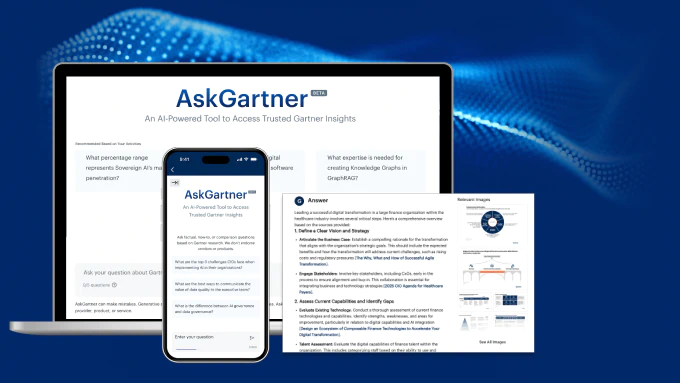
AskGartner
AskGartner is the only AI-powered tool that gives you access to the proprietary Gartner insights trusted by C-Level executives and their teams.
© 2026 Gartner, Inc. and/or its affiliates. All rights reserved. Gartner is a registered trademark of Gartner, Inc. and its affiliates. This publication may not be reproduced or distributed in any form without Gartner's prior written permission. It consists of the opinions of Gartner's business and technology insights organization, which should not be construed as statements of fact. While the information contained in this publication has been obtained from sources believed to be reliable, Gartner disclaims all warranties as to the accuracy, completeness or adequacy of such information. Although Gartner business and technology insights may address legal and financial issues, Gartner does not provide legal or investment advice and its insights should not be construed or used as such. Your access and use of this publication are governed by Gartner’s Usage Policy. Gartner prides itself on its reputation for independence and objectivity. Its insights are produced independently by its business and technology insights organization without input or influence from any third party. For further information, see Guiding Principles on Independence and Objectivity. Gartner publications and other content may not be used as input into or for the training or development of generative artificial intelligence, machine learning, algorithms, software or related technologies.