Newsroom

Conference Updates

Sydney, Australia, May 16, 2023

Gartner IT Infrastructure, Operations & Cloud Strategies Conference 2023 Sydney: Day 2 Highlights

We are bringing you news and highlights from the Gartner IT Infrastructure, Operations & Cloud Strategies Conference 2023, taking place this week in Sydney, Australia. Below is a collection of the key announcements and insights coming out of the conference. You can read the highlights from Day 1 here.

On Day 2 from the conference, we are highlighting sessions on how to build the right cloud operating model to deliver better business outcomes; technical insights into whether public cloud is cheaper than a data center; and how to build an edge computing strategy.
Key Announcements

Build the Right Cloud Operating Model to Deliver Better Business Outcomes

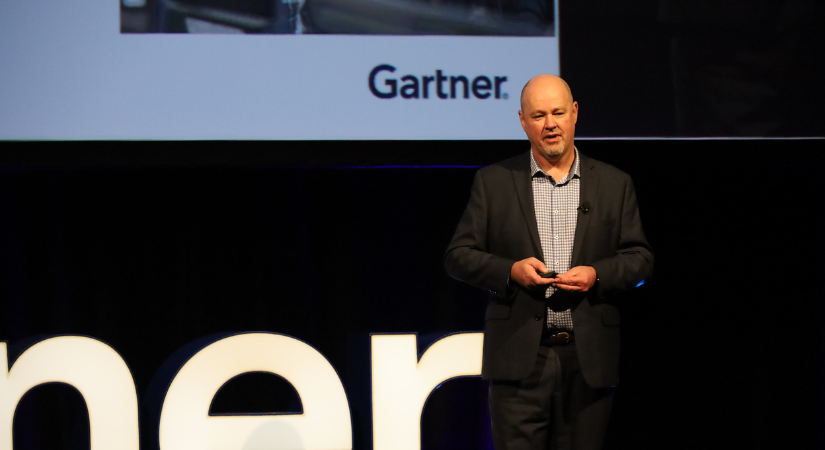
Presented by Michael Warrilow, VP Analyst, Gartner

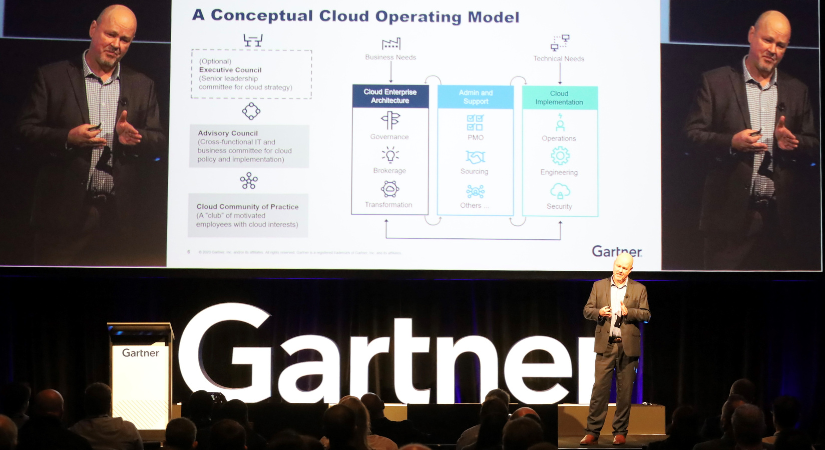
To accelerate digital innovation, technology teams must go beyond cloud centers of competence. In this session, Michael Warrilow, VP Analyst at Gartner, explains the importance of sponsoring a cloud center of excellence that empowers and enables the business; drives a transformative approach to infrastructure and operations; and places an emphasis on agility throughout the rest of the I&T operating model. 

Key Takeaways

  • “If you don’t plan for cloud adoption in your organization, you don’t establish a vision for the future and actively work towards it. It’s either already a source of conflict and inefficiency now, or it will become so in the future.”

  • “There’s no one true cloud operating model. The best model will depend on your overall I&T model, business objectives, corporate culture, along with the peculiarities and quirks of your organization, including leadership strengths and weaknesses.”

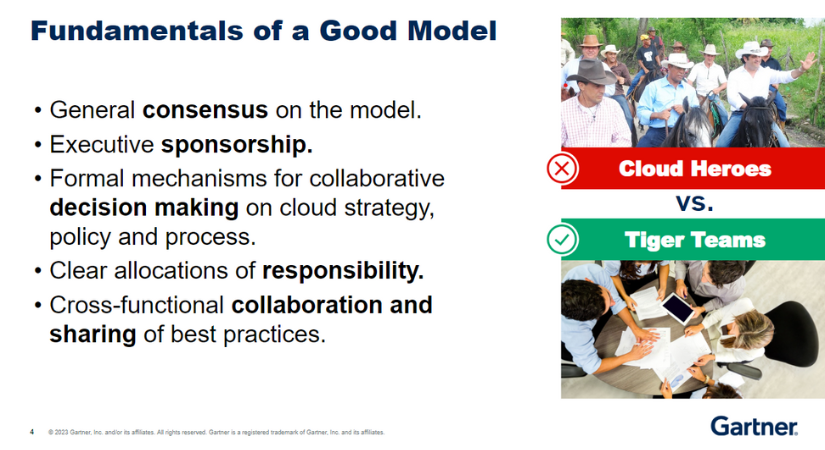
  • “Even though there’s no single best model, good models share a number of common traits - general consensus, executive sponsorship, clear allocations of responsibility, and mechanisms for collaborative decision making and sharing of best practices.”

  • “At the core of good cloud operating models is what for many organizations will be a mindset shift in the delivery of IT, business outcome and execution.”

  • “Almost all organizations will find benefit in a cloud-optimized management style, which means you don’t change your applications, but you do optimize your infrastructure design for the cloud.”

  • “Jamming cloud computing into overworked technology silos is least likely to succeed. Build an evolutionary cloud operating model with C-level sponsorship and clear lines of responsibility.”

  • “Establish a cloud center of excellence to provide cloud governance, brokerage and transformation capabilities.”

Technical Insights: Is Public Cloud Cheaper Than My Data Center?

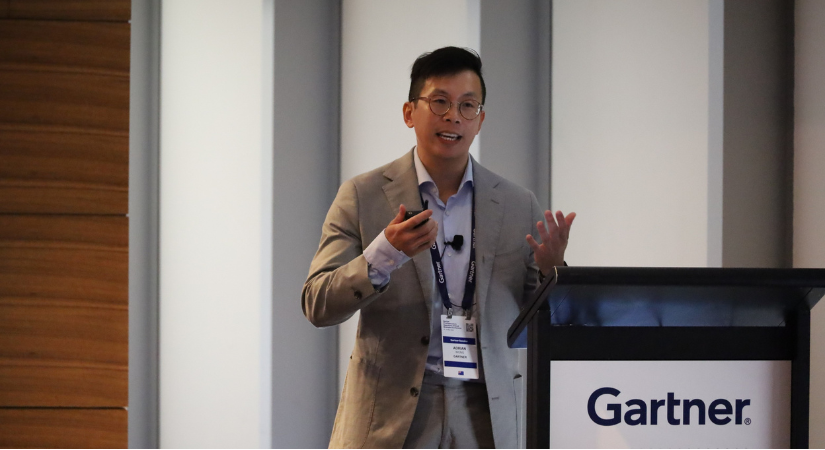
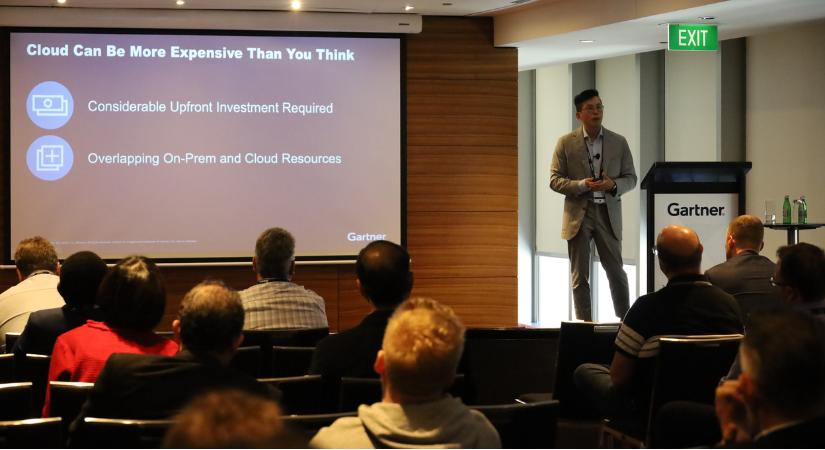
Presented by Adrian Wong, Senior Principal Analyst, Gartner

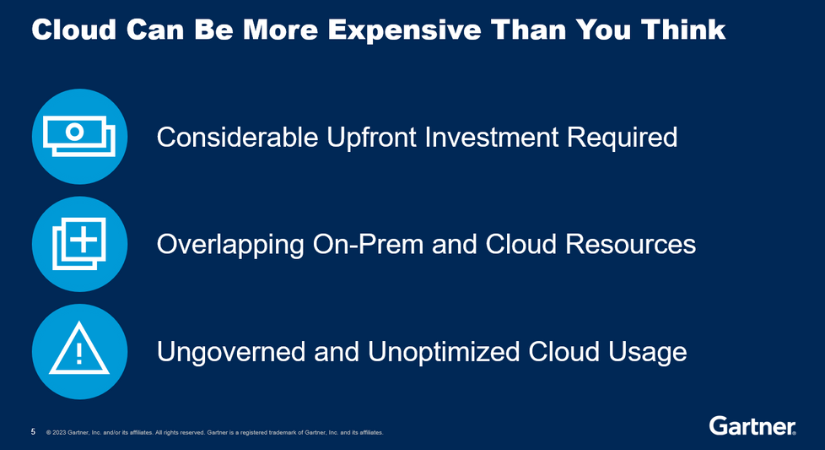
Many organizations have cloud-first strategies that include cost considerations, but have not fully answered whether it will actually be any cheaper. Many exceed cloud cost expectations and struggle to implement cost management processes to monitor and control cloud spending. In this session, Adrian Wong, Senior Principal Analyst at Gartner, explored how to evaluate public cloud costs and implement best practices to avoid overspending.

Key Takeaways

  • “Migrating something to the cloud isn’t going to shave 50% off your costs simply by existing in a provider’s data center. You must invest time, effort and skills to ensure your cloud usage is efficient.”
  • “Regardless of your organization’s drivers for cloud adoption, you need to evaluate and calculate cost upfront. Even if it’s just to make sure it wouldn’t be insanely more expensive than you anticipated, you still have to do this work.”

  • “Don’t use cost as your biggest factor in cloud adoption, especially the reason to migrate. Make it a “nice-to-have” benefit alongside core drivers of agility, flexibility, innovation, etc.”

  • “Don’t assume something will be cheaper or more expensive than your current solution. Do the hard work of calculating the total cost of ownership and return on investment.”

  • “Evaluate over the long term, preferably five years. Qualitative benefits and quantified  return on investment are often not realized in the short term.”

  • “Start to identify where you can realize some further savings. Build the foundation for your cost governance if you haven’t done so already.”

  • “Prioritize investment on the most impactful activities, such as those with the highest savings. 80% of the savings are often achieved with only 20% of the time investment.”

Building an Edge Computing Strategy

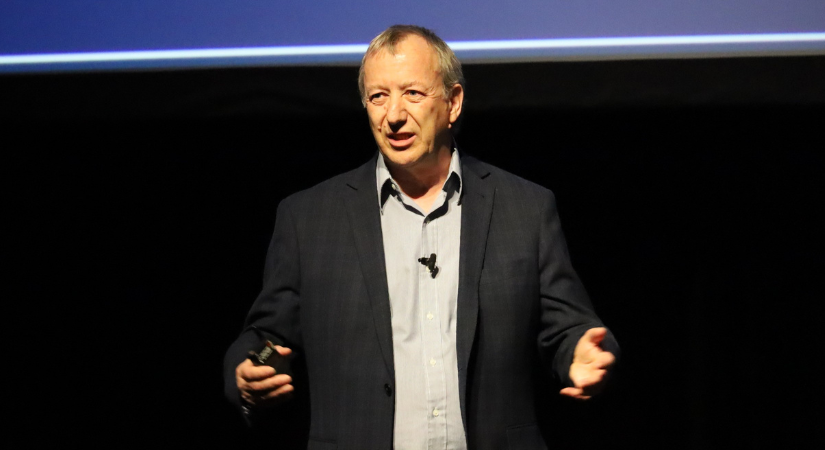
Presented by Bjarne Munch, Senior Principal Analyst, Gartner

Digital transformation requires expansion of computing to the edge, but edge computing requirements, use cases and technology choices are highly diverse. In this session, Bjarne Munch, Senior Principal Analyst at Gartner, discussed how enterprises can build an edge strategy that accelerates and powers successful deployments and future extensibility through discovery, consistent tools and processes and evolving best practices.

Key Takeaways

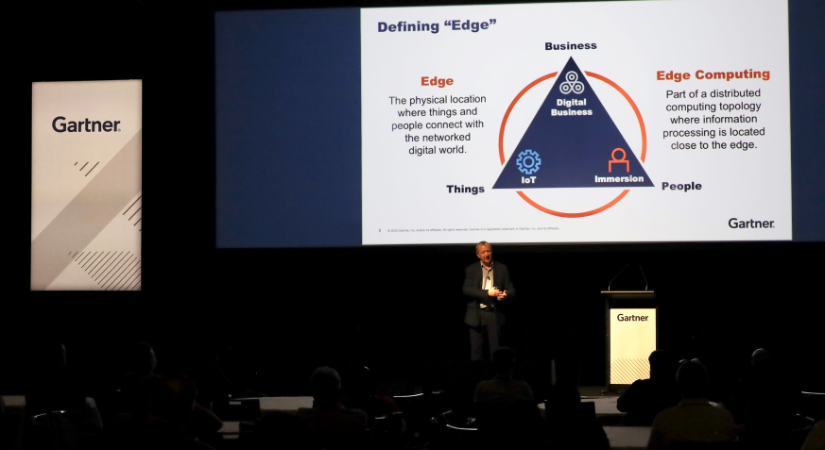
  • “The edge is the physical location where things and people connect with the networked digital world. Edge computing is part of a distributed computing topology where information processing is located close to the edge.”

  • “Through 2025, 50% of edge computing solutions deployed without an enterprise edge computing strategy in place will fail to meet goals in deployment time, functionality and/or cost.”

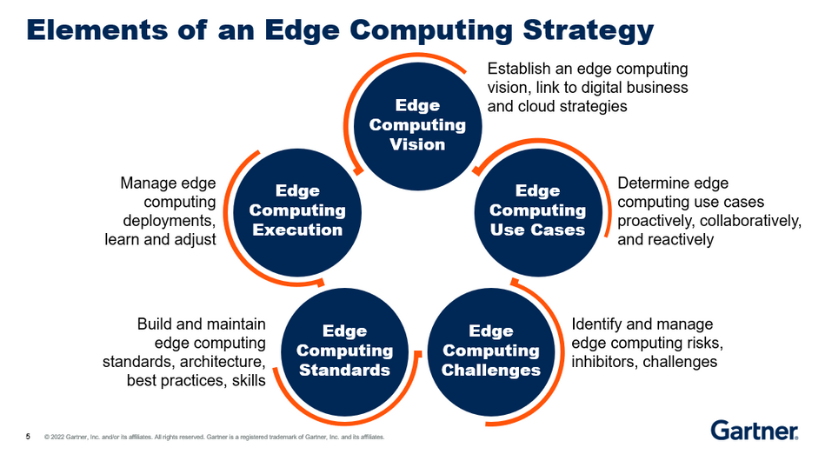
  • “There are five elements to an effective edge computing strategic plan: establishing the vision, determining use cases, identifying and managing risks, building and maintaining standards, and managing execution.” 

  • “For the foundation of an edge computing strategy, understand enterprise strategies that will require edge computing to be successful, and ensure the strategies are linked.”

  • “There are four imperatives driving computing to the edge: latency, data gravity, semi-autonomy, and privacy and security.”

  • “Identify how the drivers of edge computing relate to your industry and business – for example, healthcare is very focused on privacy and security, while defense is focused on semi-autonomy.”

  • “Proofs of concept (POCs) are important, especially with the huge number of first-of-a-kind deployments or highly competitive solutions. The edge computing strategy should include how to best test the boundary limits of a POC.”

That's a wrap for Gartner IT Infrastructure, Operations & Cloud Strategies Conference in Sydney! See you next year. 

About Gartner

Gartner, Inc. (NYSE: IT) delivers actionable, objective insight that drives smarter decisions and stronger performance on an organization’s mission-critical priorities. To learn more, visit gartner.com.

Media Contacts


Latest Releases