GOLD COAST, Australia, September 10, 2024
- Gartner client? Log in for personalized search results.
Gartner IT Symposium/Xpo 2024 APAC: Day 2 Highlights
It’s not too late to join the conference
Overview
We are bringing you news and highlights from Gartner IT Symposium/Xpo, taking place this week on the Gold Coast, Australia. Below is a collection of the key announcements and insights coming out of the conference. You can read the highlights from Day 1 here.
On Day 2 of the conference, we are covering sessions on how to future-proof your SaaS contracts to reduce costs and increase flexibility during a crisis; the future of ERP; what to do when your cloud providers aren't portable or substitutable; and how to ready yourself for legal impacts of your AI ambition.
Key Announcements
Future-Proof Your SaaS Contracts to Reduce Costs and Increase Flexibility When Crisis Hits
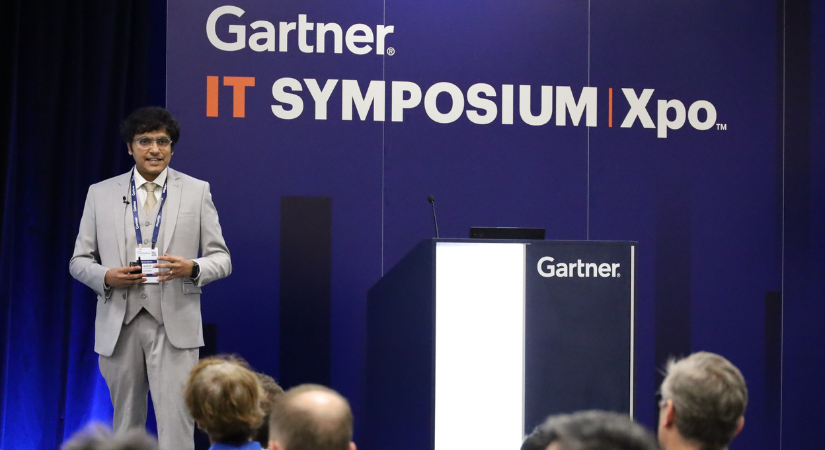
Presented by Jaideep Thyagarajan, Director Analyst, Gartner
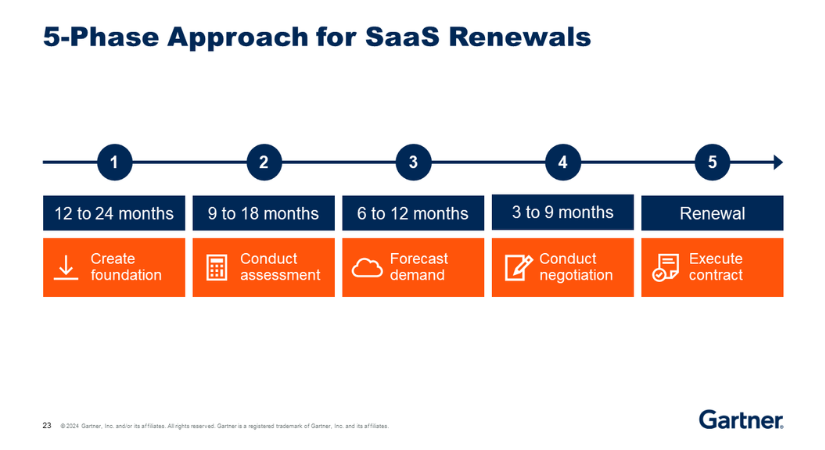
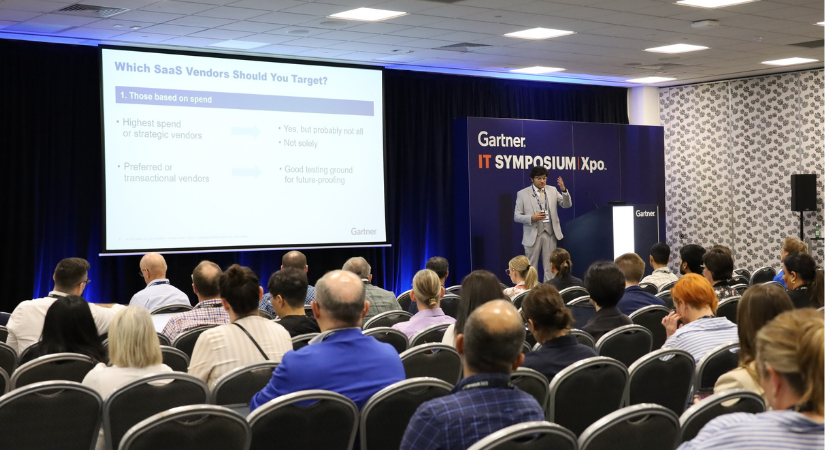
Crises are the new normal. However, SaaS contracts are typically not constructed to handle business downturns, or serious world events. In this session, Jaideep Thyagarajan, Director Analyst at Gartner, discussed how organizations can future-proof their contracts to ensure flexibility and agility when the next crisis hits.
Key Takeaways
- “Prioritize vendors using a tiered approach. In a crisis, reducing costs is often the focus, hence the majority of your large-spend SaaS vendors should be a high priority.”
- “Identify which terms to negotiate and align negotiations with renewals or significant new spend. Work out what triggers are likely, what concessions are needed and look at making flexibility programmatic.”
- “Investigate alternative and more flexible pricing models. Many pricing models are emerging that have greater flexibility than a typical SaaS contract.”
- “Giving yourself time creates leverage in negotiation. It opens up the possibility of competition, or perhaps an earlier renewal date since you’re increasing spending.”
- “Make future-proofing a part of your sourcing process, so you can rightsize your SaaS contracts when you really need them.”
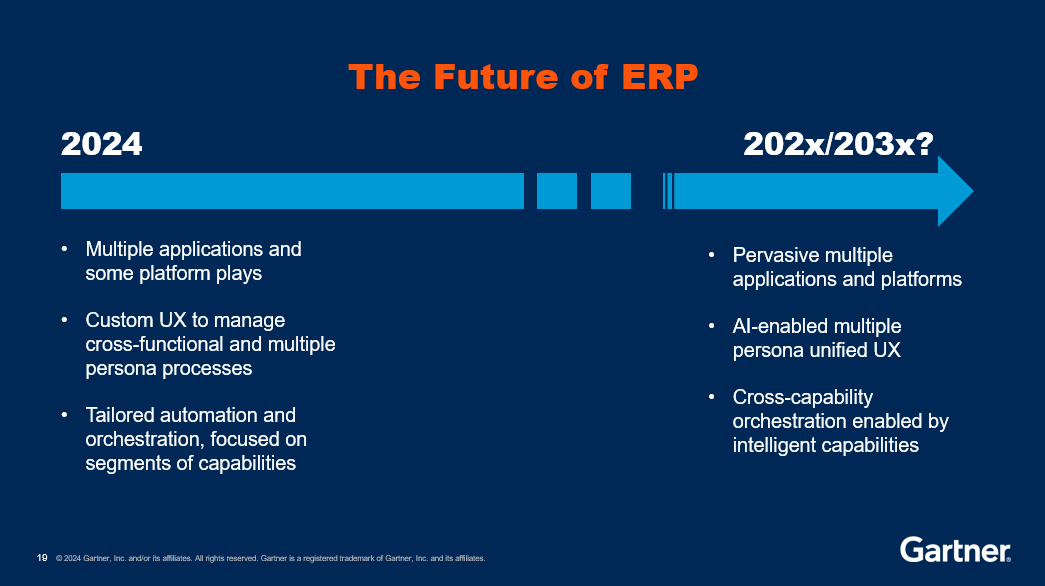
The Future of ERP — A CIO Journey Into the New Automated Reality
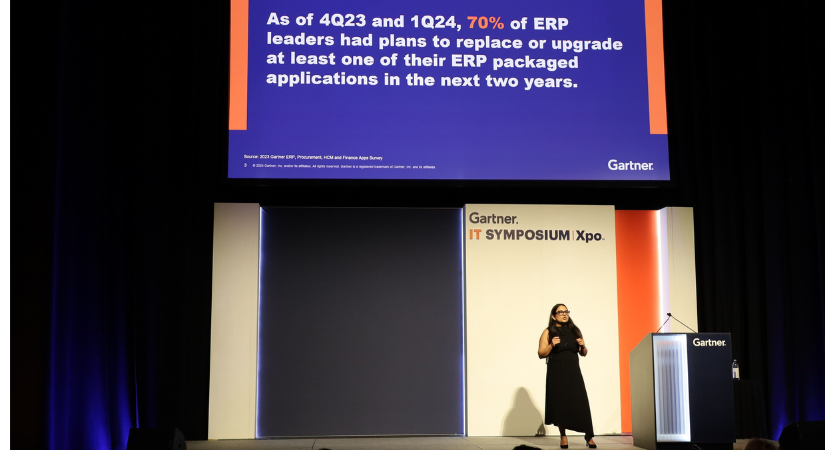
Presented by Neha Ralhan, Senior Principal Analyst, Gartner
ERP applications and strategies are quickly evolving to support a more automated and autonomous operation. CIOs must understand what is driving that change, from technology drivers to different implementation methodologies. In this session, Neha Ralhan, Senior Principal Analyst at Gartner, outlined how CIOs can help their organizations take advantage of those new possibilities and simultaneously avoid mistakes from the old days of monolithic architectures.

Key Takeaways
- “Preparing for the new future of ERP is not as easy as replacing old legacy solutions with modern technologies. Knowing and understanding how to get there is essential.”
- “ERP as a product isn’t the standard anymore – composable ERP is a strategy more than a thing. Think about trying to do something better with this big investment, especially if your strategy is being redesigned or revisited.”
- “Do not treat this as an IT exclusive journey — business and IT stakeholders must work together to envision the possibilities that will benefit the organization.”
- “Evolve and iterate — do not settle for a long-term vision that is never revisited. Technologies and business strategies change all the time.”
- “Aim for business value — the focus needs to be on getting business benefits, not simply adopting new technology.”
No Exit: What to Do When Your Cloud Providers Aren’t Portable or Substitutable
Presented by Adrian Wong, Senior Director Analyst, Gartner
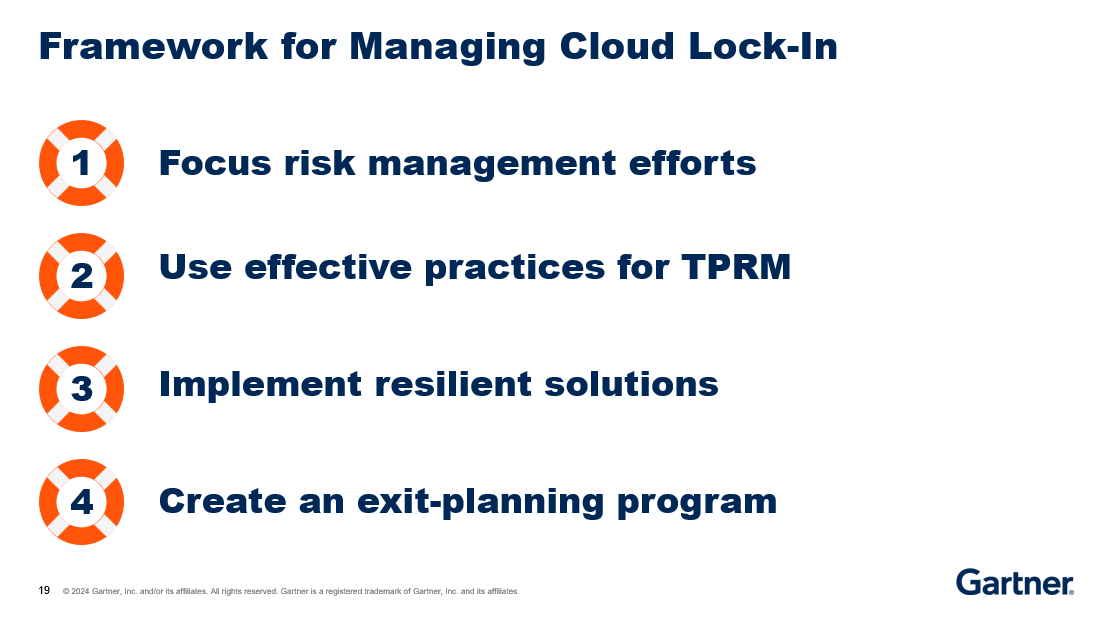
Many organizations adopt public cloud services to accelerate innovation. However, exploiting innovative capabilities complicates cloud exit, lock-in and concentration risks. In this session, Adrian Wong, Senior Principal Analyst at Gartner, provided pragmatic guidance for third-party risk management, especially in multicloud regulated environments.

Key Takeaways
- “Determine how risky your cloud providers are and balance the business desire for using them with your ability to manage their risk. This is often easier said than done, especially when the business can source solutions with minimal input from central IT.”
- “Maximize the resilience of the cloud solutions you’ve purchased. Address the highest-probability, high-impact risks first, then balance availability and business continuity needs with cost.”
- “Document a cloud exit strategy so stakeholders understand your organization’s requirements, along with the challenges.”
- “Effective cloud governance is the best way to address risks. Create a cloud center of excellence to work with your vendor management team and other stakeholders to ensure effective third-party risk management practices are applied to cloud providers.”
- “If you’ve got a regulatory obligation to do so, invest in a cloud exit planning program, recognizing that this is not a one-time cost, but a program that you will always need and must continuously invest in.”
Ready Yourself for Legal Impacts on Your AI Ambitions
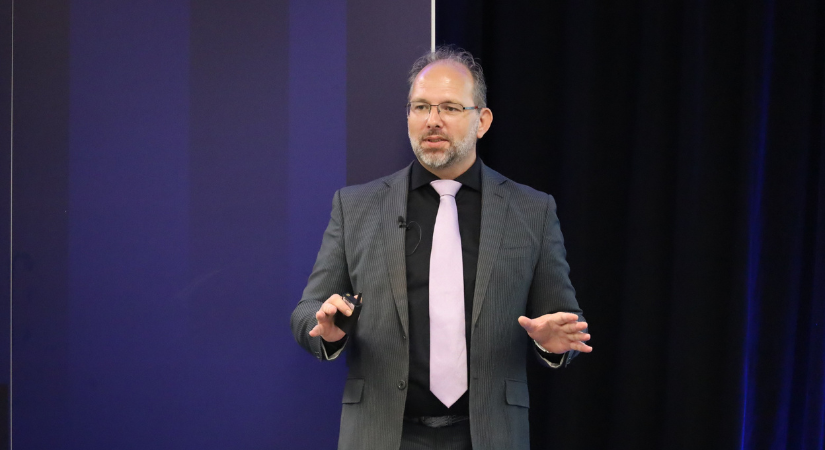
Presented by Bart Willemsen, VP Analyst, Gartner
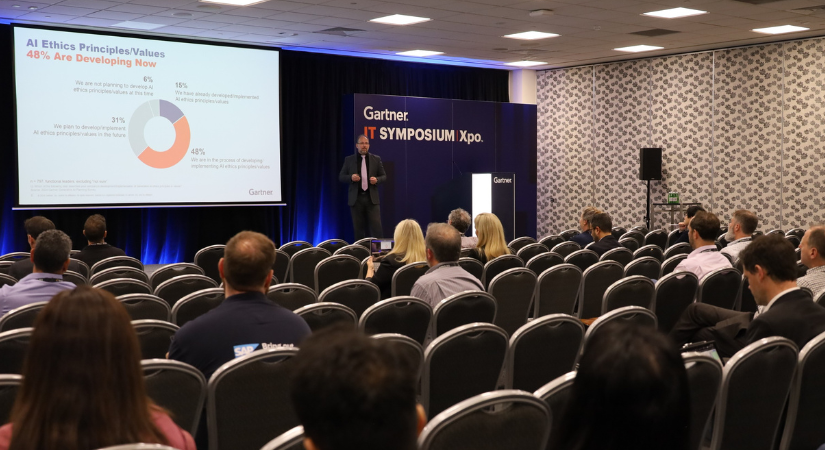
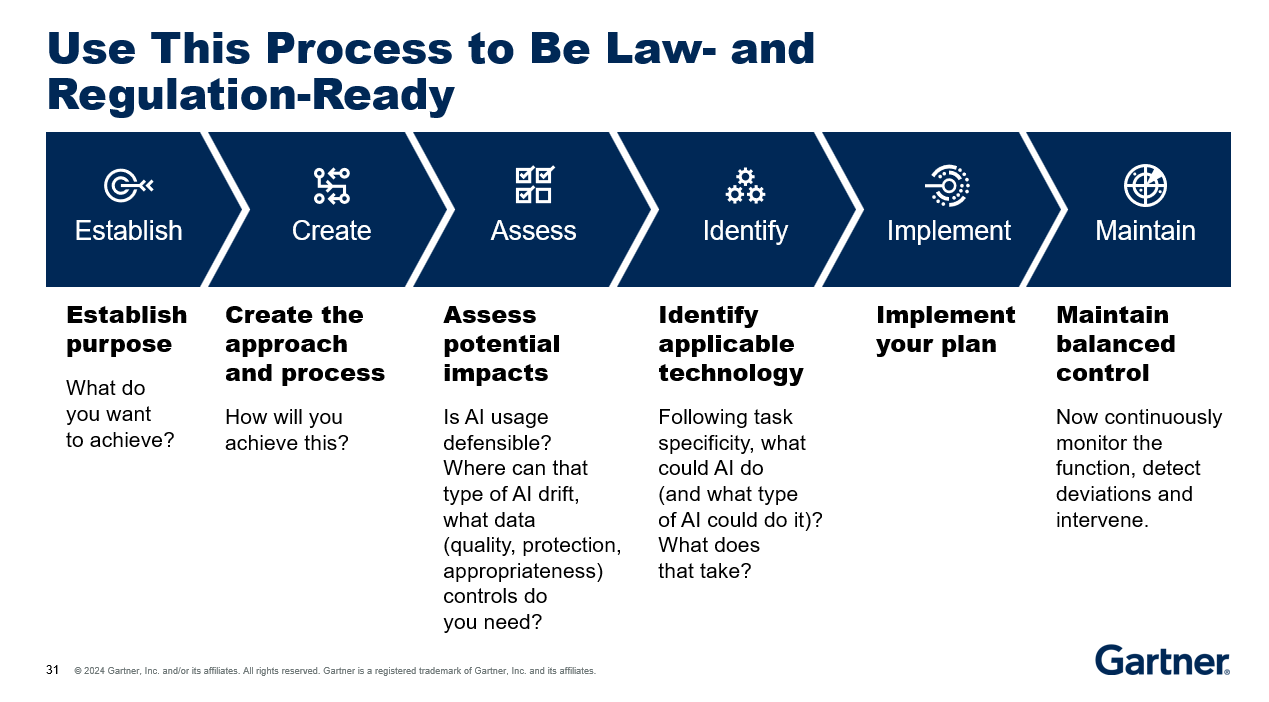
Many countries, states and cities around the world now have their own way of exercising power over AI within and outside their markets. How can an IT executive plan and execute strategy in such a fragmented landscape? In this session, Bart Willemsen, VP Analyst at Gartner, outlined how ethics, governance and practical strategy can inform an organization’s AI ambition and preserve its value.
Key Takeaways
- “Prioritize literacy. Require management and workers to work with data, AI technologies and their implications.”
- “Promote ethical AI development. Nurture a culture that prioritizes societal and company virtue in AI development.”
- “Protect privacy and human rights from the start. Integrate privacy enhancing technologies from the beginning of AI system design, to protect user data and comply with global privacy standards.”
- “Go impact-first. Regularly conduct AI impact assessments to evaluate the financial, ethical, social and legal implications of AI deployments.”
- “Document, test, then document tests. Make AI explainable and demonstrable through frequent tests and inspections of its real impacts.”

It’s not too late to join the conference
Tune back in tomorrow for more updates from the conference.


About Gartner
Gartner (NYSE: IT) delivers actionable, objective business and technology insights that drive smarter decisions and stronger performance on an organization’s mission-critical priorities. To learn more, visit gartner.com.