LONDON, U.K., May 12, 2026
- Gartner client? Log in for personalized search results.
Gartner Data & Analytics Summit 2026 London: Day 2 Highlights
It’s not too late to join the conference
Overview
We are bringing you news and highlights from the Gartner Data & Analytics Summit, taking place this week in London, U.K. Below is a collection of the key announcements and insights coming out of the conference. You can read the highlights from Day 1 here.
On Day 2 of the conference, we are exploring the future of data and analytics (D&A) governance, discussing steps to govern unstructured data, and examining how AI maturity can accelerate AI adoption and evolve D&A roles. Be sure to check this page throughout the day for updates.
Key Announcements
The Future of D&A Governance
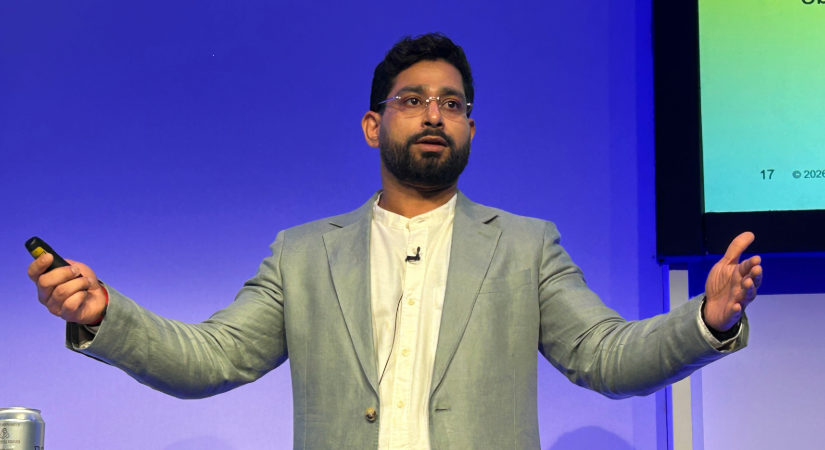
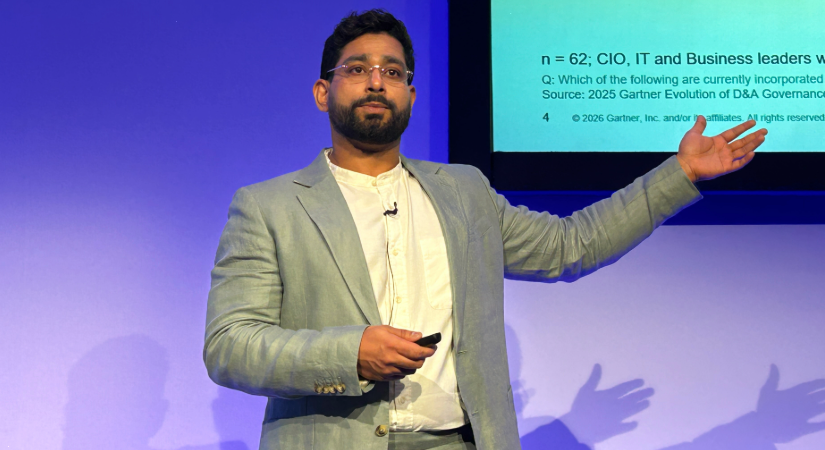
Presented by Anurag Raj, Director Analyst, Gartner
Data and analytics (D&A) governance has historically lagged in innovating. We are at a tipping point where D&A governance can be a single point of failure for AI. To succeed, D&A leaders must evolve governance for the future while reinforcing proven practices. In this session, Anurag Raj, Director Analyst at Gartner, provided a forward-looking perspective on D&A governance, including governance of AI, by AI and for AI.
Key Takeaways
“Data governance will be the single point of failure for organizations’ AI ambitions.”
“The core principles of D&A governance (stewardship, decision rights, accountability) are as critical now as ever. As data environments become more complex, governance models must evolve from simple, distributed controls to sophisticated, adaptive frameworks.”
“The fundamentals of D&A governance (clarity, integrity, trust) don’t just remain; they become even more essential. It’s innovation in these fundamentals that enables organizations to scale and adapt.”
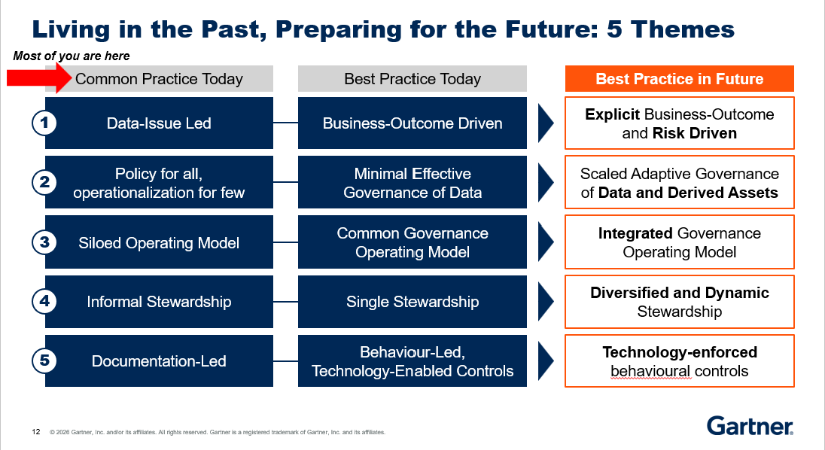
There are five best practices organizations should follow to adapt D&A governance for the future:
- Be explicitly business-outcome and risk driven
Scale adaptive governance of data and derived assets
Implement an integrated governance operating model
Ensure diversified and dynamic stewardship
Implement technology-enforced behavioral controls
Journalists can receive additional information and/or request an interview with Anurag Raj by contacting Laurence Goasduff at laurence.goasduff@gartner.com.
How to Unlock the Value of Unstructured Data for AI: Start With Governing It First
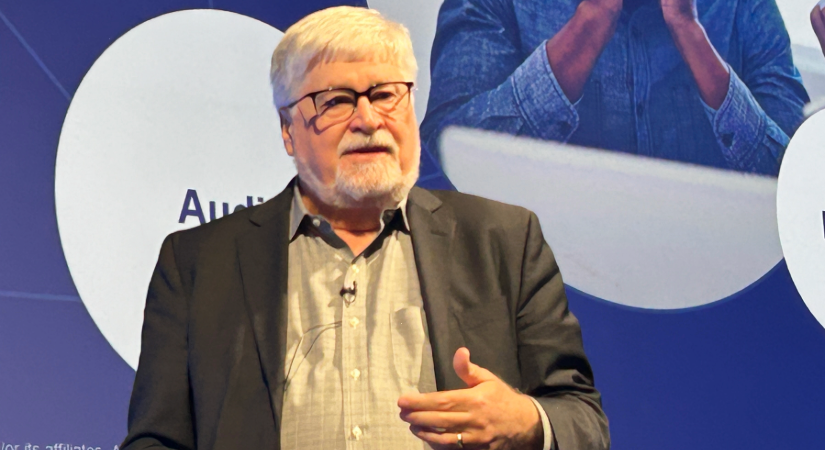
Presented by Mark Beyer, Distinguished VP Analyst, Gartner
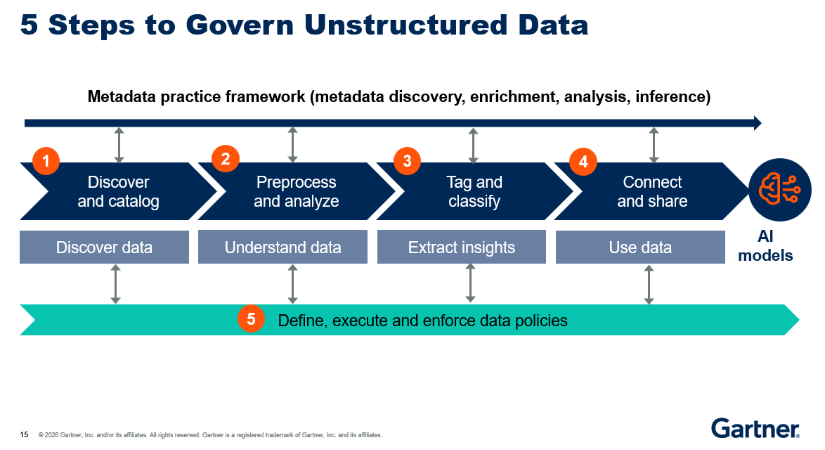
As AI shapes business decisions, making unstructured data AI-ready is a key governance priority. In this session, Mark Beyer, Distinguished VP Analyst at Gartner, shared five steps to help data and analytics (D&A) leaders govern unstructured data.
Key Takeaways
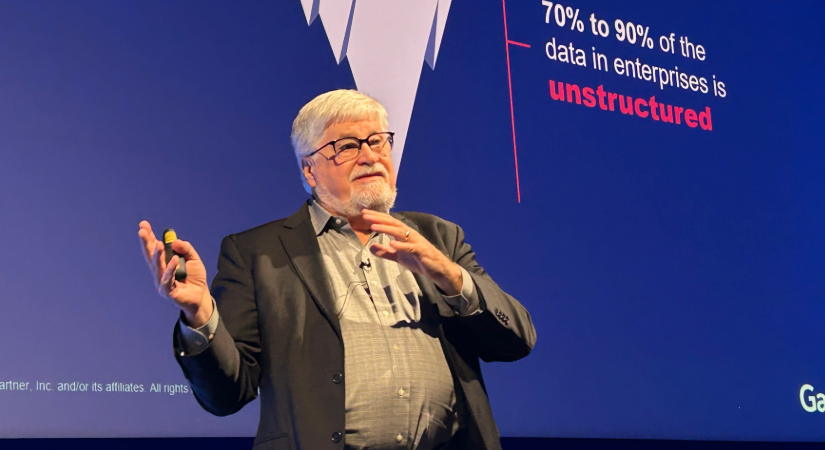
- “Unstructured data, such as documents and multimedia files, accounts for 70% to 90% of organizational data.”
“Unstructured data governance transforms messy, hard-to-use information into a reliable, accessible resource.”
“When governing unstructured data, D&A leaders need to first prioritize unstructured data sources by identifying their business value and relevance to current and potential AI use cases.”
“Implement a five-step approach to unstructured data governance:
Discovery and cataloging
Preprocessing and analysis
Tag and classification
Connect and share
Define and execute clear governance policies
“By strategically governing unstructured data, organizations can transform it from an unknown entity into a core strategic asset, driving competitive differentiation.”
Journalists can receive additional information and/or request an interview with Mark Beyer by contacting Laurence Goasduff at laurence.goasduff@garner.com.
Maturity Matters: Design the AI Organization Fit for Purpose
Presented by Jorg Heizenberg, VP Analyst, Gartner
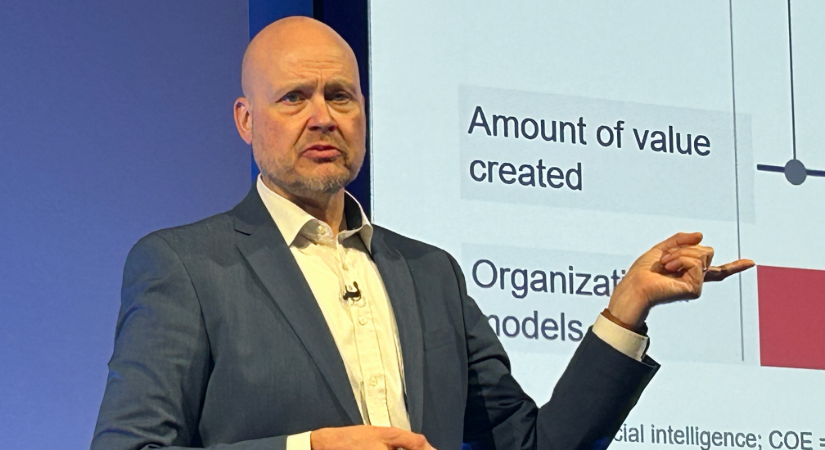
Unlocking the full value of AI demands a fundamental shift in how organizations are structured and how teams collaborate. In this session, Jorg Heizenberg, VP Analyst at Gartner, explained the five levels of AI maturity that can accelerate AI adoption,minimize friction and reshape data and analytics (D&A) roles.
Key Takeaways
Organizing AI should align with the organization’s AI maturity—don’t move ahead too fast, as AI maturity progresses through these five levels:
Planning: Special Interest Groups will help gain initial understanding of the value of AI for the organization and raise awareness.
Experimenting: AI laboratories support prototyping use cases with multidisciplinary teams to build capabilities incrementally and iteratively.
Stabilizing: A Center of Excellence (CoE) helps operationalize AI by setting standards, capturing best practices, and developing governance policies and procedures.
Expanding: Hybrid Organizational Models support the pervasive use of AI for digital process and chain transformation.
Leading: AI is deeply and seamlessly integrated into every process, product and service, requiring orchestration.
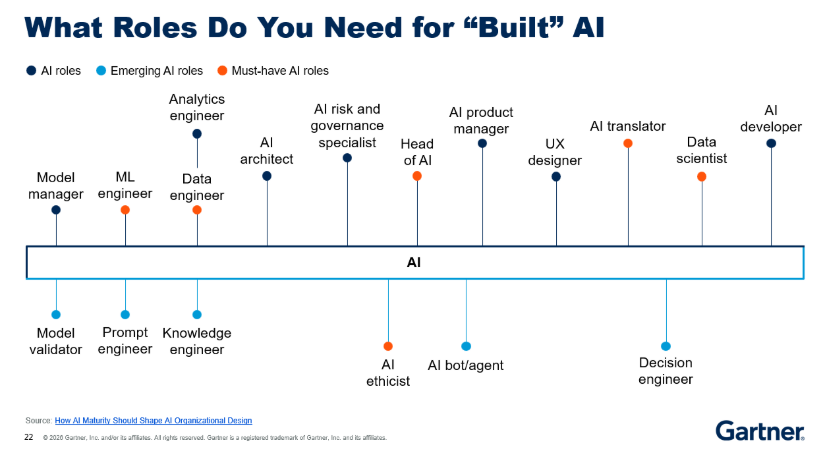
“AI is changing D&A roles; it’s time to replace rigid, role-based structures, with task-focused tiny teams that blend human skills and AI agents.”
“D&A roles are evolving rapidly. Forty-five percent of D&A teams are expanding and only 8% are shrinking. Rather than reducing headcount, a better strategy is to redistribute talent to new high-value initiatives.”
Journalists can receive additional information and/or request an interview with Jorg Heizenberg by contacting Laurence Goasduff at laurence.goasduff@garner.com.
It’s not too late to join the conference
That's a wrap on Day 2. Tune back in tomorrow for more updates from the conference.
Media contact
Laurence Goasduff
Gartner
laurence.goasduff@gartner.com


Latest releases
About Gartner
Gartner (NYSE: IT) delivers actionable, objective business and technology insights that drive smarter decisions and stronger performance on an organization’s mission-critical priorities. To learn more, visit gartner.com.