SYDNEY, Australia, June 17, 2026
- Gartner client? Log in for personalized search results.
Gartner Data & Analytics Summit 2026 Sydney: Day 2 Highlights
Overview
We are bringing you news and highlights from the Gartner Data & Analytics Summit 2026, taking place this week in Sydney, Australia. Below is a collection of the key announcements and insights coming out of the conference. You can read the highlights from Day 1 here.
On Day 2 from the conference, we are highlighting sessions on government AI adoption; unstructured data management; and how organizations can get ready for data & analytics in 2030.
Key Announcements
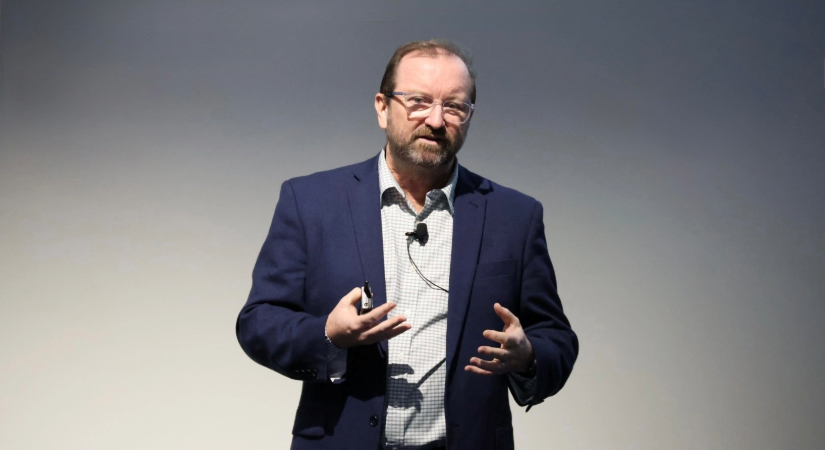
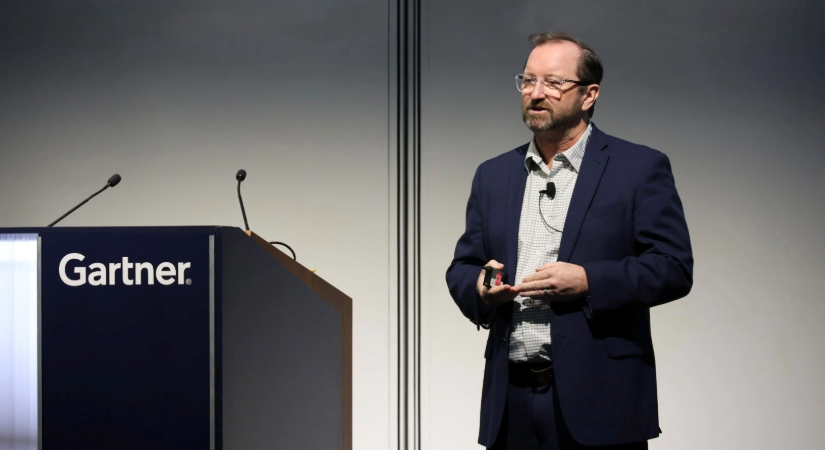
Government AI Adoption: Critical Building Blocks and Barriers to Measurable Impact
Presented by Dean Lacheca, VP Analyst, Gartner
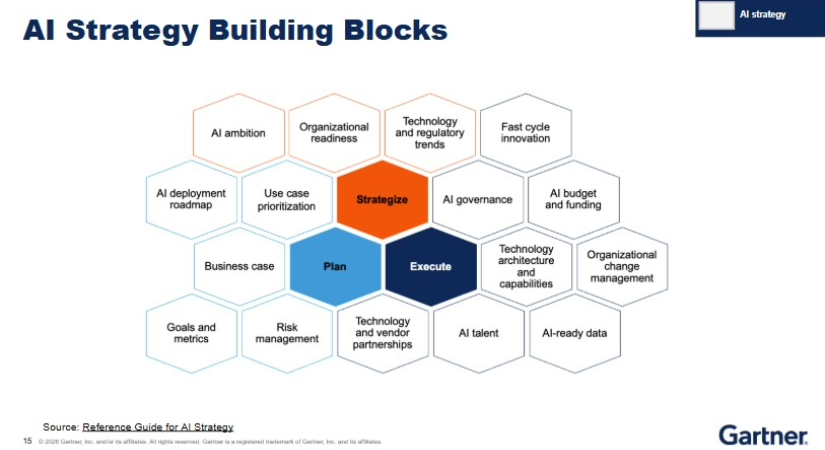
As governments accelerate efforts to responsibly adopt AI in pursuit of operational efficiency and enhanced public service delivery, recurring challenges and systemic barriers persist. In this session, Dean Lacheca, VP Analyst at Gartner, outlined the key strategic pillars and best practices for successful AI adoption in the public sector.
Key Takeaways
“AI adoption expectations within government don’t reflect reality, with more than 50% of AI projects not making it into production.”
“Limited value from AI is not a technical problem, but a lack of strategic clarity and decisive leadership. Organizations need every AI project to clearly define its value and focus on converting AI opportunity into measurable business impact.”
“To find new value, AI needs to be ready technically. This means having an AI strategy set the pace, anticipate hidden costs and select vendors based on required capabilities.”
“To capture and sustain value, organizations and workforces need to be ready. This requires transforming talent through hiring restraints, talent and value remixing, and developing critical skills like context engineering.”
“Government organizations must build the flexibility to rapidly adopt new AI capabilities while maintaining a stable workforce, governance and risk posture.”
“With momentum building behind AI agents and multiagent solutions, Australian governments cannot afford to ignore these emerging implementations of AI.”
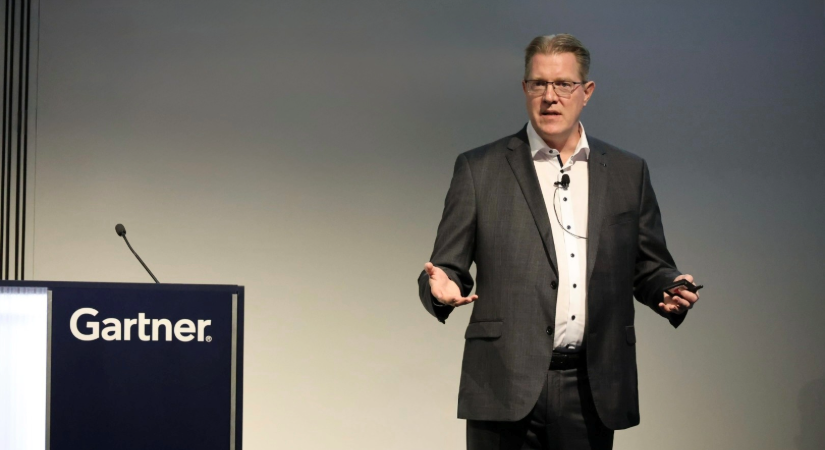
Unstructured Data Is the Missing Ingredient to Prepare AI-Ready Data
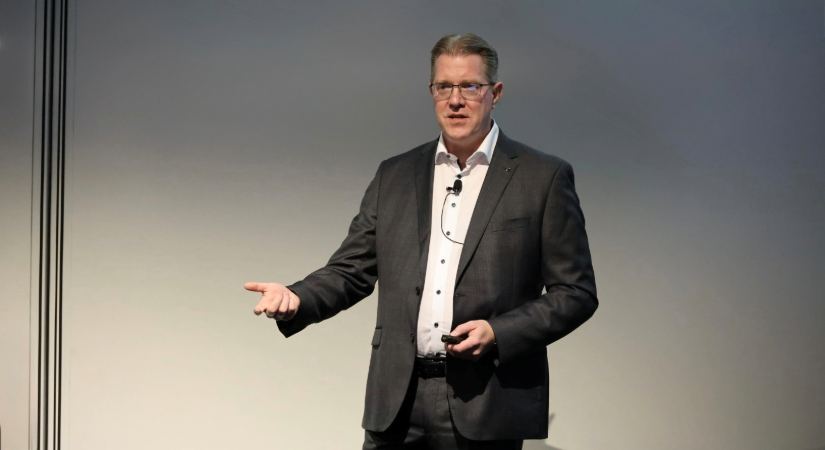
Presented by Jason Medd, Senior Director Analyst, Gartner
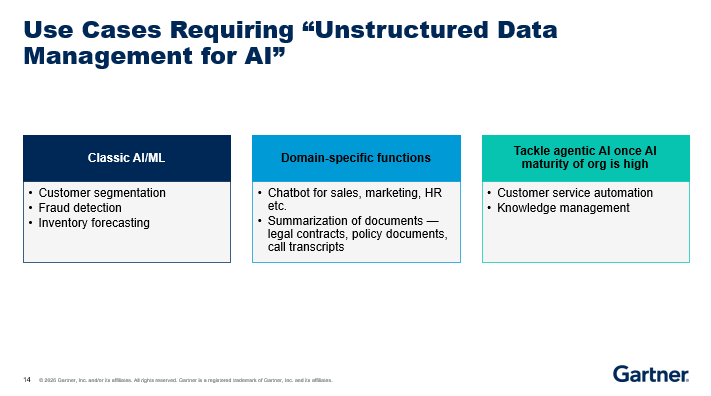
Almost every GenAI use case requires organizations to extract, qualify and govern significant volumes of unstructured data. In this session, Jason Medd, Senior Director Analyst at Gartner, discussed how data management leaders should deliver workflows that orchestrate entity extraction, vector data embeddings and semantic data enrichment with structured data pipelines to enable GenAI-ready data.
Key Takeaways
“By 2027, the IT spending focused on multistructured data management will account for 40% of the total spent on data management technologies and services.”
“From 2025 through 2029, the share of AI spending on AI data readiness will increase seven times, driven by the essential need for AI-ready data.”
“Through 2028, heads of AI, data science and data management will attempt to build their own unstructured metadata solutions, incurring costs more than 300% higher than they would if they used existing document and records solutions, skills and practices.”
“Data management leaders who are unable to feed multimodel data-hungry AI models will fall behind on executing their AI strategies.”
“Continuously assess whether the data strategy is aligned with the AI strategy. Look for opportunities to merge the data management practices for structured & unstructured data.”
Journalists can receive additional information and/or request an interview with Jason Medd by contacting Emma Keen at emma.keen@gartner.com.
Signature Series: Get Ready For Data and Analytics 2030
Presented by Sarah James, Senior Director Analyst, Gartner
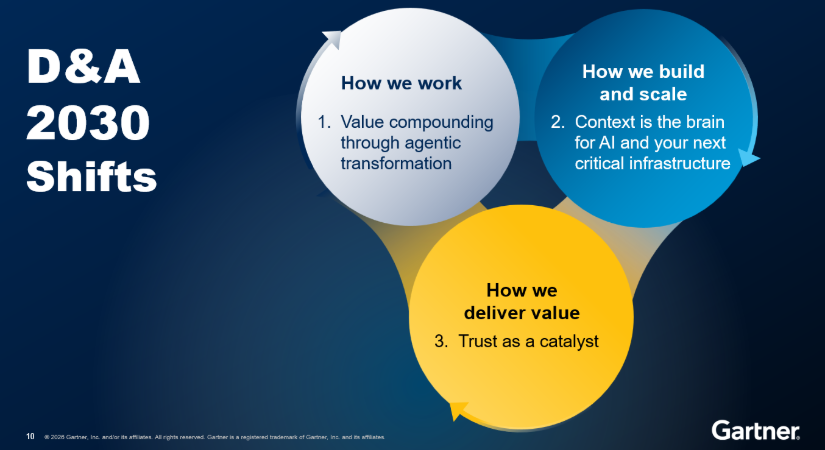
Data and analytics (D&A) leaders play a central role in their organization's AI success by providing the critical accelerants needed to realize value from AI. In this session, Sarah James, Senior Director Analyst at Gartner, highlighted three shifts D&A leaders need to make to sustain AI value.


Key Takeaways
- “Chief data and analytics officers (CDAOs) and other D&A leaders play a critical role in AI success or risk failure.”
- “Through 2030, responding to this imperative will require shifts in how the D&A team organizes and works, builds and scales, and creates value.”
- Shift #1: Create Value Compounding Through Agentic Transformation
- “The shift to becoming an AI‑first D&A organization starts with an explicit AI ambition, one that uses AI to transform, not simply optimize, business and operating models.”
- Shift #2: Treat Context as Critical Infrastructure
- “Evolve data foundations with context as critical infrastructure so AI agents operate with trusted situational awareness. D&A success isn’t about better models. It’s about giving agents governed, contextual access to the right data.”
- Shift #3: Establish Trust as Catalyst of Value and Innovation
- “Without trust in the data, outputs and decisions of AI models and agents, there is no value from AI.”
Journalists can receive additional information and/or request an interview with Sarah James by contacting Emma Keen at emma.keen@gartner.com.
That's a wrap for Gartner Data & Analytics Summit in Sydney. Until next year!


About Gartner
Gartner (NYSE: IT) delivers actionable, objective business and technology insights that drive smarter decisions and stronger performance on an organization’s mission-critical priorities. To learn more, visit gartner.com.