3 CHRO Actions to Drive Measurable AI Impact

Position HR as a Long‑Term Enterprise Leader

In the AI era, CHROs face mounting pressure to move faster—advancing strategic priorities while controlling costs and delivering long‑term value. AI is quickly becoming essential to this balance. 

By automating core processes and enabling new ways of working, AI can help HR drive efficiency today while supporting sustainable organizational growth. However, AI’s full value will only be realized if HR takes the lead in redesigning how work gets done across the enterprise.

Gartner predicts that more than 50% of HR activities will be automated or augmented by AI by 2030.

To lead in this shift and avoid HR becoming obsolete, CHROs must align their HR technology strategy with enterprise goals, risk tolerance, and AI ambitions.

This guide provides CHROs with 3 key actions to transform HR through AI and position the function as a long‑term enterprise leader.
3 Key Actions to Transform HR Through AI

1
Identify Your Future HR Model Before Automating Functional Tasks
2
Plan AI Investments Beyond Short-Term Productivity Gains
3
Explore AI’s Potential Beyond Transactional HR Initiatives

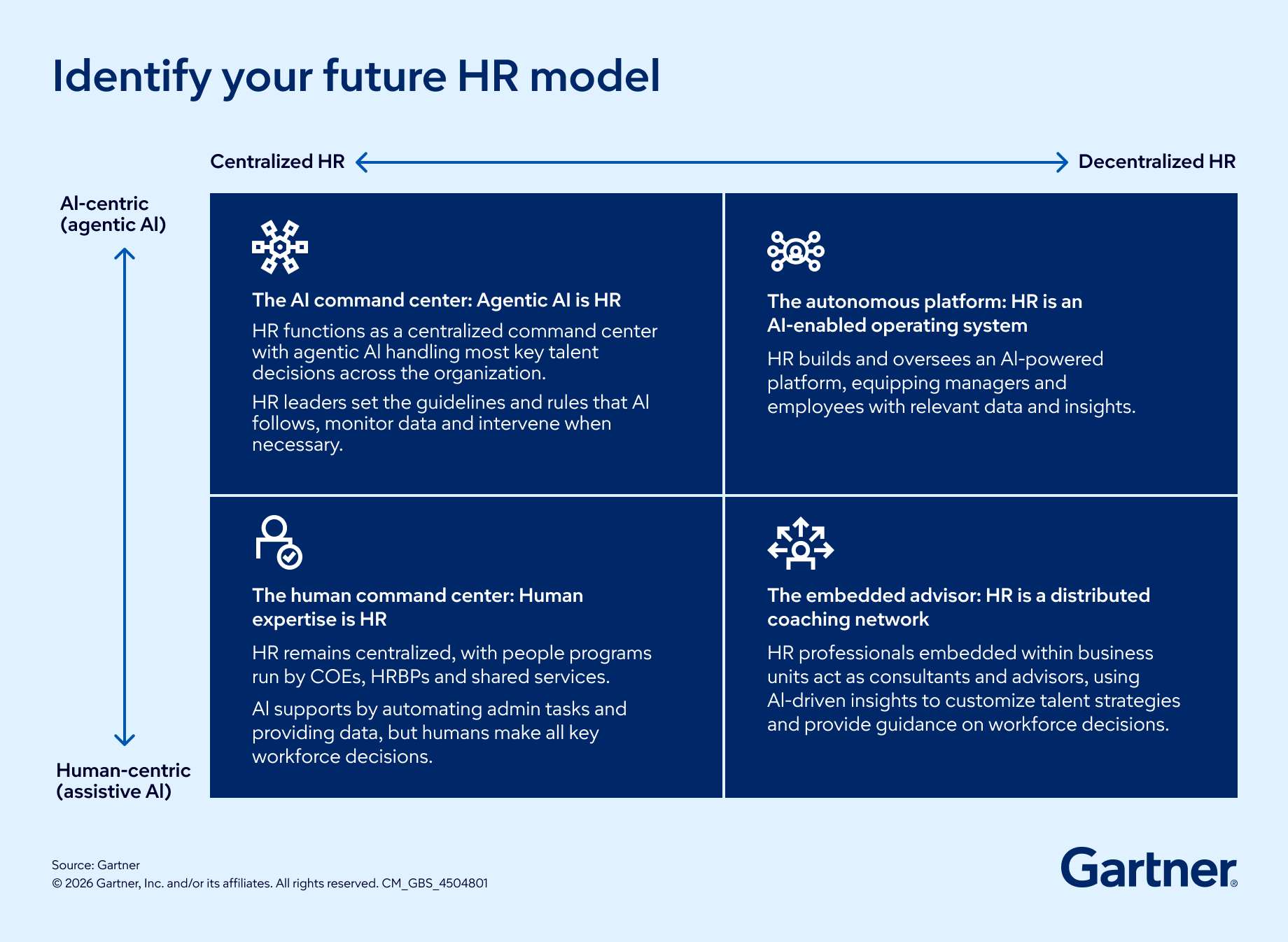
1. Identify Your Future HR Model Before Automating Functional Tasks

With AI’s potential to transform the HR function dramatically over the next two to five years, CHROs must decide today how much future decision-making authority to automate. Determining your future HR operating model in an AI-enabled world will best support the direction of your journey and provide visibility into critical first steps to your AI investments.

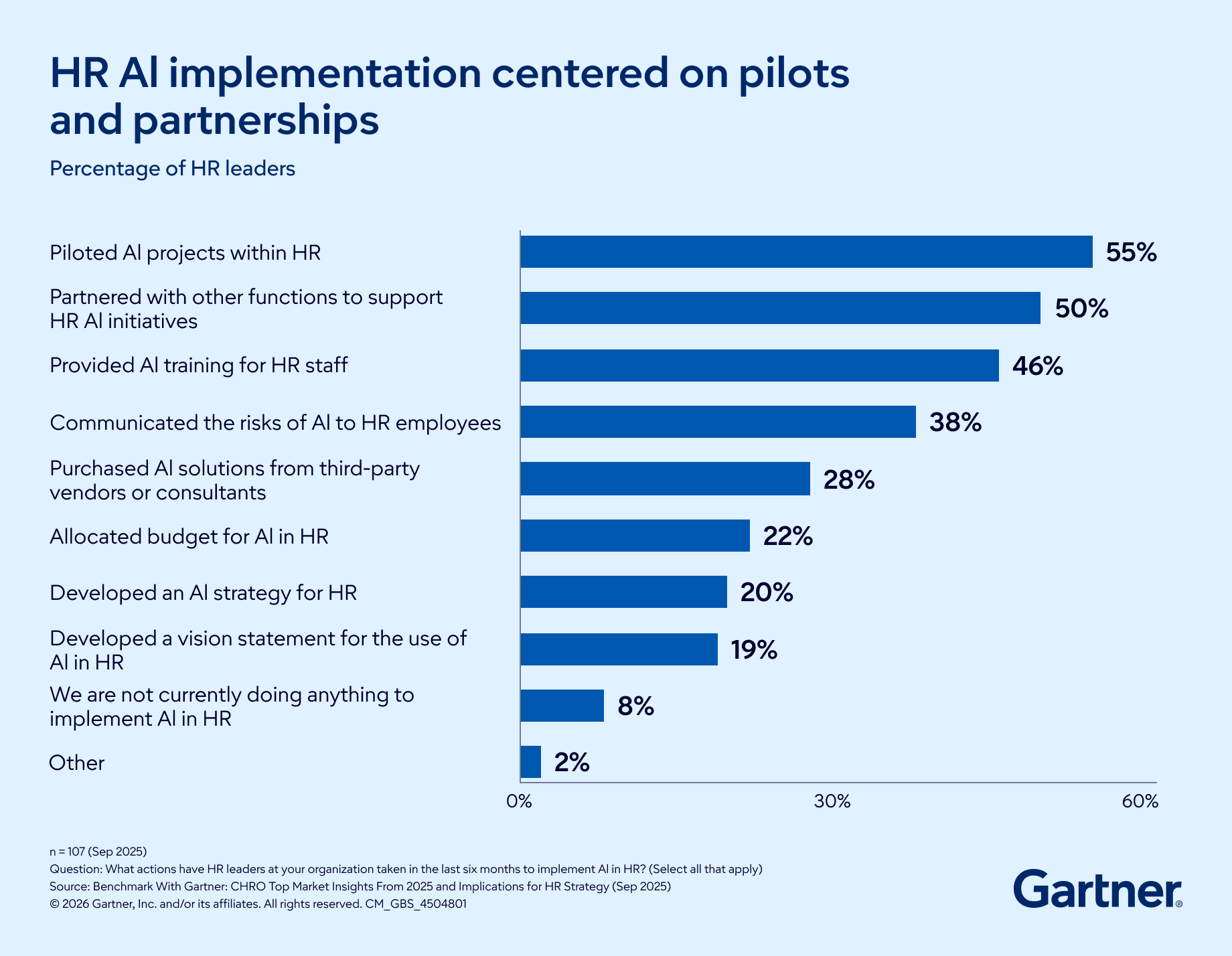
2. Plan AI Investments Beyond Short-Term Productivity Gains

To capture value from AI and position HR as an enterprise leader in redesigning work, CHROs must move beyond investing in initiatives that produce short-term productivity gains. Gartner has found that while HR leaders are implementing AI in HR, they are seeing mixed results: 81% of HR leaders who invested in AI reported a positive impact on HR productivity over the past year, however, only 31% agreed that AI investments reduced overall HR costs. This suggests that productivity may be misapplied to low-value tasks or seen in ad hoc pockets rather than delivered at scale.

3. Explore AI’s Potential Beyond Transactional HR Initiatives

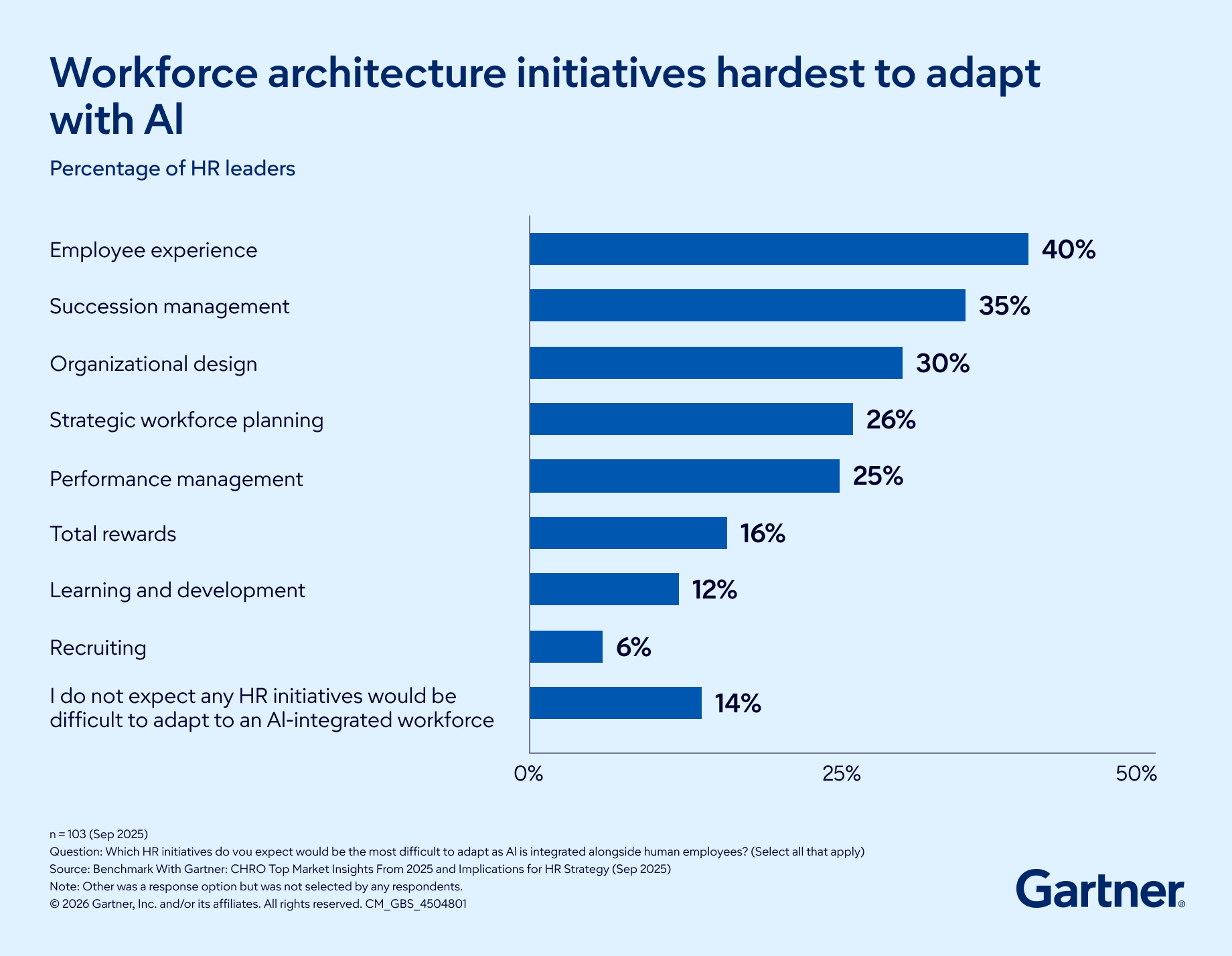
As HR considers its suite of responsibilities and offerings to the business, some are immediately perceived to be easier (Transactional tasks in recruiting or learning and development) or more challenging (Employee experience, succession management, organizational design and strategic workforce planning) to adapt to AI. 

Progressive CHROs can evaluate AI’s potential to augment the following critical talent strategy activities that can result in organizational growth:

Employee experience: Leverage AI insights in internal talent marketplace (ITM) or voice of the employee (VoE) platforms to help shape and improve employee experience across career life cycles.

Succession management: Leveraging AI to recognize trends in skills and organizational needs can streamline key succession activities, including identifying high-potential talent, recommending successors, and generating personalized development plans for critical talent.

Strategic workforce planning: AI streamlines the traditionally labor-intensive strategic workforce planning process, making it easier to identify workforce needs such as forecasting workforce demands, creating scenarios and simulations, tracking and inferring skills, and assessing external labor market trends.

Leverage Gartner Resources to Achieve Stronger Outcomes

Use CHRO Accelerators to access clear, concise guidance and resources for executing mission‑critical priorities.

Ready for what’s next? We can help.

Access objective insights, exclusive peer networks and expert guidance designed for leaders like you.