Mumbai, India, June 2, 2026
- Gartner client? Log in for personalized search results.
Gartner IT Infrastructure, Operations & Cloud Strategies Conference 2026 Mumbai: Day 2 Highlights
It’s not too late to join the conference
Overview
We are bringing you news and highlights from the Gartner IT Infrastructure, Operations & Cloud Strategies Conference, taking place this week in Mumbai, India. Below is a collection of the key announcements and insights coming out of the conference. You can read the highlights from Day 1 here.
On Day 2 of the conference, we are exploring the future of datacenters, discussing how to get ready for the agent-native future of I&O, and examining the roles, skills and training required to build a successful infrastructure platform engineering team. Be sure to check this page throughout the day for updates.
Key Announcements
Future of Datacenters: Energy Shortages, Efficiency and AI
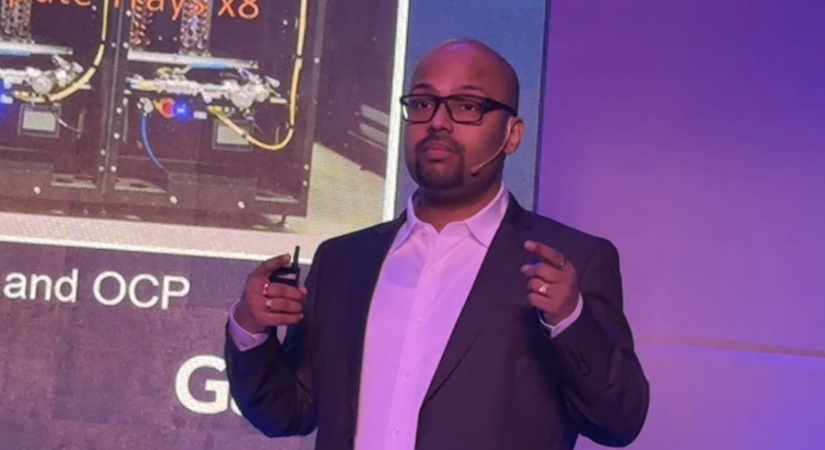
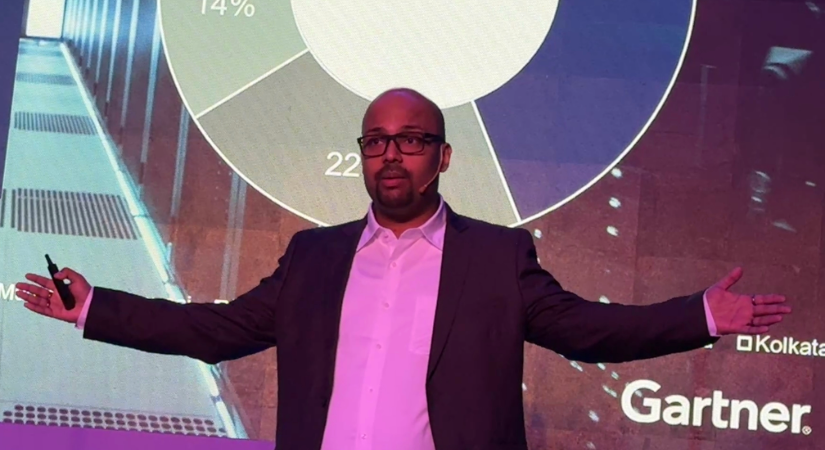
Presented by Ashish Banerjee, Sr Principal Analyst, Gartner
AI is reshaping data center site selection, design, infrastructure, and operations. In this session, Ashish Banerjee, Sr Principal Analyst at Gartner, discussed how data center infrastructures are evolving to help I&O leaders plan and develop data center strategies that thrive today and in the future.
Key Takeaways
I&O leaders planning a new data center or evaluating a colocation site should consider four critical site selection factors:
Power availability and interconnect: Verified utility capacity, power purchase agreements (PPAs), and reliable grid connectivity are key considerations.
Market location: Tier 2 and Tier 3 markets often offer better availability and cost efficiency.
Energy strategy: Options for on-site generation or alternative power sources.
Community and regulatory engagement: Early engagement to address regulatory, environmental, and social concerns.
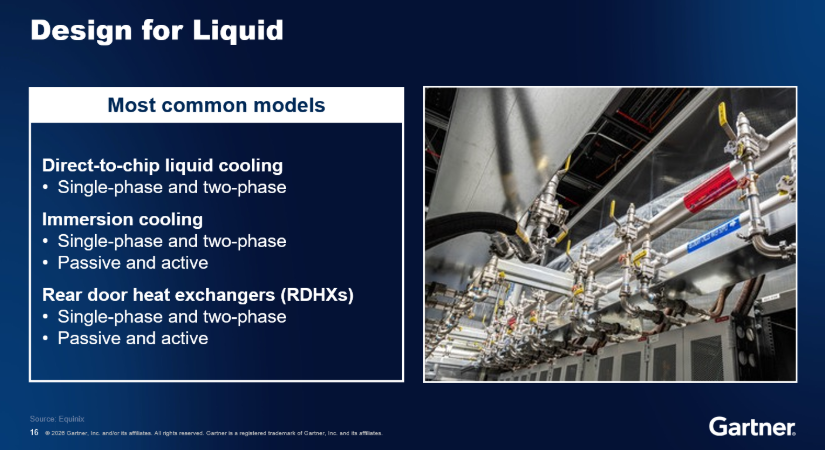
“Data centers expected to support AI and other high-density workloads should be designed for liquid cooling, as AI drives extreme rack power densities, making liquid cooling technology essential for efficient, scalable growth.”
“I&O leaders must also evaluate self‑contained add‑on modules to support high‑density equipment, offering customizable power densities and flexible cooling options, including integrated cooling or connections to a water loop.”
“Water usage is becoming a critical planning factor, requiring organizations to track consumption, prioritize closed-loop cooling where feasible, and explore water reuse strategies.”
- “Heads of I&O should prepare for energy resilience challenges, including potential load-shedding requirements, AI-driven power fluctuations, and the need for better visibility and control over energy usage.”
Journalists can receive additional information and/or request an interview with Ashish Banerjee by contacting Sonika Choubey at sonika.choubey@gartner.com.
Get Ready for the Agent-Native Future of I&O
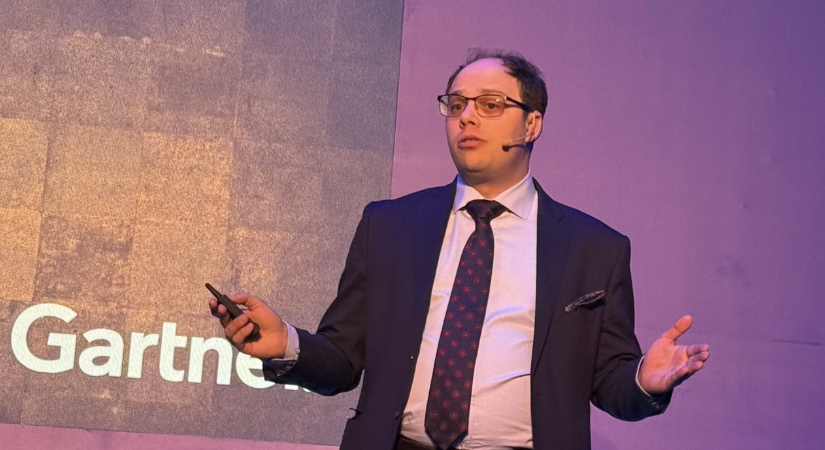
Presented by Alessandro Galimberti, VP Analyst, Gartner
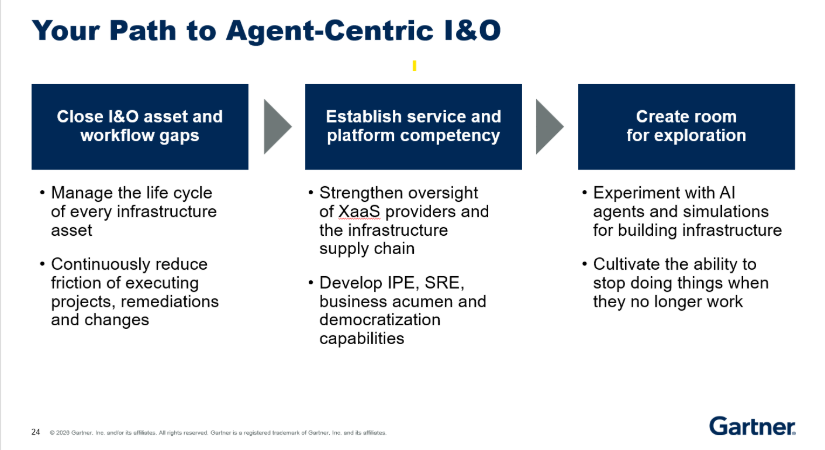
Agentic AI offers transformative potential while also challenging IT infrastructure and operations (I&O) management. In this session, Alessandro Galimberti, VP Analyst at Gartner, outlined key actions I&O leaders must take today to reimagine their infrastructures, operating models, and overall environment so that AI agents can deliver maximum organizational value in the future.

Key Takeaways
- “AI agents represent the most significant disruption to I&O since cloud computing 20 years ago, marking a new era of business computing that requires agent‑centric I&O to fully harness their potential.”
“Agent‑centric I&O optimally leverages and implements AI agent capabilities in the delivery of digital I&O operations. It accommodates both AI‑based agents and the human intelligence still needed to perform tasks that AI agents cannot yet do.”
“A critical principle of agent‑centric I&O is that it is not ‘agent‑only I&O’. People remain essential, as they assess value and define what is ‘good enough’ using tacit I&O knowledge or explicit heuristics that guide AI decision‑making.”
“I&O leaders cannot move directly to agent‑centric I&O without first building core capabilities in managing technology assets, projects and processes, internally and externally sourced services, and infrastructure platforms.”
“Excellence in infrastructure platform engineering is mandatory for success with agent-centric I&O."
Journalists can receive additional information and/or request an interview with Alessandro Galimberti by contacting Sonika Choubey at sonika.choubey@gartner.com.
Roles, Skills and Training to Build a Successful Infrastructure Platform Engineering Team
Presented by Ajeeta Malhotra, Sr Principal Analyst, Gartner
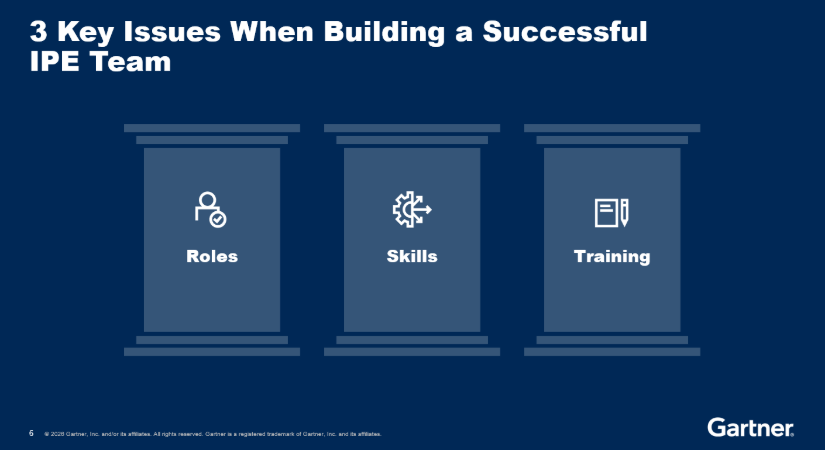
Infrastructure platform engineering (IPE) represents the future of I&O, combining software engineering and a product model to deliver reliable, secure, and scalable platforms. In this session, Ajeeta Malhotra, Sr Principal Analyst at Gartner, highlighted three core pillars to successfully building an IPE team: roles, skills, and training.


Key Takeaways
“IPE is the practice of building and operating shared infrastructure services as internal products for development teams, abstracting underlying complexity by enabling self‑service and API‑driven access to infrastructure and application resources.”
“A successful platform is built as much on people as on technology, with success grounded in three core pillars: defining the right roles, hiring for the right skills, and investing in the right training.”
“To succeed in IPE, continuous learning is non-negotiable. As user needs and technology evolve, the skills of the team must also do so with training being intentional and part of formal capacity planning.”
Key IPE training principles include:
- Prioritizing hands‑on, practical learning over theory
- Applying agile, iterative methods to training programs
- Treating training as a core work item, not an optional activity
- Formalizing mentorship to accelerate learning and knowledge transfer
Journalists can receive additional information and/or request an interview with Ajeeta Malhotra by contacting Sonika Choubey at sonika.choubey@gartner.com.
That's a wrap. See you next year!


About Gartner
Gartner (NYSE: IT) delivers actionable, objective business and technology insights that drive smarter decisions and stronger performance on an organization’s mission-critical priorities. To learn more, visit gartner.com.