Demonstrate AI value today without waiting for new technology investments.
- Gartner client? Log in for personalized search results.
The pressure to demonstrate AI value is growing
CEOs want evidence that AI is delivering value today. The challenge for CHROs is that many HR AI initiatives take more than 12 months to produce measurable results, creating a gap between executive expectations and transformation timelines. At the same time, one in four HR teams reports inadequate funding as a barrier to transformation efforts. For HR leaders, demonstrating AI value does not have to wait for the next budget cycle.
“It is critical for CHROs to be flexible and show how HR can translate AI strategy into practical applications, demonstrate progress and provide early indicators of positive ROI,” says Lydia Wu, Senior Director Analyst at Gartner. Rather than waiting for additional budget approvals, begin demonstrating value by applying existing enterprise AI tools to targeted, high-impact HR workflows.
You might also like this webinar: How CHROs Win With HR AI
Small wins can create enterprise momentum
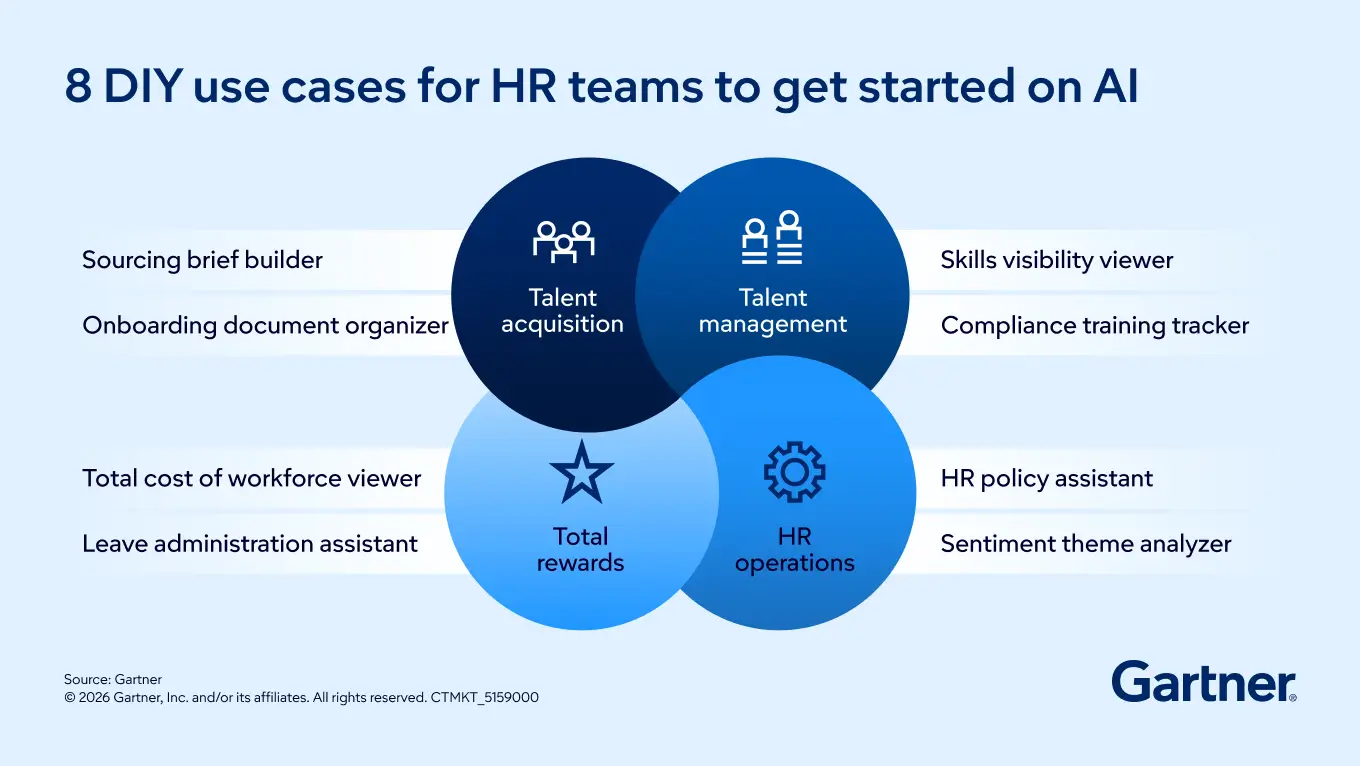
Practical AI use cases do more than improve efficiency. They help HR demonstrate progress, build organizational confidence and create momentum for larger-scale AI transformation. Gartner highlights opportunities across talent acquisition, talent management, total rewards and HR operations that can generate visible outcomes using tools already available.
Visible wins build credibility
Talent acquisition often provides an effective starting point because results are easy to see and measure. Use cases such as sourcing brief builders and onboarding document organizers can reduce manual effort, improve hiring manager alignment and create a better candidate experience. Early successes in recruiting workflows help HR demonstrate that AI can improve business outcomes and provide evidence of value for future investment decisions.
Experimentation reveals readiness gaps
Some of the most valuable AI lessons emerge before an organization reaches scale. Skills visibility viewers and compliance training trackers can help HR teams identify talent insights from volumes of data, and point out process gaps and other barriers that could slow future transformation efforts. These use cases allow organizations to learn where additional preparation may be needed before larger investments are made.
Everyday improvements build confidence
Practical HR operations use cases can make AI benefits visible to employees and managers. HR policy assistants, leave administration assistants and sentiment theme analyzers can improve access to information, reduce repetitive work and surface more actionable insights. These improvements help employees experience AI as a tool that supports their work rather than another organizational initiative.
Use early wins to build AI readiness
Experimenting with targeted workflows helps organizations build AI readiness while identifying gaps in data, governance, technology architecture and business processes before larger investments are made.
Use these early use cases to:
Build organizational confidence in AI
Identify and reduce readiness gaps
Strengthen AI adoption habits
Create the business case for future investment
Note: These are not intended to be long-term transformation solutions. Their purpose is to demonstrate value, build readiness and reveal the data, governance and process challenges that must be addressed before AI can scale successfully.
Proving value today supports transformation tomorrow
CHROs can build momentum for broader AI transformation by proving value with existing tools before pursuing additional investment. These early use cases help HR demonstrate value, strengthen AI readiness and identify the capabilities needed to scale AI successfully. Organizations that treat these wins as stepping stones to broader transformation will be better positioned to realize greater value from AI over time.
HR AI use cases FAQs
What HR AI use cases can deliver value quickly?
Gartner highlights practical use cases, including sourcing brief builders, onboarding document organizers, skills visibility viewers, compliance training trackers, HR policy assistants and leave administration assistants. These applications can improve efficiency and demonstrate AI value without requiring significant new technology investments.
How can CHROs prove AI ROI without increasing budgets?
CHROs can focus on practical use cases that leverage enterprise AI tools already available within their organizations. Early wins help demonstrate value, build confidence and support the case for future AI investments.
Why are HR AI use cases important for AI transformation?
Practical use cases help organizations build AI readiness, strengthen adoption habits and identify data, governance and process challenges before larger transformation initiatives begin. They create a foundation for broader AI transformation and enterprise value realization.
Attend a Conference
Join Gartner analysts and your peers to accelerate growth
Gather alongside your peers in Orlando to gain insights on emerging trends, receive one-on-one guidance from a Gartner expert and create a strategy to tackle your priorities head-on.
26 – 28 Oct 2026
Gartner HR Symposium/Xpo™
Orlando, FL

Drive stronger performance on your mission-critical priorities.