Quantum computing may not be enterprise-ready yet, but now is the time to build capabilities and prepare for future impact.
- Gartner client? Log in for personalized search results.
Quantum readiness starts with practical experimentation
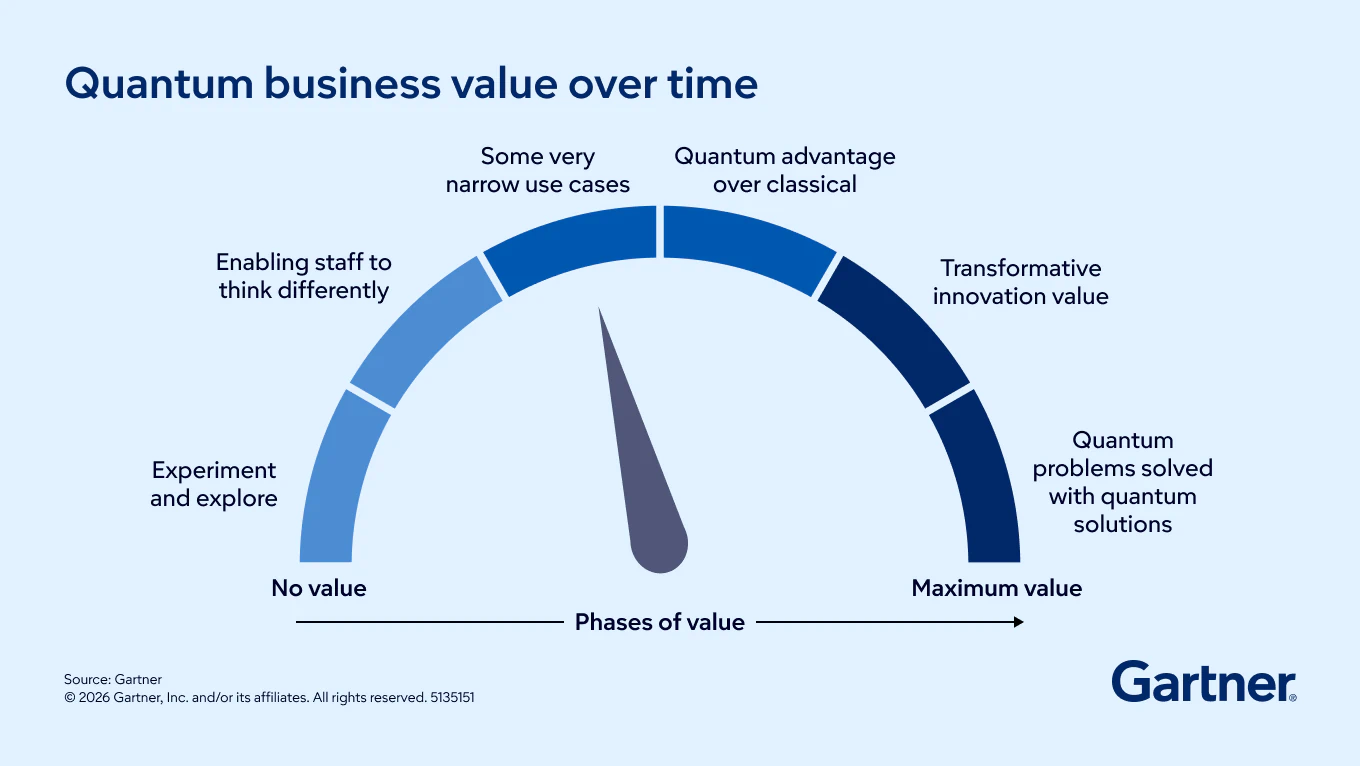
Quantum computing (QC) is entering a phase where experimentation delivers more value than large-scale deployment. Although production-grade, fault-tolerant systems are still five to 10 years out, quantum computing as a service (QCaaS) is already available and helping organizations tackle tough computational problems such as supply chain optimization and molecular modeling. For CIOs, quantum computing requires balancing long-term innovation with immediate, practical experimentation. Gartner Vice President Analyst Brett Sparks explains, “With the QC industry being currently characterized by noisy, error-prone systems used mainly for scientific exploration, CIOs must divide their quantum strategy into two distinct categories: what can wait and what must be acted upon immediately.”
How CIOS can build quantum computing readiness today
Focus on practical steps that build internal readiness and position your organization for future breakthroughs, while avoiding overhyped promises and premature investments.
Build quantum literacy and identify high-value use cases
Start by creating a focused quantum exploration team and running a readiness assessment. This team should evaluate QCaaS offerings, quantum programming languages and domain-specific use cases like optimization, molecular simulation or risk modeling. Building quantum literacy across data science, R&D and analytics teams is essential. Seek out programs that help teams rethink business constraints, identify algorithmic improvements and upskill for hybrid quantum-classical workflows. The immediate benefit is not always quantum computation itself, but a shift in problem-solving approaches that improves classical systems today.
Prepare for postquantum cryptography and hybrid architectures
Security teams must begin planning for postquantum cryptography now. The shift to quantum-resistant encryption is a multiyear effort that requires inventorying cryptographic assets and mapping migration paths.
At the same time, invest in interoperability capabilities that blend GPUs, HPC and quantum processors into unified workflows. Quantum’s near-term role is as a hybrid platform, complementing — not replacing — existing high-performance computing and AI systems. Cloud-first delivery will dominate, as on-premises quantum hardware is not practical for most enterprises.
Avoid premature investments and manage expectations
Quantum hardware purchases and large-scale rollouts can wait. The complexity and cost make on-premises systems unjustified for nearly all organizations this decade. Instead, focus on cloud-based experimentation to reduce risk and gain practical experience. Maintain skepticism around vendor claims, qubit counts and “breaking encryption” headlines. The market is moving past the hype, and timelines for fault-tolerant, production-ready quantum systems remain long. Early investment in people, skills and problem framing will position organizations for advantage when quantum advantage becomes a reality.
Quantum computing readiness FAQs
When will quantum computing be ready for enterprise use?
Gartner expects that widespread adoption of fault-tolerant quantum systems is still five to 10 years away. CIOs should focus on experimentation and foundational skills now, rather than full-scale deployment. Hybrid quantum-classical solutions offer immediate value for specialized problems, but mainstream enterprise use will require further technological maturity.
How should CIOs prepare for quantum computing security risks?
Gartner recommends preparing for mandatory postquantum cryptography and upskilling teams to understand quantum-classical workflows. Early planning ensures long-term data security and positions organizations to respond quickly as new cryptographic standards emerge.
What investments should CIOs prioritize for quantum computing?
CIOs should prioritize skills development, quantum literacy and readiness planning. Avoid premature hardware investments and large-scale deployments. Leverage quantum computing as a service for experimentation and capability building.
Attend a Conference
Experience Information Technology conferences
With exclusive insights from Gartner analysts on the latest trends, sessions curated for your role and unmatched peer networking, Gartner conferences help you accelerate your priorities.
19 – 22 Oct 2026
Gartner IT Symposium/Xpo™
Orlando, FL

Drive stronger performance on your mission-critical priorities.