As finance leaders head into 2026, Gartner’s latest survey of more than 200 CFOs reveals a landscape defined by competing priorities. Cost optimization dominates the agenda, yet a subset of CFOs is shifting toward growth investments. At the same time, confidence in technology and talent-driven initiatives is declining, and resource constraints intensify.
- Gartner client? Log in for personalized search results.
Gartner recommends CFOs prioritize five key actions to balance cost pressures with growth and AI ambitions
1
Improve cost discipline while accelerating growth investments.
2
Deliver enterprise cost savings with AI.
3
Identify and scale high-value AI use cases in finance
4
Add new digital skills and roles to the finance team
5
Accelerate finance transformation with a limited tech budget.
Use these insights to pressure-test your agenda, prepare for board discussions and lead with confidence in 2026.
PRIORITY 1
Improve cost discipline while accelerating growth investment
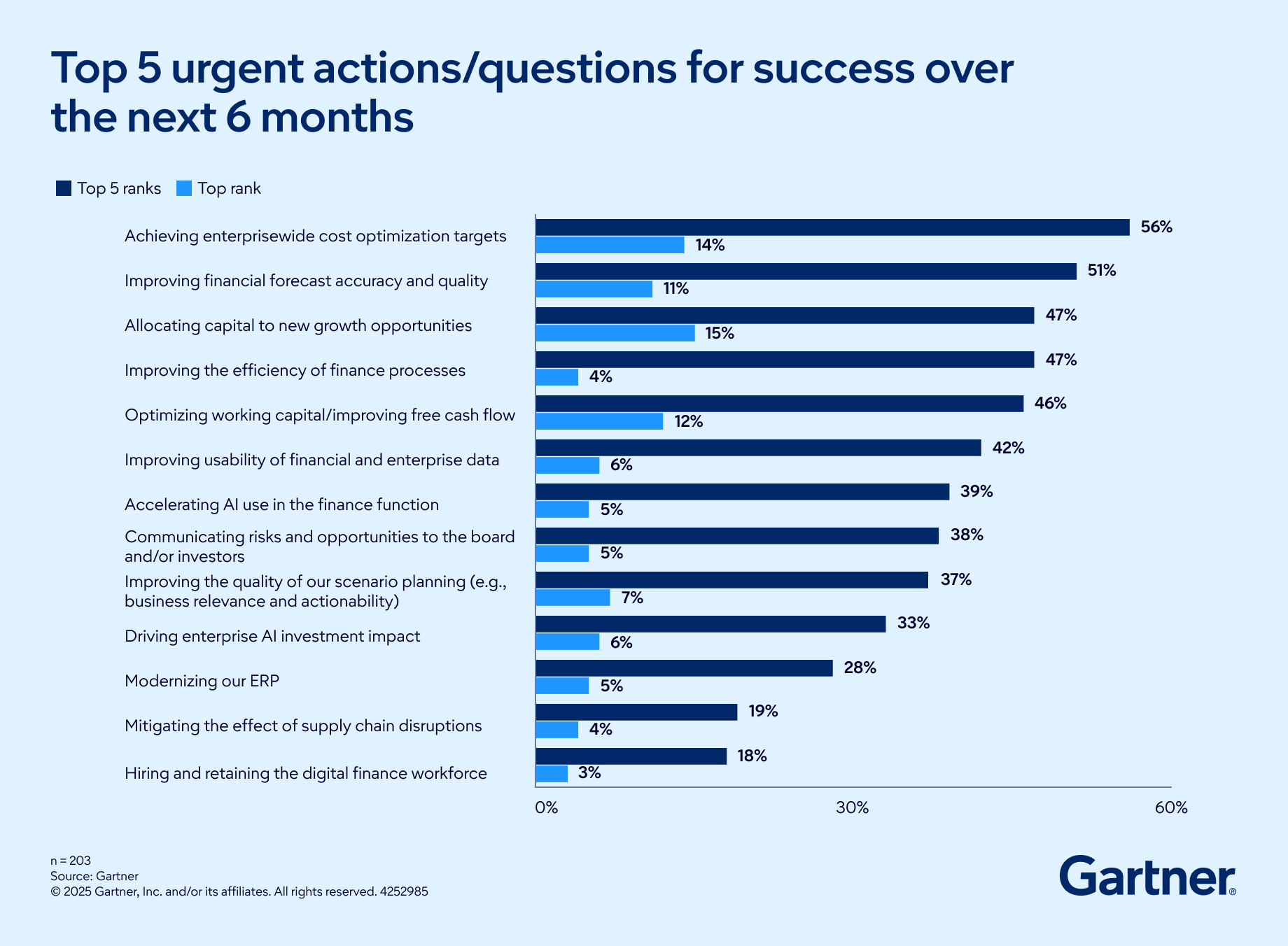
More than half of CFOs (56%) rank enterprisewide cost optimization among their top 5 priorities, with 14% affirming it’s their top concern. This reflects a continued focus on financial conservatism, cash flow maximization and risk mitigation. Still, Gartner data also reveals a bifurcation: While most CFOs remain focused on cost and efficiency, more ranked capital allocation for growth as their top priority. This signals a return to strategic investment for some, with growth-focused CFOs seeking first-mover advantages in a volatile environment.
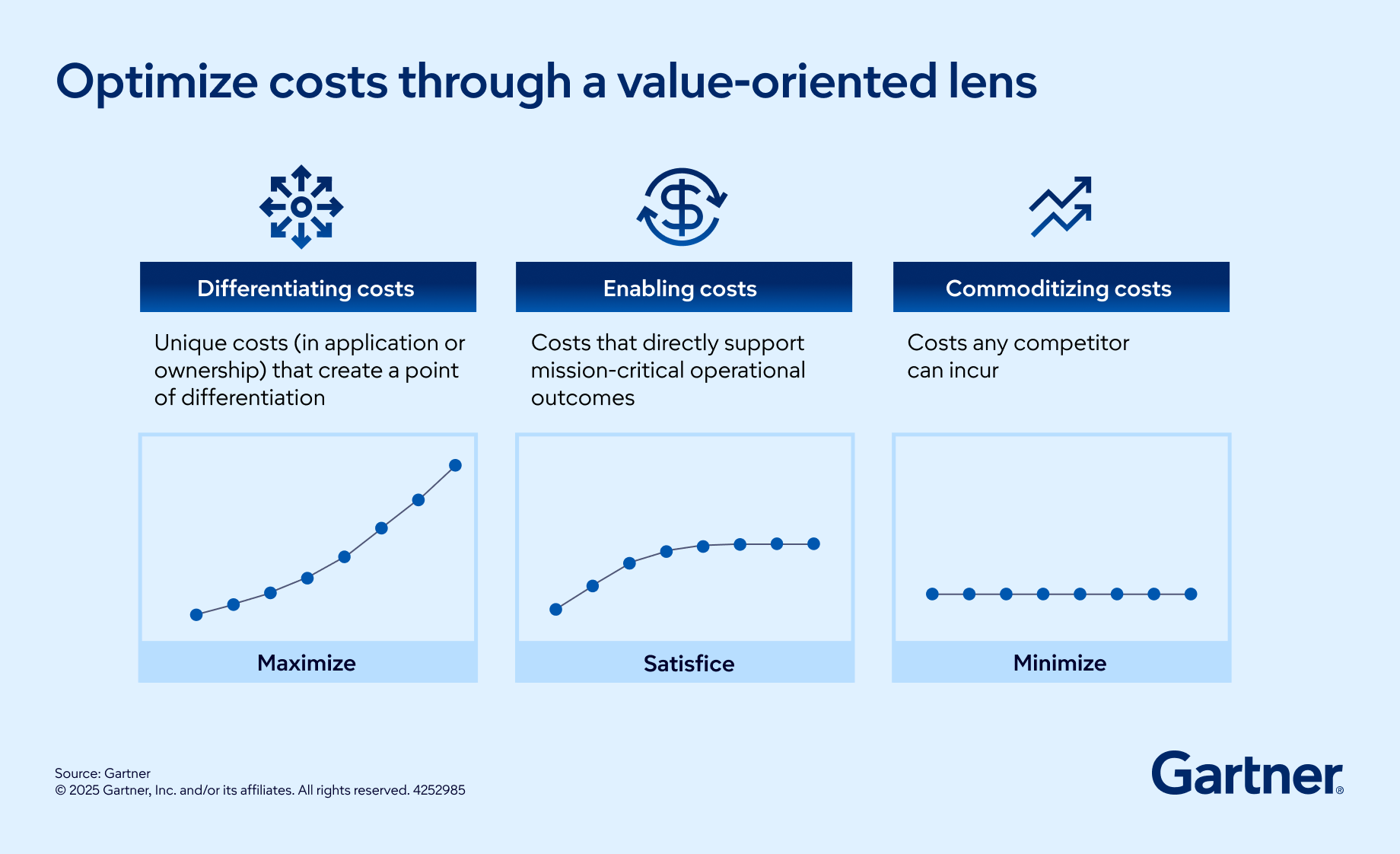
Gartner guides CFOs to abandon cost symmetry and embrace strategic cost imbalance — overspending on differentiators while aggressively cutting commoditized activities. Aligning costs with intrinsic business differentiators rather than market trends drives 42% higher long-term value realization. To sustain margin discipline, CFOs should focus on embedding cost acumen and ownership across decision makers, rather than slashing G&A expenses. Levers to build a cost-conscious culture include winbacks and cost-aligned incentives, on-demand cost analytics and teaching-focused business partners.
PRIORITY 2
Deliver enterprise cost savings with AI
AI is no longer just a growth lever — it’s a cost lever. CFOs must rethink cost categories and the data needed to drive successful cost optimization outcomes. Leaders who keep the old technology cost management playbook often will find their typical old 2-3% labor cost increases replaced with 8-10% cloud and vendor cost increases.
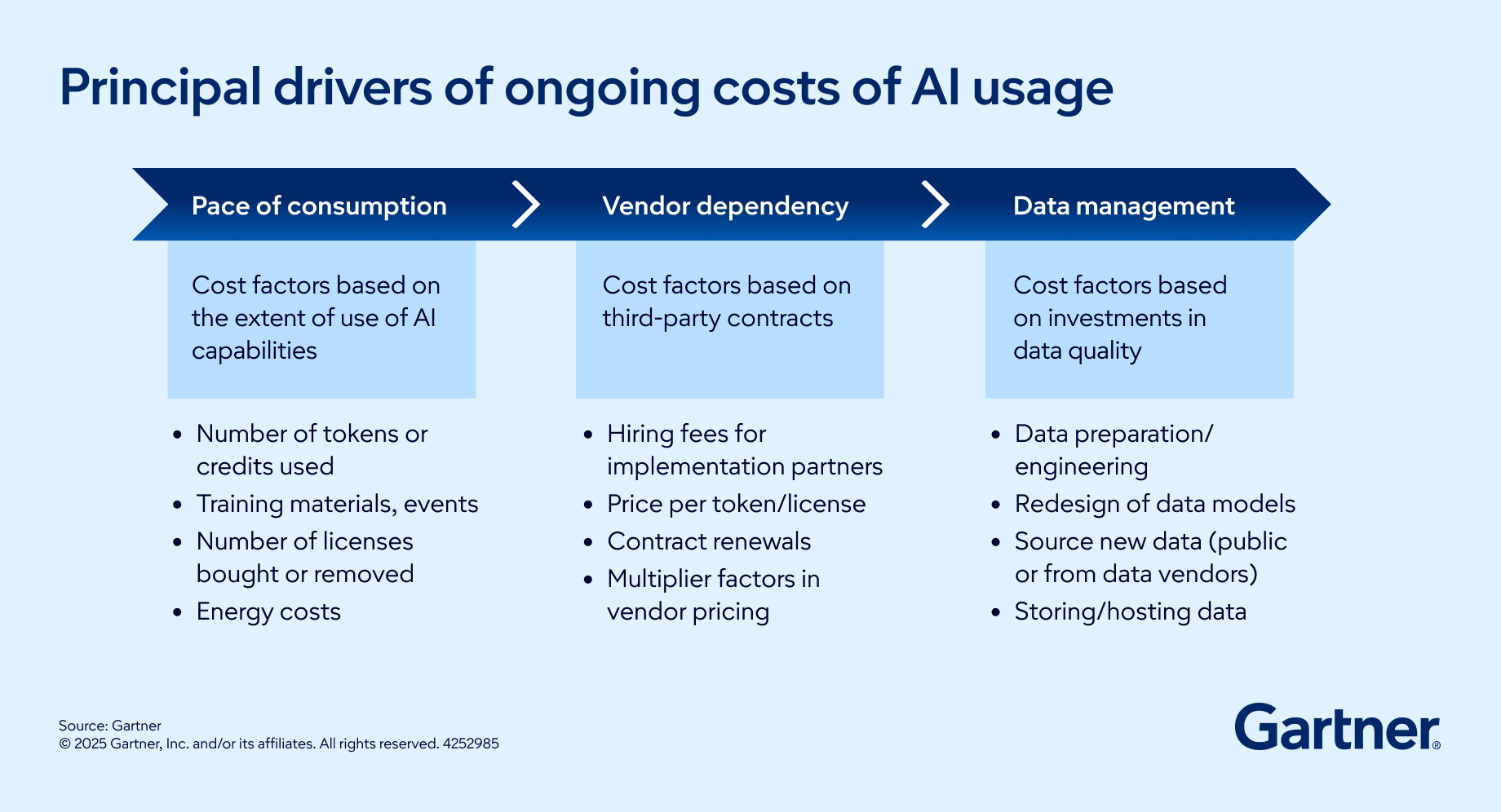
To deliver enterprise-level AI impact, CFOs should target the three unique drivers of AI’s ongoing costs: pace of consumption, vendor dependency and data management. CFOs should also advocate for the use of governance tools, such as administrative consoles embedded in GenAI solutions that allow teams to monitor usage and manage related costs.
PRIORITY 3
Identify and scale high-value AI use cases in finance
While 84% of finance teams are planning or deploying AI initiatives, only 36% of CFOs feel confident in driving meaningful AI outcomes. The key is prioritization: CFOs should focus on scaling high-value use cases, such as cash flow forecasting, anomaly detection and orchestrated automation, in areas like accounts payable.
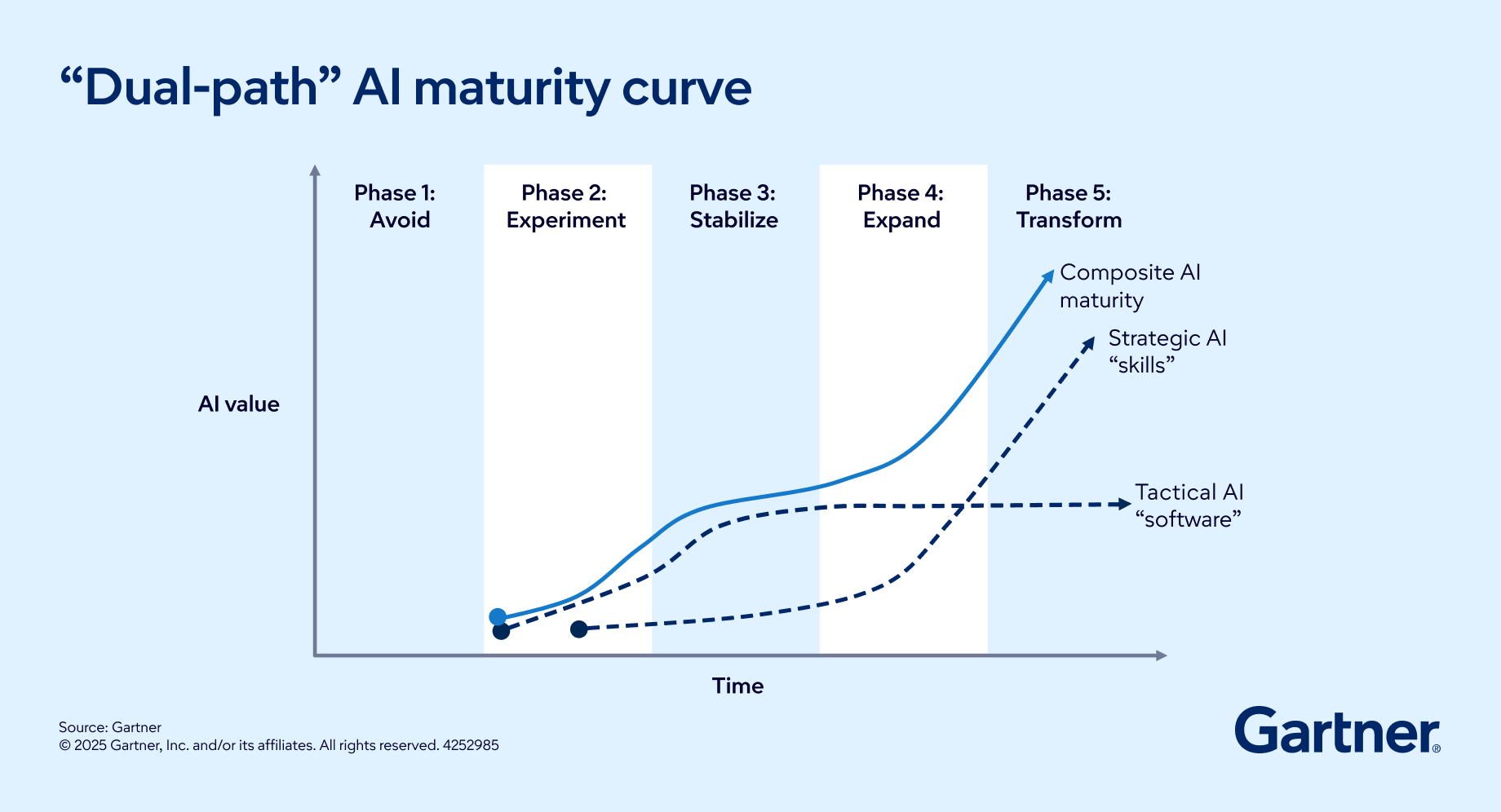
Gartner recommends a “build-and-buy” strategy to accelerate AI maturity. Tactical AI delivers short-term efficiency, but strategic AI — customized solutions aligned to unique business needs — offers long-term competitive advantage. CFOs should orchestrate an environment where humans and machines work together seamlessly, leveraging a blend of generative AI, traditional AI, data science and automation.
PRIORITY 4
Add new digital skills and roles to the finance team
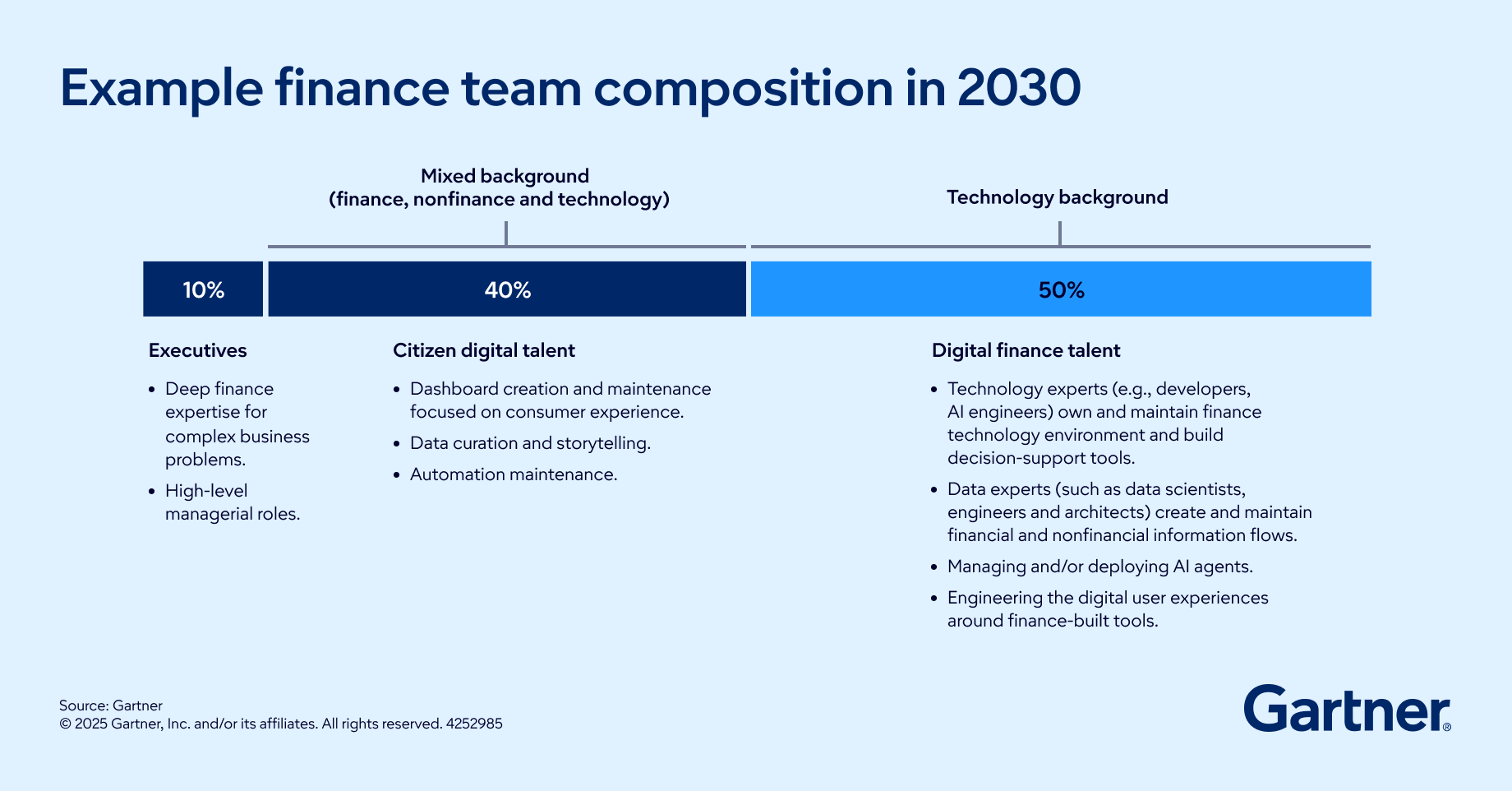
Technology ambitions will fail without the right talent. As AI eliminates more entry-level roles, the traditional bottom-heavy finance talent pyramid is shifting to a diamond shape, and only 42% of CFOs are confident in their ability to hire and retain digital finance talent. By 2030, Gartner expects a significant increase in finance staff with technology and data expertise.
CFOs must prioritize building a workforce strategy that captures critical tacit knowledge, while accelerating digital skill development. This includes hiring technical talent from nonfinance backgrounds, investing in citizen digital talent programs, and creating career paths that blend finance, technology and data science.
PRIORITY 5
Accelerate finance transformation with a limited tech budget
Cloud ERP, with embedded AI features and continuous vendor updates, is reshaping the finance technology landscape. Over 70% of finance organizations are planning ERP migrations, but many leaders experience regret due to unclear frameworks for vendor selection and post-go-live process improvements.
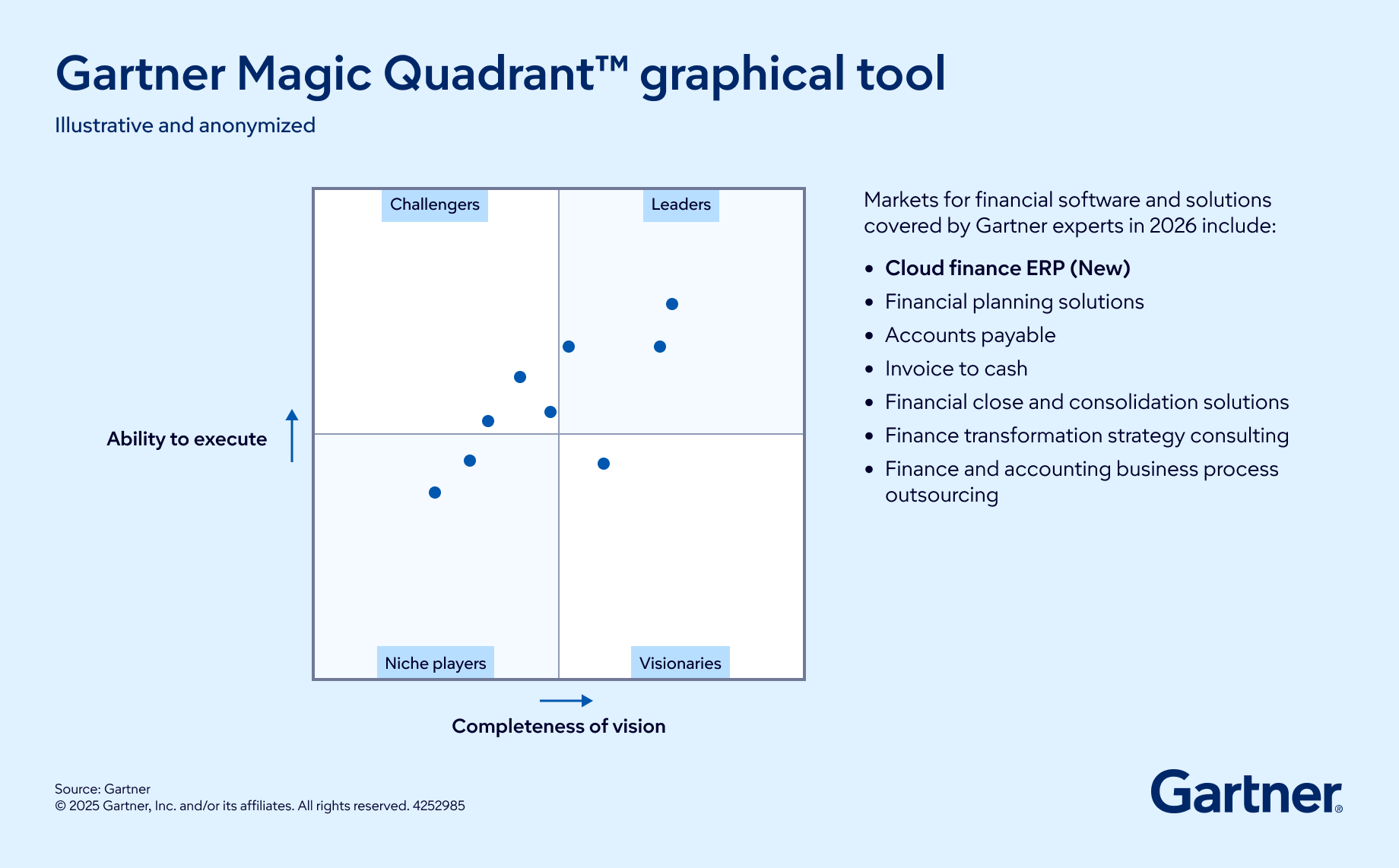
CFOs should leverage the Gartner Magic Quadrant™ graphical tool for intelligence on vendor capabilities, or connect with a Gartner analyst for an overview of the fast-evolving finance AI software market and change management best practices. Smart vendor engagement and disciplined portfolio optimization will be essential to maximize value from technology spend.
Don’t navigate 2026 alone
Partner with Gartner to gain clarity, confidence and a competitive edge through personalized guidance, peer-tested best practices and tools to accelerate your impact.