Four trends redefining talent strategy as AI, evolving skills and productivity pressures reshape the workforce
- Gartner client? Log in for personalized search results.
The Future of Talent Strategy: A CHRO's Guide
Why CHROs must rethink talent strategy
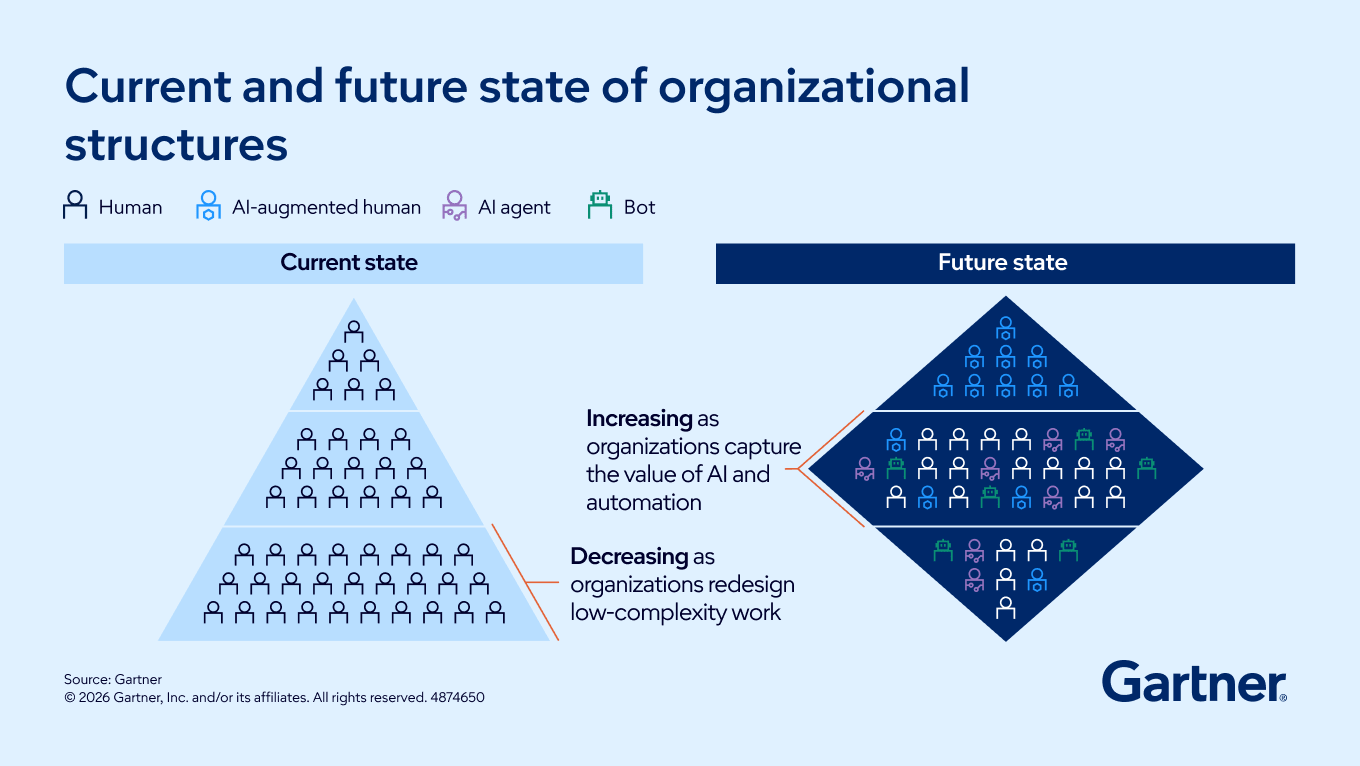
AI is reshaping organizational structures by automating low complexity work and accelerating changes to skills, productivity and performance management. These shifts are forcing a reset of talent strategy.
Gartner’s Future of Talent Strategy provides a practical guide to four trends shaping talent strategy in 2026 and the actions CHROs should take to protect productivity and build future capability, including how to:
Redesign early career talent pipelines as AI reduces traditional on the job learning
Align recruiting and talent management around internal mobility and redeployment
Address productivity loss driven by regrettable retention and low performance
Evolve performance management from compliance focused processes to development driven outcomes
About talent strategy
Chief Human Resources Officers (CHROs) are increasingly being asked to develop and clearly articulate their organization’s talent strategy. Their role requires them to be strategic value providers — from managing activities to developing a robust, strategic plan for competing for and retaining talent in this ever-changing talent landscape.
However, many CHROs cannot develop clear and compelling talent strategies because they struggle to translate their organizational strategy into talent imperatives. They find it difficult to prioritize HR and talent management initiatives to address these new talent imperatives.
To identify talent imperatives, CHROs should:
Understand the organization’s priorities
Identify long-term "talent enablers" associated with those priorities
Recognize medium-or short-term talent challenges that impact them
This is an opportunity for CHROs to redefine their role and establish themselves as proactive, strategic leaders. They can use the Gartner research to avoid common planning pitfalls and establish a clear and compelling talent strategy.
Talent Strategy FAQs
What is a talent strategy?
A talent strategy defines your plan to optimize the value of your talent assets. It addresses how and why the organization must attract, engage, retain and develop talent, and drive continuous performance improvement.
What key questions should a talent strategy address?
A list of key questions a talent strategy should address include:
What skills and capabilities must we build, buy or borrow?
What talent segments must we attract and retain?
What organizational design elements must we maintain?
What leadership mindset and behaviors must we foster?
What culture and ways of working must we co-create?
What employee experience and the employee value proposition must we deliver?
What challenges do CHROs face in developing talent strategy?
Chief Human Resouces Officers (CHROs) face challenges like accelerating skills gaps, a deficit in future-ready leaders, employee change fatigue, and mismatched AI expectations while developing their talent strategies.