London, U.K., September 11, 2024
- Gartner client? Log in for personalized search results.
Gartner CFO & Finance Executive Conference: Day 1 Highlights
It’s not too late to join the conference
Overview
We are bringing you news and highlights from the Gartner CFO & Finance Executive Conference 2024, taking place this week in London. Below is a collection of key announcements and insights coming out of the conference.
On Day 1 of the conference we are looking at 2024 trends in finance technology, applying AI and machine learning (ML) to complex problems, rethinking FP&As delivery model and five traits CFOs should adopt to pursue a CEO role.
Key Announcements
Finance Technology Trends You Need to Know in 2024
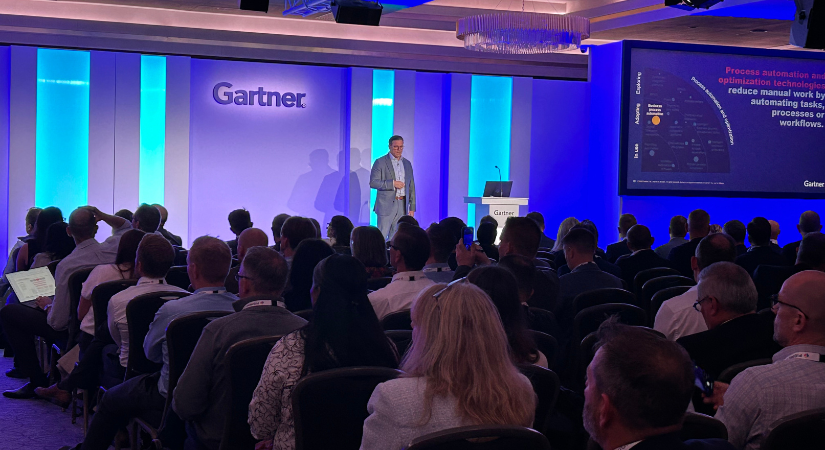
Presented by Matthew Mowrey, Senior Director Analyst, Research, Gartner
CFOs are finding it difficult to fully understand innovative technologies for corporate finance and what’s available in the market today. In this session Matthew Mowrey, Senior Director Analyst at Gartner, shared insights from Gartner’s annual finance technology survey to cut through the noise and help CFOs identify the most critical technologies for their functions.


Key Takeaways
Half of all technologies earmarked by finance leaders for future investment are AI and ML related, focused towards financial forecasting and planning capabilities.
By 2026, more than 80% of independent software vendors will have embedded generative AI capabilities in their enterprise applications, up from less than 1% in 2023.
Modern finance professionals need to possess both technical expertise and business acumen: data scientists should understand business processes, while business analysts should be proficient in data analytics tools. Ensuring finance staff build technology proficiency should be a top priority.
Finance technology is increasingly automating through various technologies such as process mining, RPA, and AI, necessitating digital competencies to keep up with these innovations.
Finance teams are moving away from reliance on spreadsheets as an alternative core application.
From Baby Step to Giant Leap: Gain More Value by Applying AI/ML to Complex Problems
Presented by Randeep Rathindran, Distinguished Vice President, Gartner
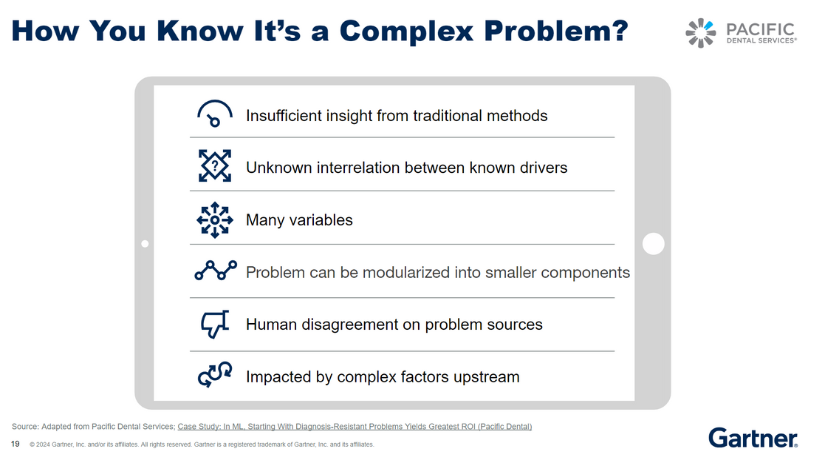
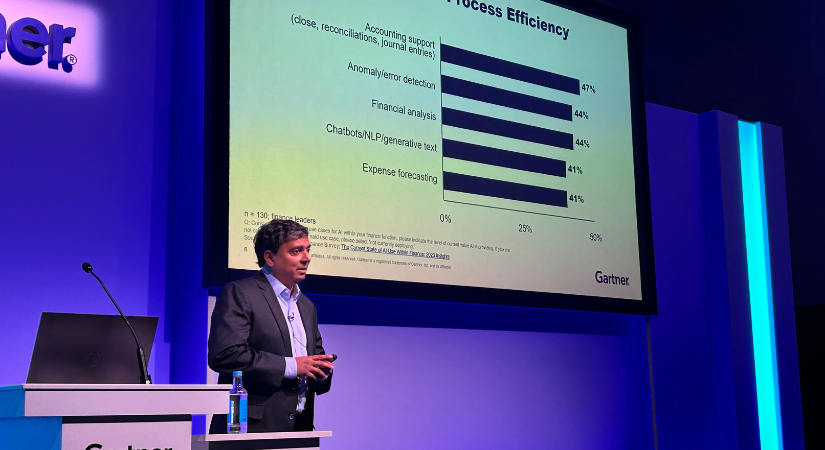
Many organizations are deploying artificial intelligence (AI) and machine learning (ML) to improve process efficiency in accounting and forecasting, but they miss opportunities to capture the most value. In this session, Randeep Rathindran, Distinguished Vice President of Research at Gartner, shared an approach to applying AI and ML that unlocks their power to solve complex problems.

Key Takeaways
- “Finance organizations are deploying AI and ML with a ‘quick win’ mindset, assuming AI will help people become more effective at their jobs, but that is a different thing to efficiency.”
“Deploying AI for solving complex problems should lead to learnings about a businesses’ real problems and nuances in decision making.”
- AI’s true strength is in solving complex problems that involve three difficult, but common, finance scenarios:
- A morass of seemingly unrelated data - AI excels in finding patterns in seemingly unrelated data, things that otherwise smart humans have difficulty in detecting.
- Difficulty in deciphering data to make judgements - AI can make autonomous judgments when analyzing a problem, weighing drivers better than humans.
- Wide spans of data - AI is expansive and improves with more data, without the cognitive limits that humans possess.
Finance leaders should set a higher bar when deploying AI, focusing on complex problems even if it means failure.
CFOs must ask who will be impacted by the AI solution and connect changes in workflows with potential changes to roles and responsibilities, as well as to anticipate potential pushback and areas where additional change management will be necessary.
Rethinking FP&A’s Delivery Model
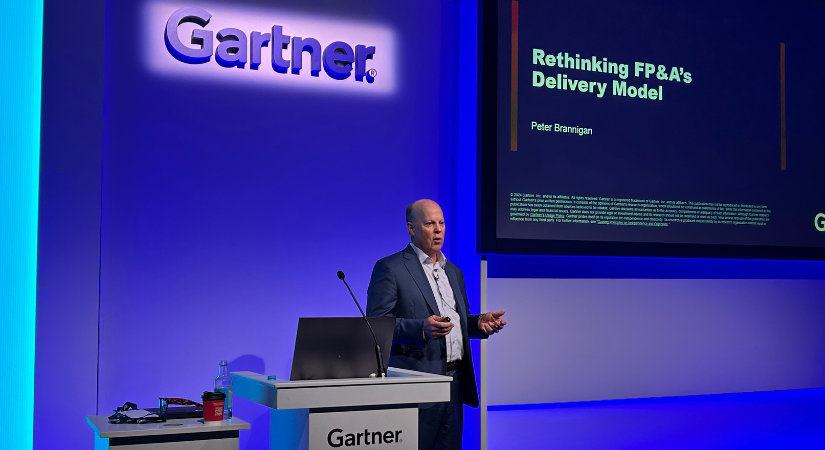
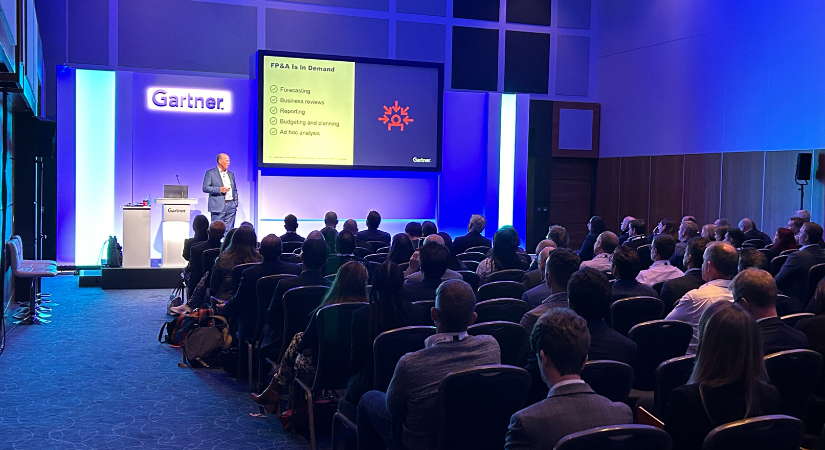
Presented by Peter Brannigan, Senior Director Analyst, Gartner
Financial planning and analysis (FP&A) leaders are struggling with a delivery model that isn’t providing the advanced decision and planning support needed. In this session, Peter Brannigan, Senior Director Analyst at Gartner, discussed how FP&A can free up capacity by placing decision and planning support into the hands of the business using smart, technology-centric tools.
Key Takeaways
“The FP&A function is being asked to make more frequent reforecasting and gap-to-target analyses, as well as other activities like guiding cash flow monitoring and pricing flux strategies, and capacity is increasingly stretched.”
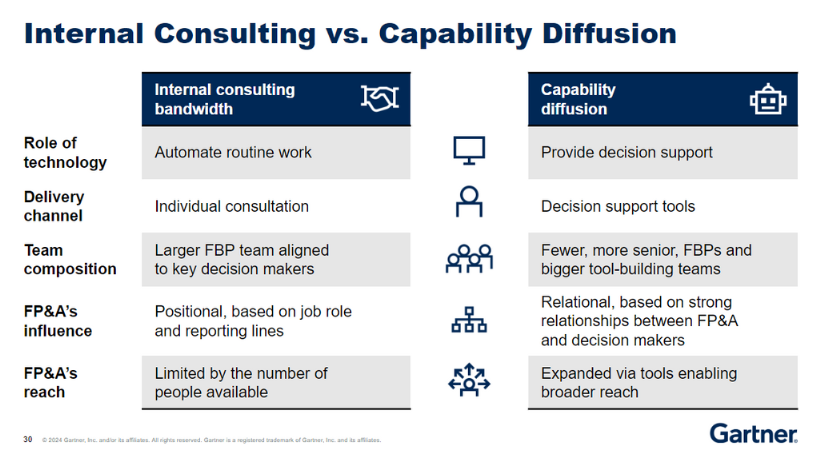
“Capability diffusion” puts less focus on internal consulting and empowers leaders to make more decisions for themselves using tech-centric decision support with FP&A advice embedded into decision support tools.
Capability diffusion has a 3.4 times greater impact on FP&A’s goal of sustainable decision support than internal consulting.
Using the role of technology to perform judgment-based decision support through tool-embedded analysis and insights, capability diffusion significantly expands the reach of FP&A influence by inspiring decision makers to emulate an FP&A mindset.
Persona of a CEO: 5 Traits CFOs Should Adopt to Grow
Presented by Rob O’Donohue, VP Analyst, Gartner
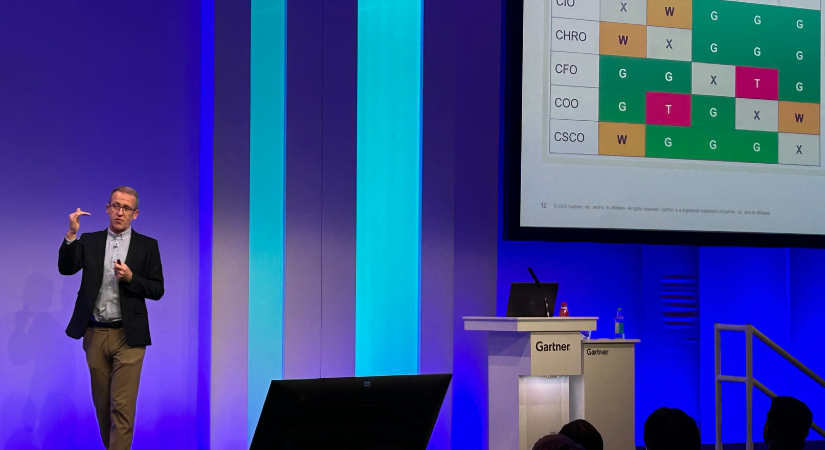
Top-performing enterprise CEOs exhibit traits such as empowerment and accountability. In his session, Rob O’Donohue, Vice President Analyst in Gartner’s Executive Leadership Research Group, detailed the key behaviors CFOs should incorporate to drive their C-suite performance.

Key Takeaways
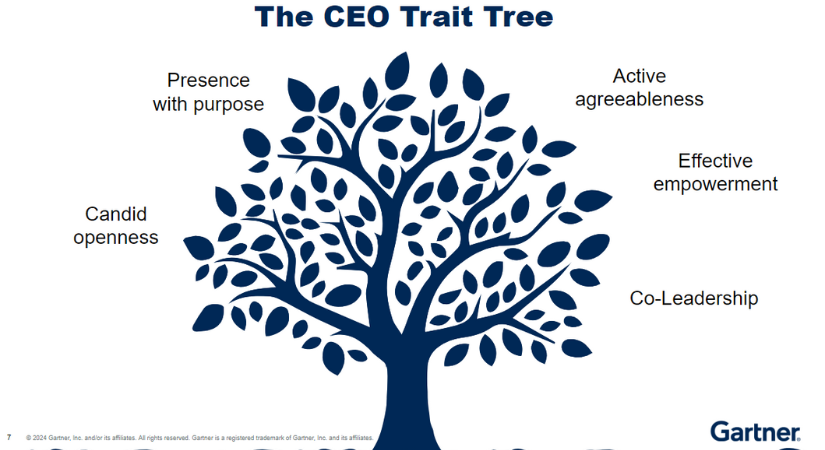
- “CEOs in high performing organizations exhibited five traits that were crucial to their success and the success of the organization. The five traits are people-related leadership characteristics that all CFOs should know.”
Trait 1: Candid Openness: The ability to candidly and effectively communicate, collaborate and build relationships.
Trait 2: Presence with Purpose: The ability to captivate and involve others, fostering a sense of connection, motivation and enthusiasm, while also being fully attentive and involved in the current moment.
Trait 3: Activate Agreeability: A proactive and constructive approach taken, which includes engaging and managing conflict, cooperation to find common ground, seeking diverse perspectives, and being open to challenging feedback.
Trait 4: Effective Empowerment: The ability and willingness of a leader to delegate authority, share decision-making responsibilities and manage organizational performance effectively.
- Trait 5: Co-Leadership: With this trait, leaders have a shared sense of responsibility, accountability, and commitment toward common goals and outcomes.

It’s not too late to join the conference


About Gartner
Gartner (NYSE: IT) delivers actionable, objective business and technology insights that drive smarter decisions and stronger performance on an organization’s mission-critical priorities. To learn more, visit gartner.com.