Barcelona, Spain, November 4, 2024
- Gartner client? Log in for personalized search results.
Gartner IT Symposium/Xpo 2024 Barcelona: Day 1 Highlights
It’s not too late to join the conference
Overview
We are bringing you news and highlights from Gartner IT Symposium/Xpo, taking place this week in Barcelona, Spain. Below is a collection of the key announcements and insights coming out of the conference.
On Day 1 from the conference, we are highlighting the Gartner opening keynote presentation, revealing top trends in AI and top 10 strategic technology trends for 2025, and discussing what the requirements are to prove data is AI ready. Be sure to check this page throughout the day for updates.
Key Announcements
- Gartner Says CIOs Need to Overcome Four Emerging Challenges to Deliver Value With AI
- Gartner Predicts Fortune 500 Companies Will Shift $500 Billion from Energy Opex to Microgrids Through 2027
- Gartner Survey Reveals Only 48% of Digital Initiatives Are Successful
- Gartner Forecasts IT Spending in Europe to Grow 8.7% in 2025
Gartner Opening Keynote: Pacing Yourself in the AI Races
Presented by Alicia Mullery, VP Research and Daryl Plummer, Distinguished VP Analyst, Gartner
The majority of CIOs are now tasked with leading their company’s AI strategy. In the Gartner Opening Keynote, Distinguished VP Analysts Alicia Mullery and Daryl Plummer discussed the four emerging challenges CIOs face when delivering value from AI safely and at scale.


Key Takeaways
“Because of the relentless innovation happening in the tech vendor race, CIOs feel like they are always living the hype, while the reality of their AI outcomes race - how tough it is to get value - makes it feel like they are also in the trough.”
“CIOs can set the pace in their AI outcomes race.”
“If CIOs have modest AI ambitions, in an industry that isn’t being remastered by AI yet, they can afford to go at a more measured pace.”
“This is an AI-steady pace. For those organizations with bigger AI ambitions, or in an industry that’s being reinvented by AI, the pace will be faster. This is an AI-accelerated pace.”
“Whether CIOs are moving at an AI-steady or AI-accelerated pace, they have to deliver value and outcomes.”
“Productivity gains from GenAI are not equally distributed. Gains vary by employee, not just because of their personal interest and levels of adoptions, but according to complexity of job and level of experience.”
- “CIOs should manage AI benefits like a portfolio. Determine the size of your bet in each benefit area, and manage risks and rewards across this portfolio.”
Learn more in the Gartner press release "Gartner Says CIOs Need to Overcome Four Emerging Challenges to Deliver Value With AI."
2025 Top Trends in AI
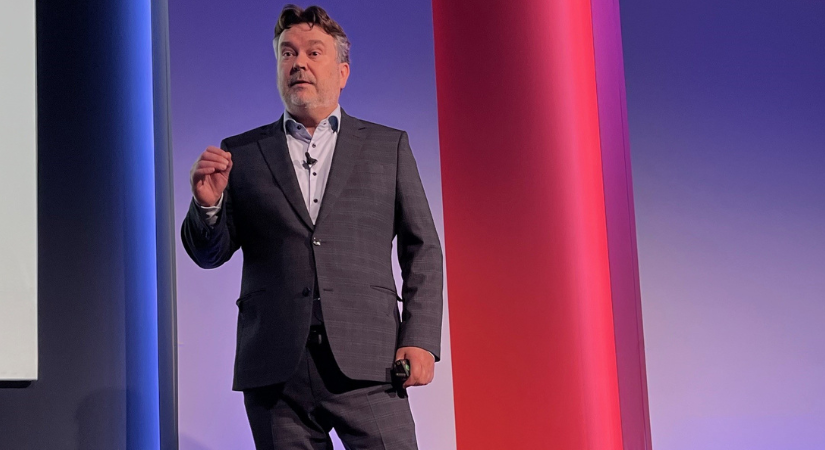
Presented by Pieter den Hamer, VP Analyst, Gartner
How is GenAI evolving and what are its current limitations? Will composite AI or autonomous AI come to the rescue? In this session, Pieter den Hamer, VP Analyst at Gartner, explored the next big thing in AI, and how they may be relevant to an organization.


Key Takeaways
For 2025, Gartner analysts identified three trends:
Increasing AI’s value impact
More actionable and trustworthy AI
Taming the power of AI
“The third trend is about using AI in a responsible way, at the least by having proper AI governance and risk management in place, complying with new regulations.”
“Despite the current emphasis on large language models (LLMs) also in the realm of agents, don’t be fooled by thinking that agents can only exist by using LLMs. That is not true.”
By 2026, 75% of Global 500 companies will apply decision intelligence practices.
By 2028, 33% of enterprise software applications will include agentic AI, up from less than 1% in 2024.
Journalists can receive additional information and/or request an interview with the Gartner expert by contacting Laurence Goasduff at laurence.goasduff@gartner.com.
Signature Series: Top Strategic Technology Trends for 2025
Presented by Nick Jones, Distinguished VP Analyst, Gartner
CIOs must take the time to look to the future to lead their organizations to success. CIOs and other IT leaders can use Gartner’s top strategic technology trends to keep their organization heading safely into the future. In this session, Nick Jones, Distinguished VP Analyst at Gartner, highlighted the top strategic technologies CIOs must know about to prepare for an uncertain future.


Key Takeaways
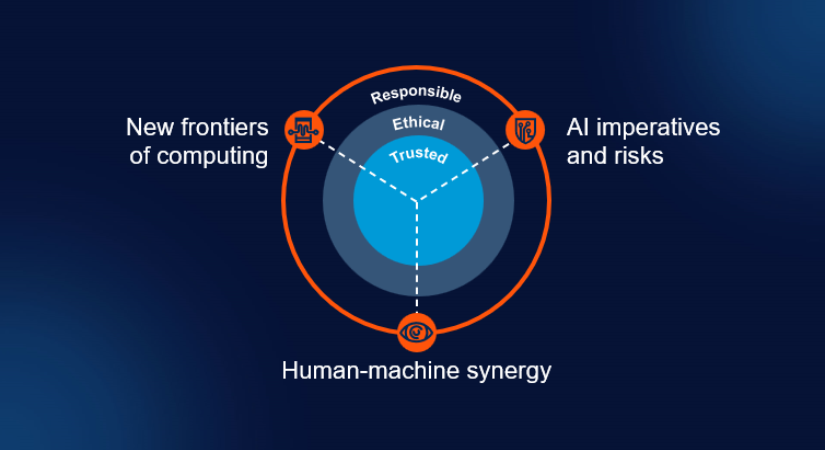
The top trends for 2025 fall into three themes: new frontiers of computing, AI imperatives and risks, and human-machine synergy.
Agentic AI: “Analyze huge amounts of data, make plans, decisions and take action in its target environment, whether physical or digital. It can do things with us or without us. It can act autonomously. It can be everywhere for you.”
Disinformation Security: “An emerging category of technologies aimed at discerning trust, assessing truth and tracking the spread of information.”
Postquantum Cryptography: “Cryptographic algorithm designed to resist attack from both classical and quantum computers.”
Ambient Invisible Intelligence: “Ultra-low-cost tiny wireless tags, devices and sensors. A redefinition of the economics of real-time large-scale tagging, tracking, sensing and intelligence.”
- Spatial Computing: “Emerging computing paradigm that combines physical and digital objects in a shared frame of reference, beyond screen-based displays via mixed reality.”
Journalists can receive additional information and/or request an interview with the Gartner expert by contacting Laurence Goasduff at laurence.goasduff@gartner.com.
Ready Your Data for AI
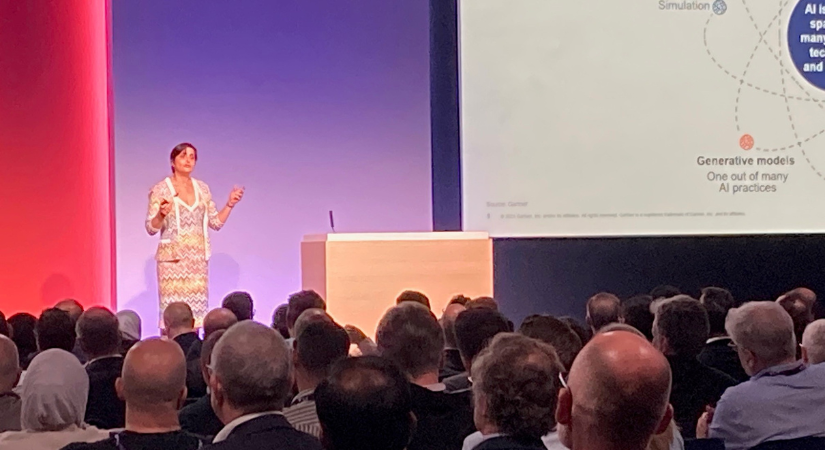
Presented by Roxane Edjlali, Sr Director Analyst, Gartner
AI-ready data is a key pillar for enabling AI-related ambitions. In this session, Roxane Edjlali, Sr Principal Analyst at Gartner, discussed what AI-ready means and how data management should evolve to support its risks and challenges.

Key Takeaways
“Some might be tempted to say AI-ready data is high-quality data, but high-quality data as judged by a human is not AI-ready data.”
“AI-ready data is contextual to the AI use case and technique, necessitating the evolution of data management practices.”
“Data readiness for AI is not something you can build once and for all nor that you can build ahead of time for all your data. It is a process and a practice based on availability of metadata to measure, quantify and govern the data.”
“Common data management practices are too slow, too structured and too rigid for AI teams.“Make data management an AI strategic priority.”
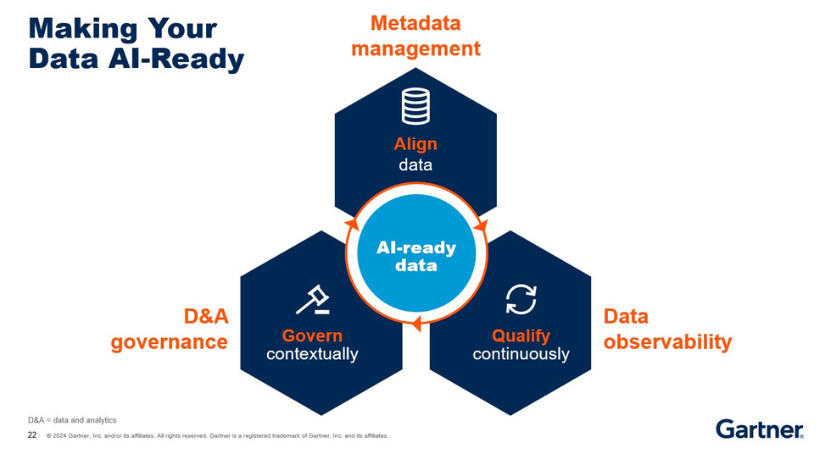
To prove data is AI ready, it requires metadata management for source lineage; observability to qualify use when developing the model and also when operationalizing the model, and data governance to support policies and privacy and security requirements.
Journalists can receive additional information and/or request an interview with the Gartner expert by contacting Laurence Goasduff at laurence.goasduff@gartner.com.

It’s not too late to join the conference


About Gartner
Gartner (NYSE: IT) delivers actionable, objective business and technology insights that drive smarter decisions and stronger performance on an organization’s mission-critical priorities. To learn more, visit gartner.com.