How to effectively partner with the business to maximize performance.
- Gartner client? Log in for personalized search results.
Delivering on the HR Strategic Promise
Transform HR into a strategic partner to accelerate business results
HR leaders must move beyond traditional support roles and act as true partners in business delivery. This requires not just diagnosing gaps but proactively refining approaches to stay ahead of business needs. Too often HR functions struggle with misalignment, inefficiencies and missed opportunities, limiting their ability to drive meaningful impact.
This page, built with insights from world-class CHROs, equips HR leaders to:
- Ruthlessly prioritize
- Execute with rigor
- Co-lead change
Download the toolkit to get started creating a function that doesn’t just respond to the business but actively shapes its success.
A framework to deliver HR’s strategic promise
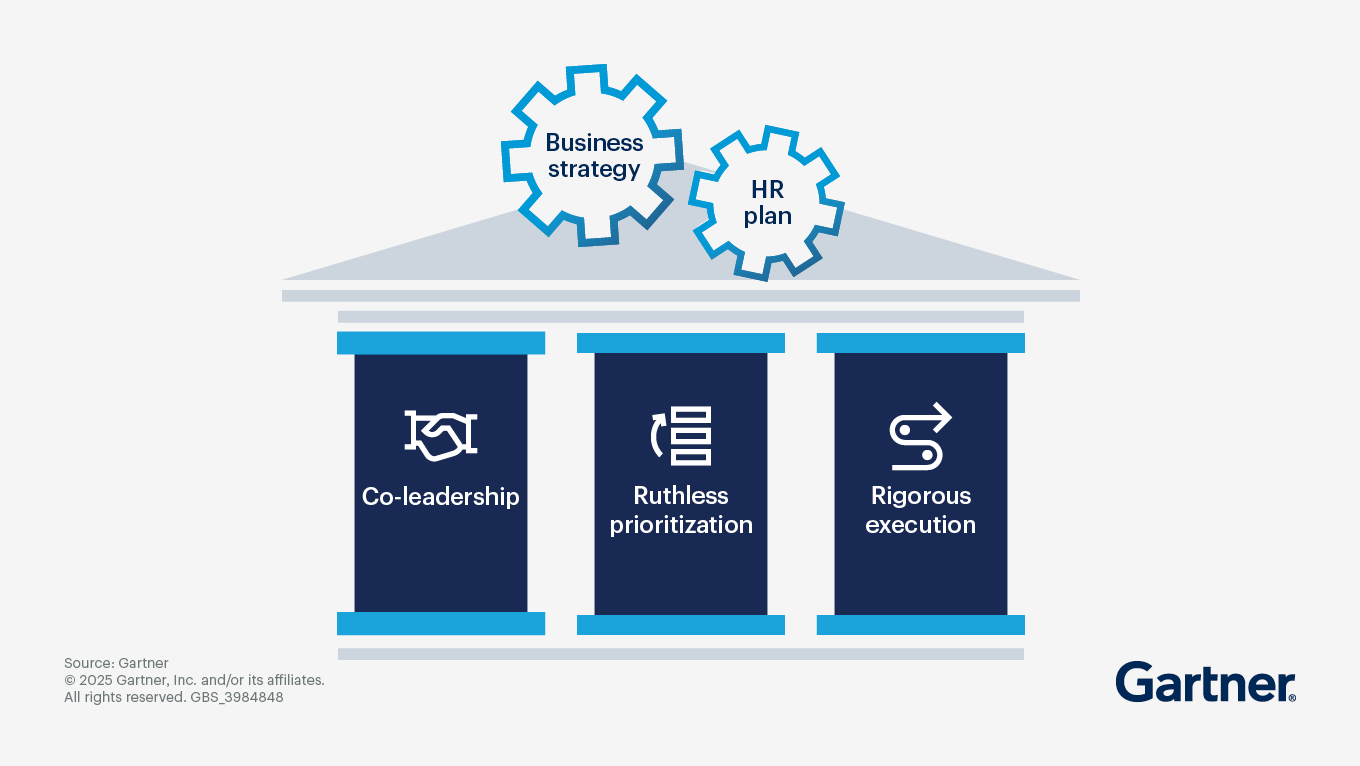
To deliver on HR’s strategic promise, the HR plan must be fully embedded in business strategy and driven by co-leadership, ruthless prioritization and rigorous execution.
- Strategy
- Leadership
- Prioritization
- Execution
People strategy is business strategy
Human resources (HR) is evolving beyond its traditional role as a support function, positioning itself as a true partner in business delivery within the organization. Business strategies must adapt rapidly to address increasing complexity and volatility, and it is not sufficient for HR to reactively align its strategy with the business. Instead, HR leaders must proactively co-create and drive business strategy, ensuring that HR and business objectives are seamlessly integrated from the outset.
By embedding the HR plan within the broader business strategy, organizations can better anticipate workforce needs, capitalize on market changes and foster a culture of agility and innovation. This proactive approach enables HR to directly contribute to organizational growth and resilience.
Close gaps in strategic partnership
To form an effective strategic partnership with the business, clear alignment of expectations is essential. HR leaders must fully understand where the HR plan intersects with business strategy, as well as the desired pace and scale of strategic change. This alignment ensures that HR can actively contribute to the evolution of business strategy, rather than simply supporting it.
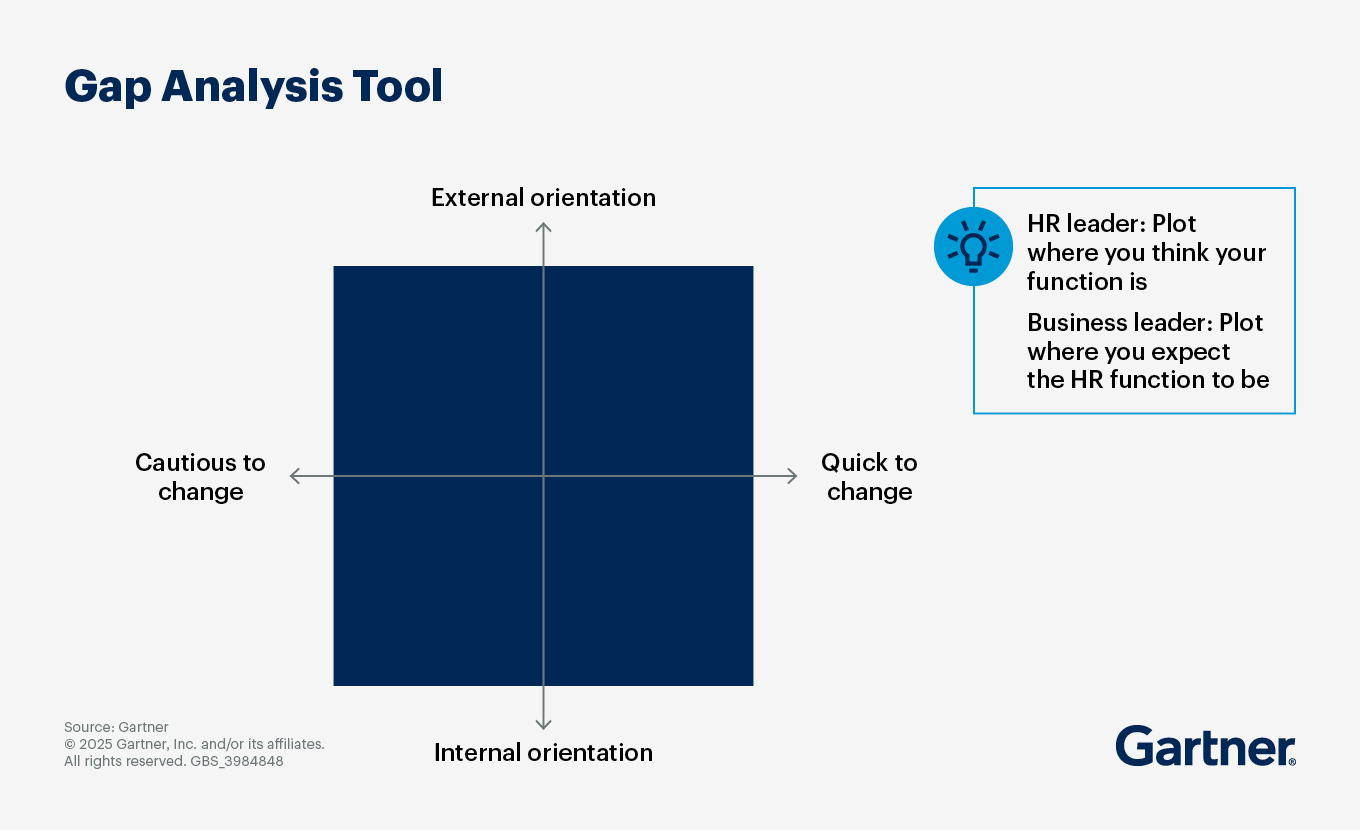
Conducting a comprehensive gap analysis is a critical first step. This process helps HR leaders identify what the business truly expects from HR in terms of strategic partnership, responsiveness and value creation. The insights gained from this analysis inform how HR should approach strategic change, ensuring that HR initiatives are both timely and relevant.
Pacing is everything
It’s important to note that agility and rapid change are not always the optimal responses. In some cases, steadfastly adhering to core principles and values may offer the greatest long-term benefit to the organization. HR must strike a balance between adaptability and consistency, ensuring that strategic decisions support both immediate needs and enduring organizational goals. Ensure you have a thorough grasp on what the business expects of the HR function in terms of agility and strategic alignment. Speak with the CEO and other business leaders to gain an understanding of how they would prefer HR to operate in times of broader change.
HR’s value is in teaching the business what works
HR leaders are multifaceted
Today’s CHROs are expected to do far more than manage HR operations. They play a pivotal role in shaping organizational strategy, advising executive leadership, driving transformational change and fostering a culture of continuous improvement.
A world-class CHRO fulfills five roles in one:
- Serving as the board and CEO’s leader of human capital and culture
- Being able to win in a dynamic talent landscape
- Leading enterprise strategic change
- Leading through evolving stakeholder scenarios
- Acting as a trusted advisor and coach
Leverage networks and build credibility for strategic influence
To fulfill these responsibilities, HR leaders must leverage their networks, build strong relationships across the organization and take an active role in the creation and evolution of business strategy. HR’s unique value lies not only in responding to business needs, but also in educating and guiding the organization on what truly works to achieve strategic objectives. To effectively coach and influence the business through strategy development, it’s imperative to understand who your stakeholders are and what they care about.
Identify strategy stakeholders by asking:
- Who is directly — and indirectly — involved with my HR plan?
- Who is or might be affected by my HR plan?
- Who gains or loses from executing on my HR plan?
After identifying your stakeholders, understand what motivates them by asking:
- What are their business goals and objectives?
- Who are they looking to impress, and what will they need to impress them?
- How do they currently work with the HR function?
- Who influences their opinions?
- Who else may be influenced by their opinions?
Effective communication is also paramount. HR leaders must be able to clearly articulate strategy both upward to executive leadership and downward throughout the organization. Securing and maintaining buy-in for HR initiatives is essential for success, and strong communication skills are critical in building the trust and alignment necessary to drive meaningful change. A deep understanding of the function and the business is key to building conviction and credibility in these communications, so be prepared to explain the business case for your HR plan and how exactly it can be accomplished.
Ruthless prioritization is the cornerstone of strategic excellence
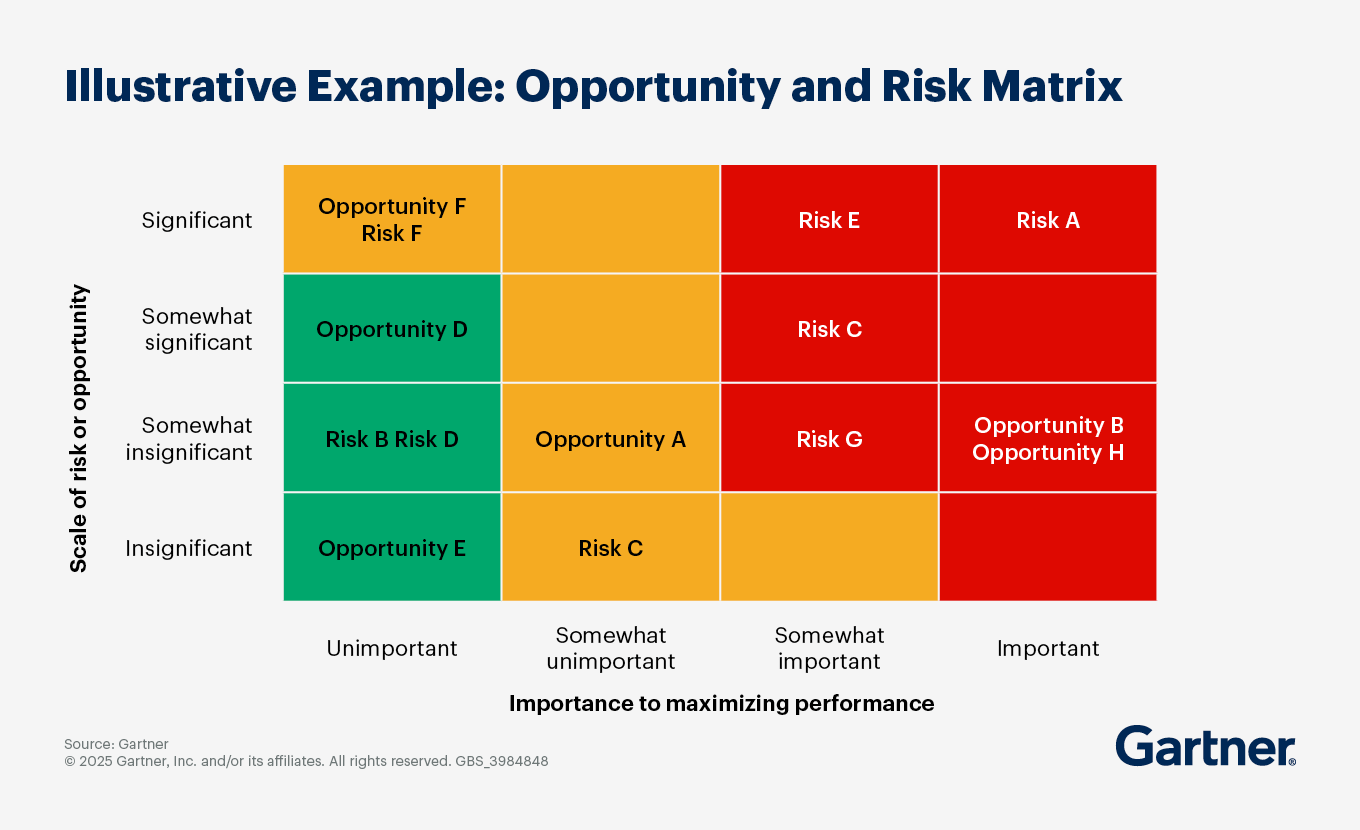
HR cannot afford to be a function that simply reacts; it must drive. Yet too many HR teams remain trapped in an additive mindset, layering initiative upon initiative without the discipline to stop or refuse what does not serve the business. The result is diluted impact, frustrated leaders and a function perpetually stuck in reactive, execution mode rather than shaping strategy.
To combat this dynamic, HR leaders must ruthlessly prioritize. They must make the hard choices that separate mere activity from impact. This requires:
- Aligning every initiative to the organization’s top business priorities
- Establishing clear criteria for what merits investment and what no longer does
- Contracting with leadership on outcomes, not just activities
A framework for focus
Set non-negotiables.
Define the few HR priorities that will drive measurable business impact. If an initiative doesn’t directly advance these, it doesn’t get resources.Build stopping mechanisms.
Regular portfolio reviews with hard capacity limits prevent initiative creep. Use data, not internal consensus, as your filter.Lead through trade-offs.
When everything is a priority, nothing is. Model strategic courage by sunsetting legacy programs to free up capacity for high-impact work.
The result is better execution, stronger credibility and a high-performance culture within and outside of HR that effectively drives business results. Organizations that master this discipline see HR’s role transform from support to co-leader of business strategy.
Strategy is as much about what you say “no” to as what you say “yes” to. Delivering on the HR strategic promise is not about doing more with less. It’s about doing what matters with focus and ensuring it delivers on the business strategy.


Rigor in execution drives results
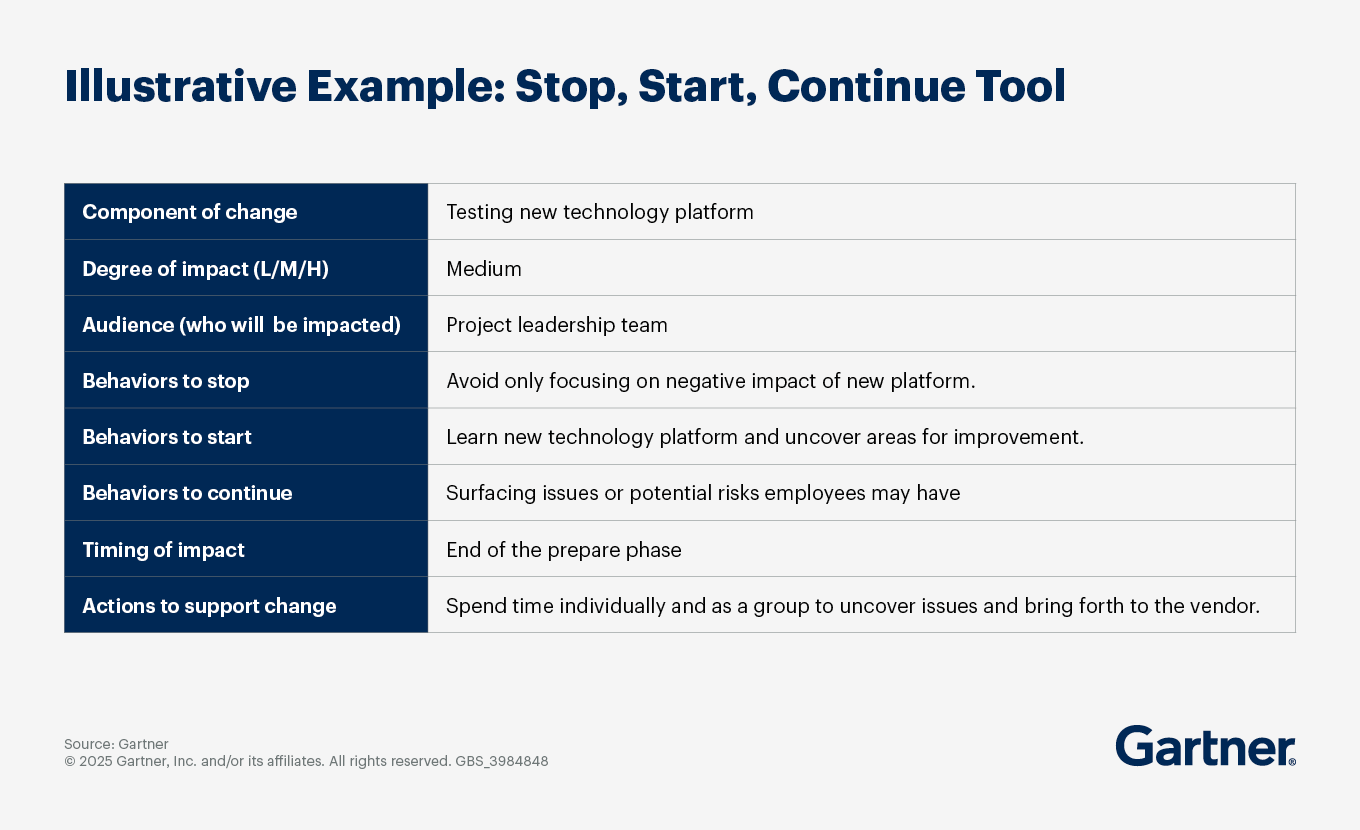
Even the most brilliant HR plan means little without disciplined execution. The difference between impact and mere aspiration lies in operational rigor, a systematic approach to projects that turns strategic intent into measurable business results.
To ensure rigor in execution, HR leaders must do the following:
Make project excellence a core competency
HR teams must adopt the systematic excellence in execution rigor as a basic standard. This requires:
- Mandatory project charters for all strategic work, specifying:
- Concrete business outcomes (not HR activity metrics)
- Defined success criteria and end dates
- Explicit resource commitments and executive sponsors
- Investment in HR’s project management capabilities through:
- Agile methodology training
- Dedicated change management resources
- Portfolio management tools and processes
Create visible accountability structures
Transparency drives discipline. Implement simple but powerful mechanisms such as:
- Public dashboards tracking progress against milestones
- Regular leadership reviews of resource allocation versus strategic priorities
- Celebration of completed work before approving new initiatives
These practices create organizational muscle memory for finishing what gets started while maintaining strategic focus.
Lead with courage
The hardest part of execution isn’t process, it’s people. CHROs must:
- Empower leaders to challenge misaligned work by asking, “Which priority will this displace?”
- Institutionalize decision-making forums where “no” is a strategic choice, not a failure
- Model the behavior by visibly deprioritizing their own initiatives when necessary
No process, no matter how elegant, can substitute for leaders willing to make and stand by difficult choices. The most effective CHROs combine operational discipline with the emotional intelligence to:
- Navigate the tension between short-term demands and long-term strategy
- Maintain team engagement during necessary trade-offs
- Keep the organization focused on quality of execution over quantity of activity

The payoff
Organizations that master execution rigor achieve:
- Faster implementation cycles for strategic initiatives
- Higher leadership satisfaction with HR’s contribution
- Tangible improvements in workforce productivity metrics
These outcomes come not from doing more, but from bringing relentless focus to doing fewer things exceptionally well. In the end, rigorous execution ensures HR initiatives deliver measurable business impact by maintaining discipline and accountability, and preventing wasted effort and misaligned outcomes.
Drive stronger performance on your mission-critical priorities.