Fresh insights on emerging trends
- Gartner client? Log in for personalized search results.
Gartner First Takes

Preview
First Take: Databricks CustomerLake Erodes Stand-Alone CDPs and Shifts the Martech Landscape
By Audrey Brosnan, Benjamin Bloom, Lizzy Foo Kune | 26 June 2026
Chief marketing officers (CMOs) must urgently reassess martech and data strategies as Databricks announces CustomerLake, a governed identity and activation layer. This marks the start of a platform-layer race that will redefine customer data management and marketing operations.
Note: This is our first take on the announcement. Gartner will make updates as more information becomes available. We are currently awaiting fact-review feedback from Databricks.
Strategic Planning Assumption
By 2030, 80% of net-new enterprise CDP deployments will be embedded in — or composable with — data platforms, rather than stand-alone.
Through 2027, 80% of CMOs renewing CDP contracts will choose single-year or pay-as-you-go terms, signaling the stand-alone SaaS CDP model’s decline.
Analysis
Are You Ready for the Shift From CDP to Data Platform?
At its 16 June 2026 Data + AI Summit, Databricks unveiled CustomerLake, which is not a stand-alone customer data platform (CDP) but a bundle of profile and campaign agents that govern customer data and activation natively within Databricks’s data management platform. CustomerLake will be priced by consumption, essentially by agent activation levels.
There’s no separate activation layer, no third-party identity vendor and no data movement out of a company’s governed environment. CustomerLake serves as a governed data fabric, allowing agentic AI to serve as the operational layer that activates data.
CustomerLake is positioned to offer:
The first data platform to make a direct play for martech leadership
Unified customer profiles within Databricks
A marketer-friendly segmentation workspace
Agentic orchestration for campaign activation
Reverse extract, transform, load (ETL) connectors to leading martech platforms
A native-governed data fabric, removing boundaries between CIO-owned platforms and CDPs
Steeper cost and architectural competition for martech vendors
Accelerated convergence of martech and data platform strategies
CMOs should treat this as a data infrastructure decision, not as CDP procurement, requiring new evaluation frameworks for scope, timeline and risk.
Why It Matters
As of 2025, 50% of marketing technology teams report a deployed lakehouse architecture as a critical martech stack integration pathway. Marketers are eager to find solutions for fragmented customer datasets and martech stack integration with data platforms whose only access points are code-based (i.e., not marketing-friendly).
CustomerLake addresses both pain points by embedding core martech functions into the data platform. This forms a governance layer that absorbs the SaaS stack around it, expanding reach across business units and enhancing CMOs’ influence.
Databricks’s pitch is that the data platform is now the CDP. While consolidating martech offers the appeal of simplification, it also shifts the balance of power around the data platform. Data platforms offer more control of data management and more visibility into marketing’s use of and return on data. The real question for marketing leaders will be whether to align more closely with your firm’s enterprise data strategy or to defend your preferred CDP vendor, if not your larger martech strategy.
The competitive implication is clear: Gartner expects Snowflake and others to follow. Databricks’s announcement is the first move in a platform-layer race for marketing infrastructure ownership.
As native CDP capabilities become standard in data platforms, stand-alone CDPs will lose relevance, and major application vendors like Salesforce and Adobe will face mounting pressure as these data platforms take center stage in marketing operations.
This reflects a market shift toward converged data management platforms. It’s one of eight top trends in D&A for 2026 (see Top Trends in D&A for 2026: Converging Solutions With Data Management Platforms). The market is moving away from the fragmented modern data stack, which relied on multiple point solutions, toward unified platforms offering preintegrated capabilities.
Databricks is driving convergence by natively embedding data integration, governance, metadata management and AI enablement into a single environment. This is a strategic maneuver by an independent software vendor to become the enterprise’s center of data gravity and prove that clients don’t need to leave its ecosystem to achieve their customer experience and AI aspirations.
What This Means for CMOs
If You’re on Databricks
Add CustomerLake to your CDP shortlist. With full general availability (GA) expected in 4Q26 or early 2027, schedule a CustomerLake evaluation for 3Q26...
Already a Gartner client?
Gain full access to this First Take and more exclusive insights by becoming a Gartner client.
Related insights
First Takes are just a sliver of what Gartner clients get

Guidance on your mission-critical priorities (MCPs)
Focus on the core imperatives that drive results for your business, board and stakeholders with step-by-step plans, bold and actionable perspectives, comprehensive insights and answers to your biggest questions.

Tools to make decisions with confidence
Gartner Hype Cycle™, Gartner Magic Quadrant™ and Gartner Score are just a few tools you can use to assess current performance, implement best practices and accelerate improvements.

Access to C-Level Communities, conferences and peer networks
Connect with Gartner analysts, best-in-class solution providers and verified peers to refine your organization’s strategies, dial up growth, reduce risk and gain a competitive edge.
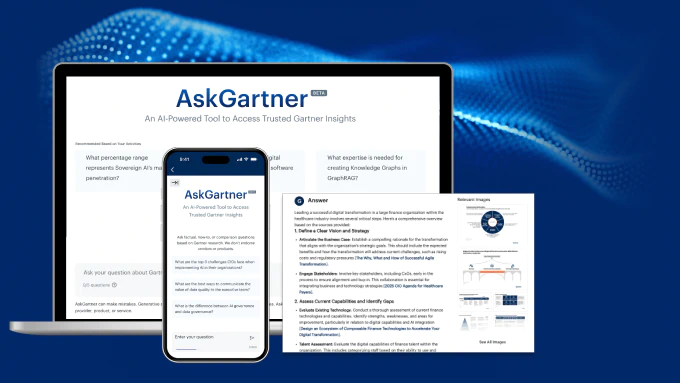
AskGartner
AskGartner is the only AI-powered tool that gives you access to the proprietary Gartner insights trusted by C-Level executives and their teams.
© 2026 Gartner, Inc. and/or its affiliates. All rights reserved. Gartner is a registered trademark of Gartner, Inc. and its affiliates. This publication may not be reproduced or distributed in any form without Gartner's prior written permission. It consists of the opinions of Gartner's business and technology insights organization, which should not be construed as statements of fact. While the information contained in this publication has been obtained from sources believed to be reliable, Gartner disclaims all warranties as to the accuracy, completeness or adequacy of such information. Although Gartner business and technology insights may address legal and financial issues, Gartner does not provide legal or investment advice and its insights should not be construed or used as such. Your access and use of this publication are governed by Gartner’s Usage Policy. Gartner prides itself on its reputation for independence and objectivity. Its insights are produced independently by its business and technology insights organization without input or influence from any third party. For further information, see Guiding Principles on Independence and Objectivity. Gartner publications and other content may not be used as input into or for the training or development of generative artificial intelligence, machine learning, algorithms, software or related technologies.