Newsroom

Conference Updates

Orlando, Fla., October 24, 2023

Gartner ReimagineHR Conference, North America 2023: Day 2 Highlights

We are bringing you news and highlights from the Gartner ReimagineHR Conference, taking place through tomorrow, Wednesday, October 25, in Orlando, Florida. Below is a collection of the key announcements and insights coming out of the conference. You can read the highlights from Day 1 here.

On Day 2 from the conference, we are highlighting how HR leaders should approach change fatigue, outlining how organizations can address pay gaps, the manager’s role in creating a culture of sustainability, and the main drivers of HIPO retention at organizations today. Be sure to check this page throughout the day for updates.

Key Announcements

Reduce Employee Fatigue with Proactive Change Management

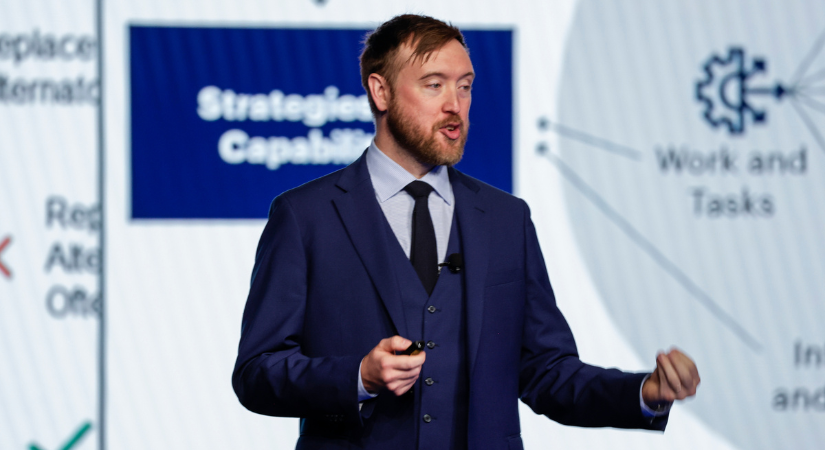
Presented by Andy Karr, Vice President, Gartner

Employees are fatigued from persistent disruption from overlapping changes in recent years, leaving many HR leaders stuck in a cycle of reactive change fatigue management, forever "fixing" depleted employees. In this session, Andy Karr, Vice President at Gartner, shared how HR leaders should approach change fatigue risk to help employees maintain consistent energy and performance.

Key Takeaways

  • “The most common approach to change management centers on involving employees, which can reduce change fatigue by up to 29% while making willingness to change 1.5 times more likely.” 

  • “However, from 2016 to 2022, the percentage of employees willing to change their work behaviors to support their organization’s goals decreased by 42%.” 

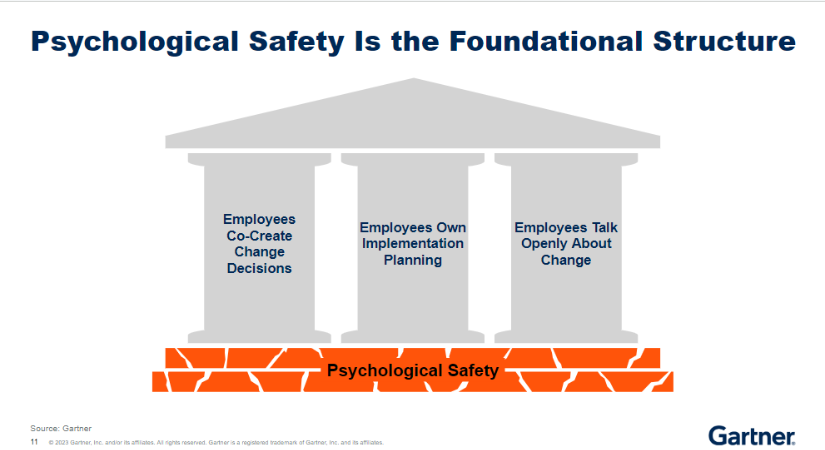
  • “Simply involving employees in change efforts is necessary, but insufficient; organizations must create an environment of psychological safety if they want employee involvement to be productive.”

  •  “When managers create a psychologically safe environment for their employees, it can have up to a 46% reduction in change fatigue.” 

  • “Psychological safety is composed of two key components: 

    • Safety to Experiment: Comfort in taking risks to accomplish team goals, even if it results in failure. 

    • Safety to Challenge: Comfort pushing back against the status quo and contributing to transformation efforts.”

It’s not too late to join the conference!

The Unspoken Key to Pay Equity in 2024

Presented by Rachel Juley, Senior Principal, Advisory at Gartner

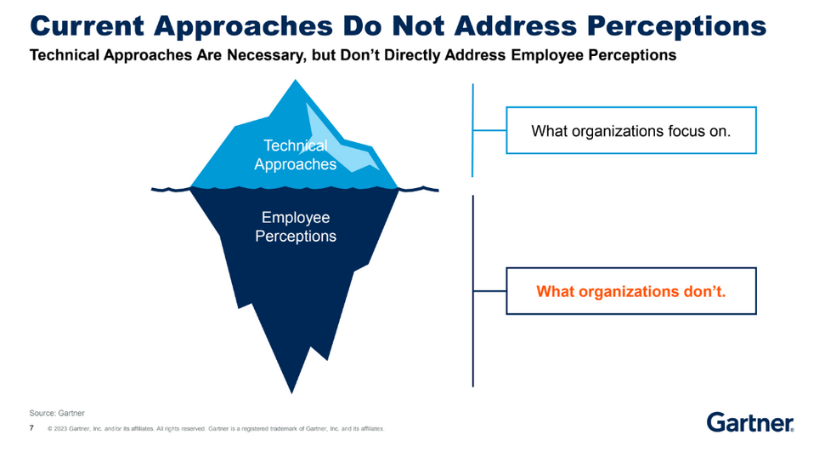
Organizations need to change their approach around pay equity, focusing not just on the technical aspects of pay equity but also on employees' perceptions of pay equity more broadly. In this session, Rachel Juley, Senior Principal, Advisory at Gartner, outlined how organizations can address pay gaps to achieve a more equitable outcome. 

Key Takeaways

  • “Employees’ trust in pay is alarmingly low: Less than one-third of employees believe their pay is fair and only 39% agree that their organization’s pay practices are free of bias.”

  • “Organizations tend to focus on the technical aspects of pay equity – conducting pay equity audits and adjusting salaries as needed – but they ignore employee perceptions of pay.”

  • “Employees who perceive pay as unequitable are 15% less likely to stay at their organization and are 13% more likely to actively look for a new job.”

  • “Organizations can better address pay equity by managing three contextual factors surrounding pay:

    • Reduce Discomfort with Pay Differences: If pay gaps are unavoidable, HR should seek to keep them to a minimum and close them quickly, while also leveraging non-monetary factors such as PTO to off-set pay differences between new hires and tenured employees.

    • Minimize Unfair Moments: Employees experience an average of 2.5 unfair moments every two years, which negatively impact their perceptions of pay and intent to stay with their employer.  

    • Provide Critical, Low-Risk Information: Employees have little actual pay information and without it, they assume the worst. Messaging (re)builds trust and improves perceptions.”

Closing the Sustainability Opportunity Gap: The Role of CHROs and Managers

Presented by Katie Sutherland, Senior Principal, Advisory, Gartner 

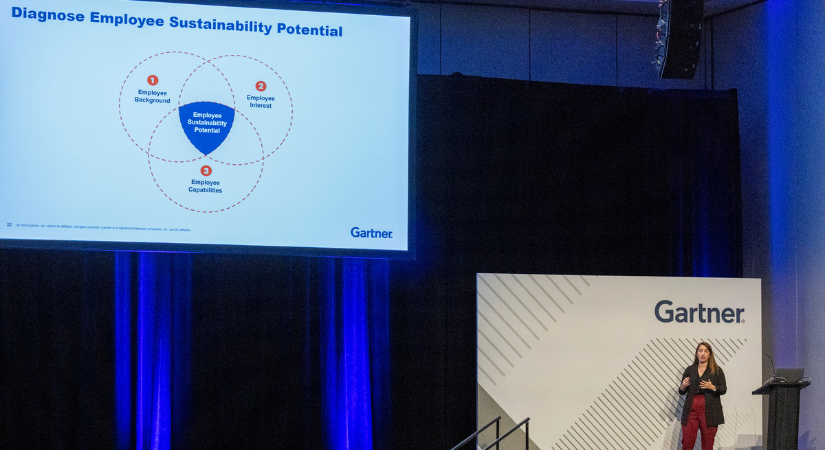
Employee interest in sustainability currently outpaces opportunities to engage around sustainability. In this session, Katie Sutherland, Director, Advisory at Gartner, discussed how CHROs can create a strong culture of sustainability and equip managers to drive employee engagement on sustainability.

Key Takeaways

  • “Executive leaders are increasingly prioritizing sustainability as one of their top five strategic business priorities – rising from 2% mentioning it as a priority in 2012, to 16% in 2023.”

  • “Employee interest outpaces opportunities – 67% of employees rated at least six out of 10 sustainability-related issues as highly important.”

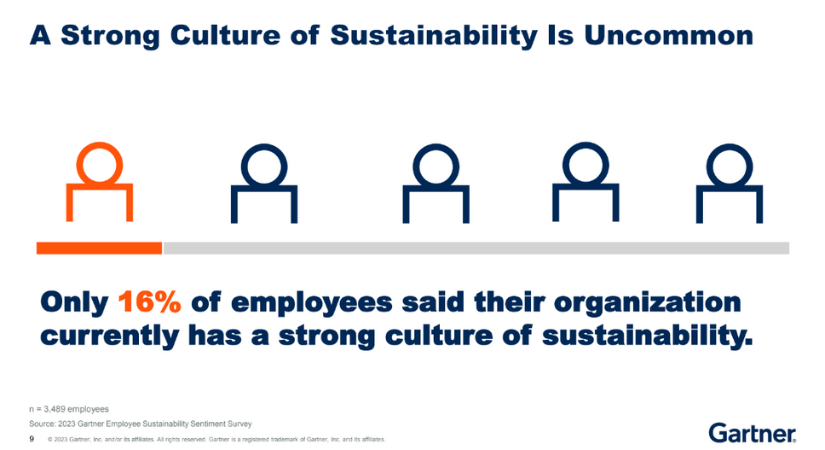
  • “Only 16% of employees said their organization currently has a strong culture of sustainability, and only 31% of employees say their organizations provide resources to support ESG goals.”

  • “To close the sustainability interest-opportunity gap, CHROs should focus on two things:

    • Maximize Opportunities by Supporting a Strong Culture of Sustainability.

    • Close Opportunity Gap by Equipping Connector Managers to Support Sustainability.”

  • “Creating a strong culture of sustainability encompasses knowledge, mindset and behavior.”

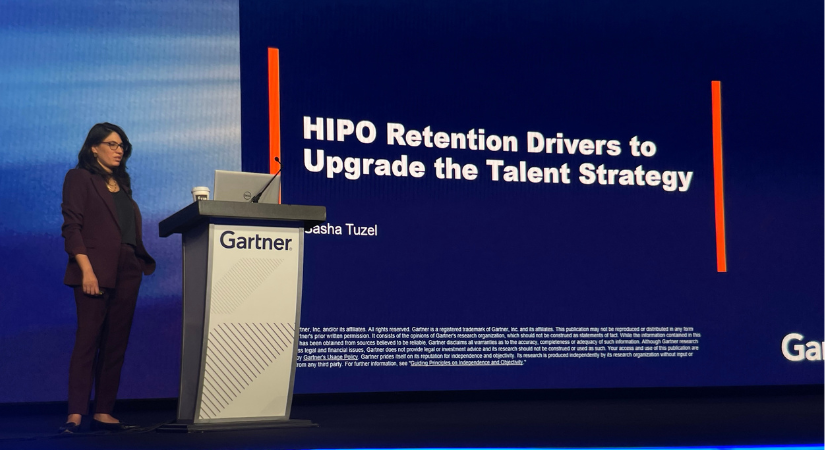
HIPO Retention Drivers to Upgrade Talent Strategy

Presented by Sasha Tuzel, Senior Director, Advisory, Gartner

High-potential employees (HIPOs) are critical for company performance, but strategies to engage and retain them often rely on outdated assumptions about what they expect from their work experiences. In this session, Sasha Tuzel, Senior Director, Advisory at Gartner, shared what drives HIPO retention today, and how to take bold action to retain this valuable talent segment.

Key Takeaways

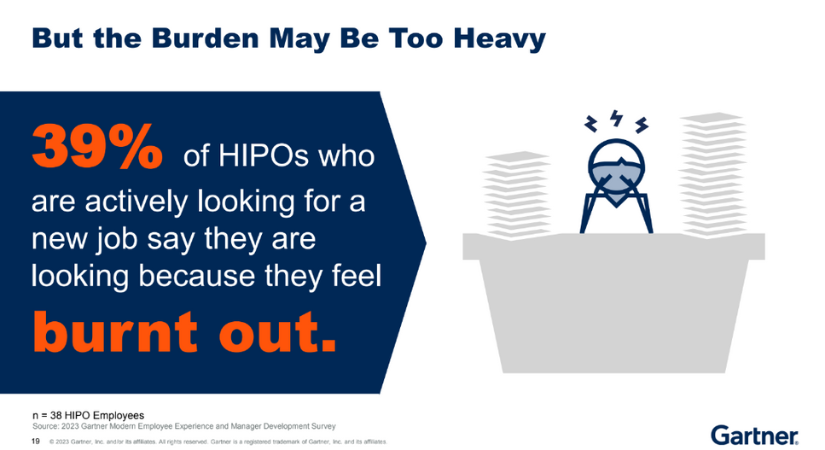
  • “Nearly 1 in 5 HIPOs – the subset of employees who provide outsized value and who have outsized potential to rise to more senior, critical positions – are actively looking for a new job.”

  • “There are several attrition drivers organizations must address to better retain HIPOs, including work-life harmonization, future career opportunity, development opportunity and people management.”

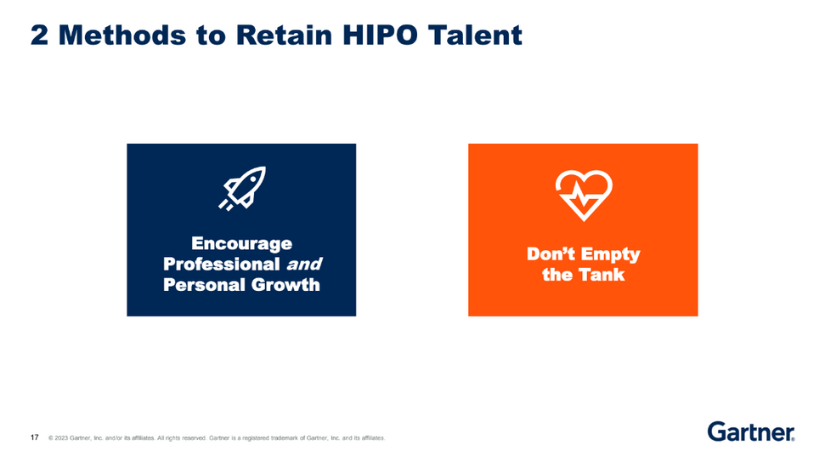
  • “To retain HIPO talent, organizations should focus on providing opportunities for professional and personal growth and helping HIPOs avoid burnout by reserving energy for their lives, not just their work.”

  • “Improving HIPO satisfaction with development opportunities can increase intent to stay by up to 11%, while greater satisfaction with future career opportunities can increase intent to stay by up to 15%.” 

  • “Organizations that ensure their HIPOs feel valued can increase intent to stay by up to 21%.”

About Gartner

Gartner, Inc. (NYSE: IT) delivers actionable, objective insight that drives smarter decisions and stronger performance on an organization’s mission-critical priorities. To learn more, visit gartner.com.

Media Contacts

It's not too late to join the conference

Latest Releases