London, U.K., May 13 2025
- Gartner client? Log in for personalized search results.
Gartner Data & Analytics Summit 2025 London: Day 2 Highlights
It’s not too late to join the conference
Overview
We are bringing you news and highlights from the Gartner Data & Analytics Summit, taking place this week in London, U.K. Below is a collection of the key announcements and insights coming out of the conference. You can read the highlights from Day 1 here.
On Day 2 from the conference, we are revealing the top trends in D&A for 2025, discussing the impacts of generative AI on data governance operations, and exploring the future of analytics. Be sure to check this page throughout the day for updates.
Key Announcements
Top Trends in Data and Analytics 2025
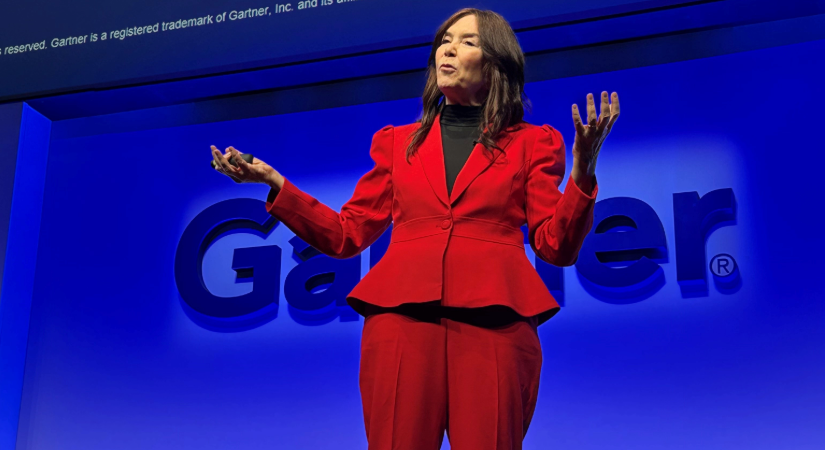
Presented by Rita Sallam, VP Analyst, Gartner
AI is having a huge impact, but is not the only thing with societal, technological, and organizational implications driving change in data and analytics. In this session, Rita Sallam, Distinguished VP Analyst at Gartner, examined how trends such as complexity, trust, and empowerment are impacting leaders and teams as they make decisions in all aspects of their D&A strategy.


Key Takeaways
Trend No. 1: Highly Consumable Data Products: “Start with business-critical use cases; correlate and scale products to reduce data delivery bottlenecks.”
Trend No. 2: Metadata Management Solutions: “Start with technical metadata and add business metadata to enable context.”
Trend No. 3: Multi-Modal Data Fabric: “Build a metadata management practice where tools share metadata across the entire data pipeline. Use tools to remove duplicate metadata and share metadata bidirectionally with other tools.”
Trend No. 4: Synthetic Data: “Identify areas in your organization where data is missing, incomplete or expensive to obtain, and is thus currently blocking AI initiatives.”
Journalists can receive additional information and/or request an interview with the Gartner expert by contacting Laurence Goasduff at laurence.goasduff@gartner.com.
AI for Data Governance: The Benefits and Risks of Adopting New Technologies
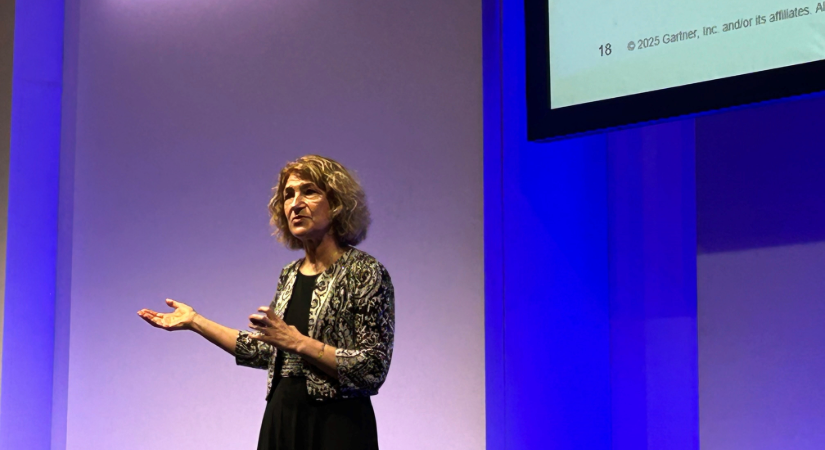
Presented by Svetlana Sicular, VP Analyst, Gartner
Generative AI (GenAI) and AI are evolving rapidly, however, their expectations might not be realized without balancing value and risks via well-thought-out AI governance. In this session, Svetlana Sicular, VP Analyst at Gartner, discussed how to get organized for AI governance.

Key Takeaways
- “When creating governance structures, consider your AI scope, AI maturity, industry, regulatory compliance and culture.”
“Align an AI governance operating model, policies and controls with existing frameworks and the organization’s culture.”
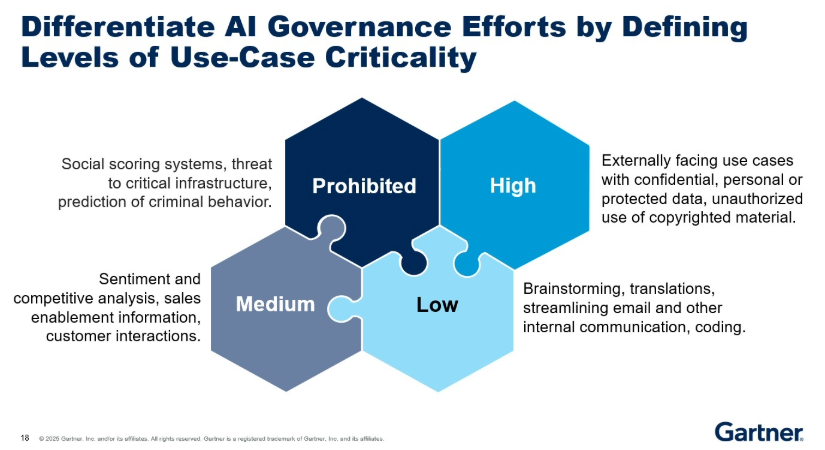
“Define levels of use-case criticality to focus AI governance on what matters the most.”
“Involve diverse stakeholders in AI governance who can ask and resolve questions to address AI issues. Pace AI governance with AI speed.”
Journalists can receive additional information and/or request an interview with the Gartner expert by contacting Laurence Goasduff at laurence.goasduff@gartner.com.
The Future of Analytics in the Era of Generative AI
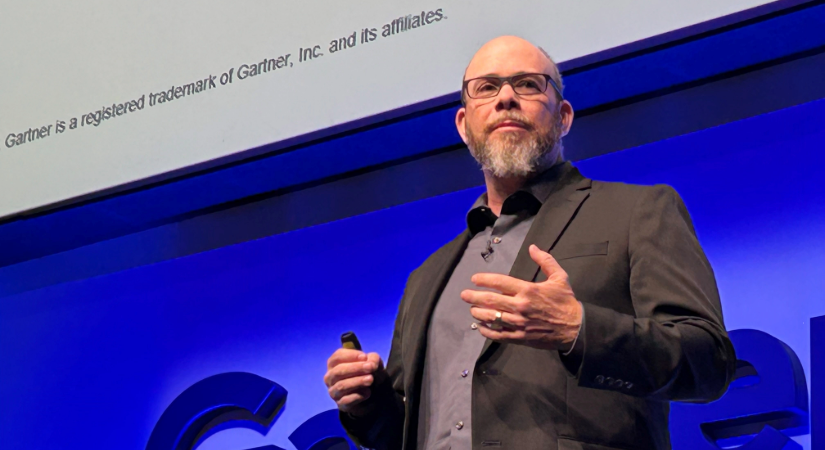
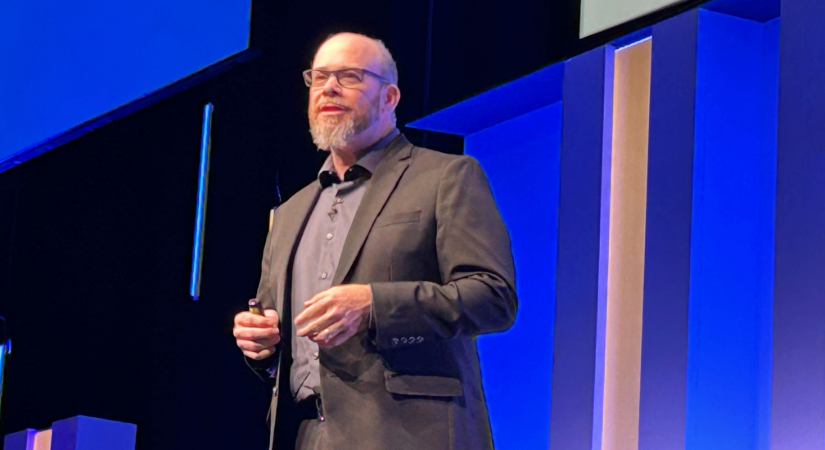
Presented by Christopher Long, Director Analyst, Gartner
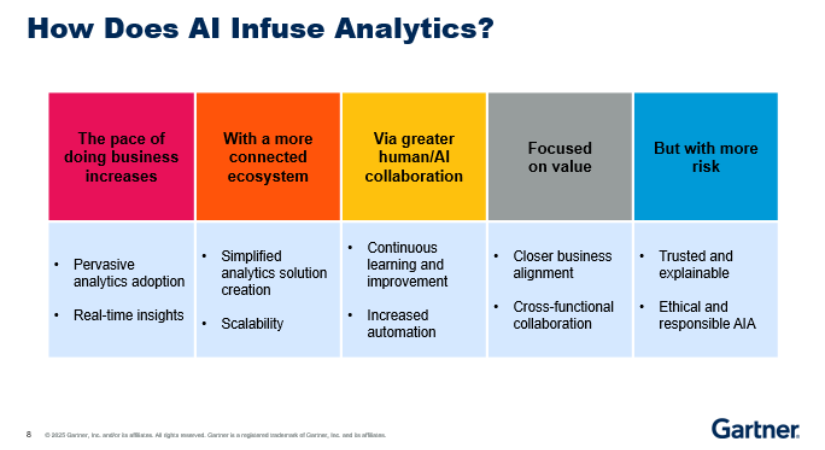
Analytics is experiencing a monumental change. In this session, Christopher Long, Director Analyst at Gartner, discussed the new technologies that are making an impact and how they will affect plans for future investment in analytics tools, platforms and solutions.
Key Takeaways
- “74% of IT and business leaders believe GenAI accelerates the speed of decision making.”
“65% of IT and business leaders believe GenAI leads to better decision outcomes.”
“Perceptive analytics uses LLM-powered reasoning and AI agents in order to achieve proactive, contextual, outcome-driven decision-making.”
“By 2027, augmented analytics capabilities will evolve into autonomous analytics platforms that fully manage and execute 20% of business processes.”
Journalists can receive additional information and/or request an interview with the Gartner expert by contacting Laurence Goasduff at laurence.goasduff@gartner.com.

It’s not too late to join the conference


About Gartner
Gartner (NYSE: IT) delivers actionable, objective business and technology insights that drive smarter decisions and stronger performance on an organization’s mission-critical priorities. To learn more, visit gartner.com.