The pressure on sales leaders to drive growth has never been higher. At the same time, economic uncertainty, evolving buyer expectations and rapid technological change continue to present new challenges. Chief sales officers (CSOs) must do more than manage change. They must lead it.
To deliver a strong start in 2026, CSOs should embrace key strategic shifts, leadership imperatives and emerging innovations to build resilient, high-performing sales organizations capable of navigating disruption with clarity.
- Gartner client? Log in for personalized search results.
The cost of constant change
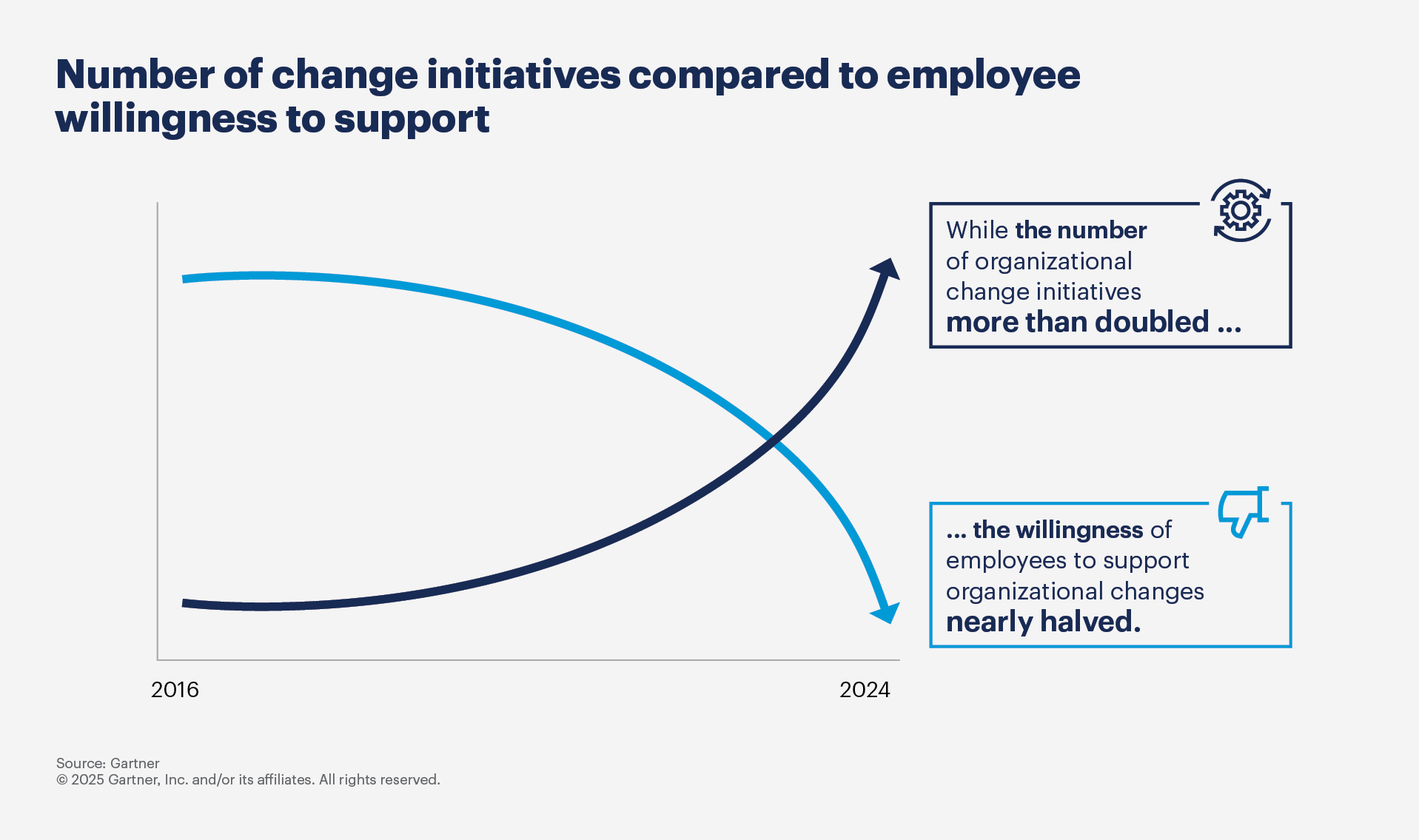
Between 2016 and 2024, the number of organizational change initiatives increased by 67%. In the same time, employee willingness to support those changes dropped from 74% to 44%, an indication of chronic change fatigue.
This fatigue is significantly pronounced in sales organizations. Our research indicates 41% of sellers are highly reluctant to change how they do their jobs. Seller adaptability is declining as the pace of change accelerates. It’s clear that traditional change management approaches are insufficient.
Gartner insights frequently capture a common sentiment among CSOs: My organization is often “back on its heels,” managing continuous change.
CSOs must recognize that their organizations are currently built for consistency — not disruption. To succeed in 2026 and beyond, leaders must shift to a mindset of leading change and deliberately engineer their organizations for constant disruption.
Strategic sales imperatives for 2026
Gartner recommends CSOs focus on three core imperatives to deliver growth through disruption:
1. Drive a unified commercial strategy
The evolution of the CSO role demands broader alignment across revenue functions. Misalignment typically leads to poor customer experiences and lost opportunities. CSOs must champion a unified commercial strategy that connects sales, marketing and customer success teams. This unified approach ensures that every customer touchpoint is supported with integrated processes, shared metrics, joint accountability and mutually identified growth opportunities.
2. Build resilient sellers
Sellers are being asked to do more than ever before — often without the tools or clarity to succeed. Overwhelmed sellers are significantly less likely to attain quota. To reduce burnout and improve performance, CSOs must prioritize differentiated seller skills and offload less impactful activities from their teams’ workload.
3. Embrace change leadership
Sales organizations must be adaptable. Rather than reacting to disruption, CSOs should lead it — shifting from change management to change leadership. This means designing organizations that can withstand and thrive amid constant transformation. CSOs should foster a culture of agility and collaboration, empowering teams to work and adapt together during disruption. In doing so, CSOs will better position their organization for sustainable, long-term growth.
Build a transformation roadmap that mitigates risk to seller productivity
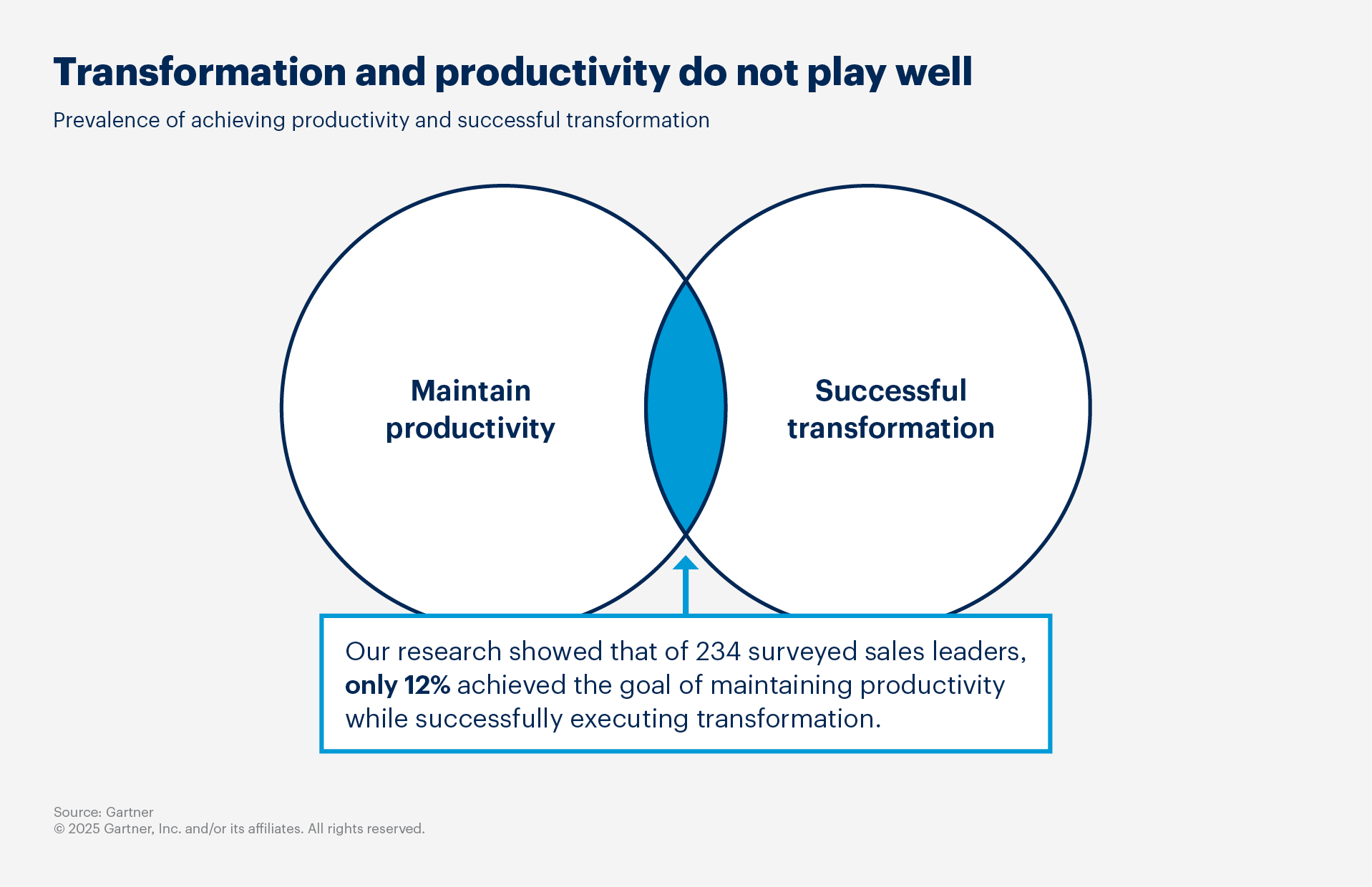
A recent Gartner survey found only 12% of sales leaders felt they were able to maintain productivity when successfully executing their transformation initiatives. A critical piece of overcoming this challenge is adopting innovations and proven enablers that support transformation while safeguarding productivity.
Sales transformation enablers
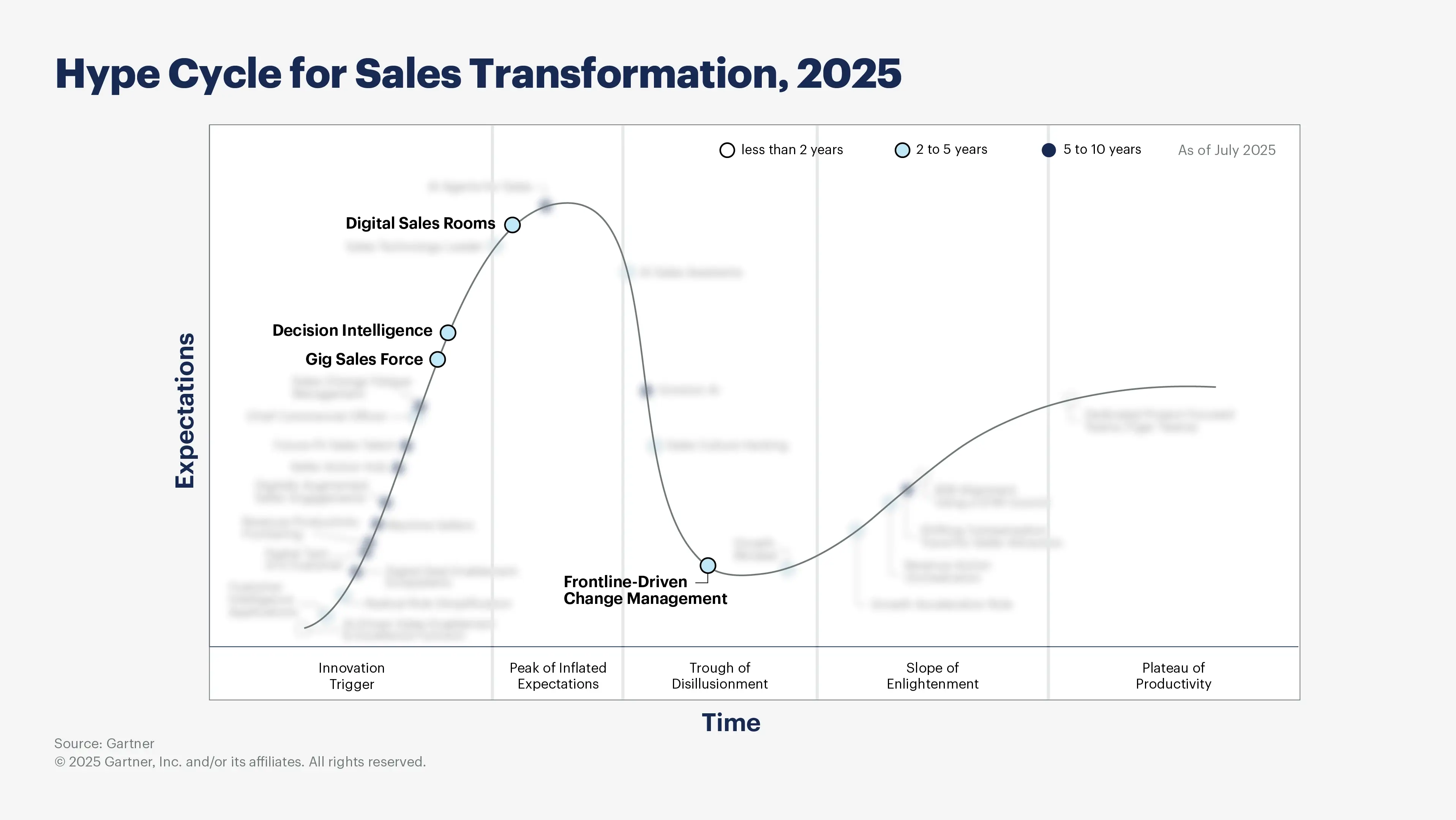
The 2025 Gartner Hype Cycle™ for Sales Transformation identifies four key innovations that can help sales leaders take advantage of new opportunities within the next two to five years. It can also inform analyst discussions on how to build a roadmap that mitigates risk to seller productivity.
Key innovations:
Decision Intelligence: Enables faster, higher-quality decision making and improves agility toward shifting market dynamics
Digital Sales Rooms: Personalizes buyer engagement and improves forecast accuracy
Frontline-Driven Change Management: Includes sellers in shaping change to reduce resistance and fatigue
Gig Sales Force: Offers flexible, on-demand talent to scale sales capacity in real time
These innovations aren’t just trends — they’re here-to-stay tools CSOs can use to balance strategic change management and near-term seller productivity.
Sales execution tools
CSOs can operationalize these strategies using the Gartner suite of tools and diagnostics, including:
Why it matters
When 61% of B2B buyers prefer a rep-free experience, traditional sales strategies are no longer enough.
Reimagining customer engagement and building agile, insight-driven sales organizations can help CSOs seize new opportunities and mitigate risks while avoiding the burnout and productivity loss that often undercut transformation efforts. CSOs should unify commercial strategies, simplify roles and double-down as proactive change leaders.