Many EA teams try to reinvent too much, too quickly, undermining the very change they hope to achieve.
- Gartner client? Log in for personalized search results.
EA reinvention starts with sensing enterprise demands
Enterprise architecture (EA) teams are under pressure to help their organizations respond to accelerating change. Yet many EA functions struggle with unclear priorities, fragmented execution and limited influence. Effective roadmapping is critical to closing this gap, yet Gartner finds that only 26% of EA functions create roadmaps that depict interdependencies across initiative, program and technology domains.
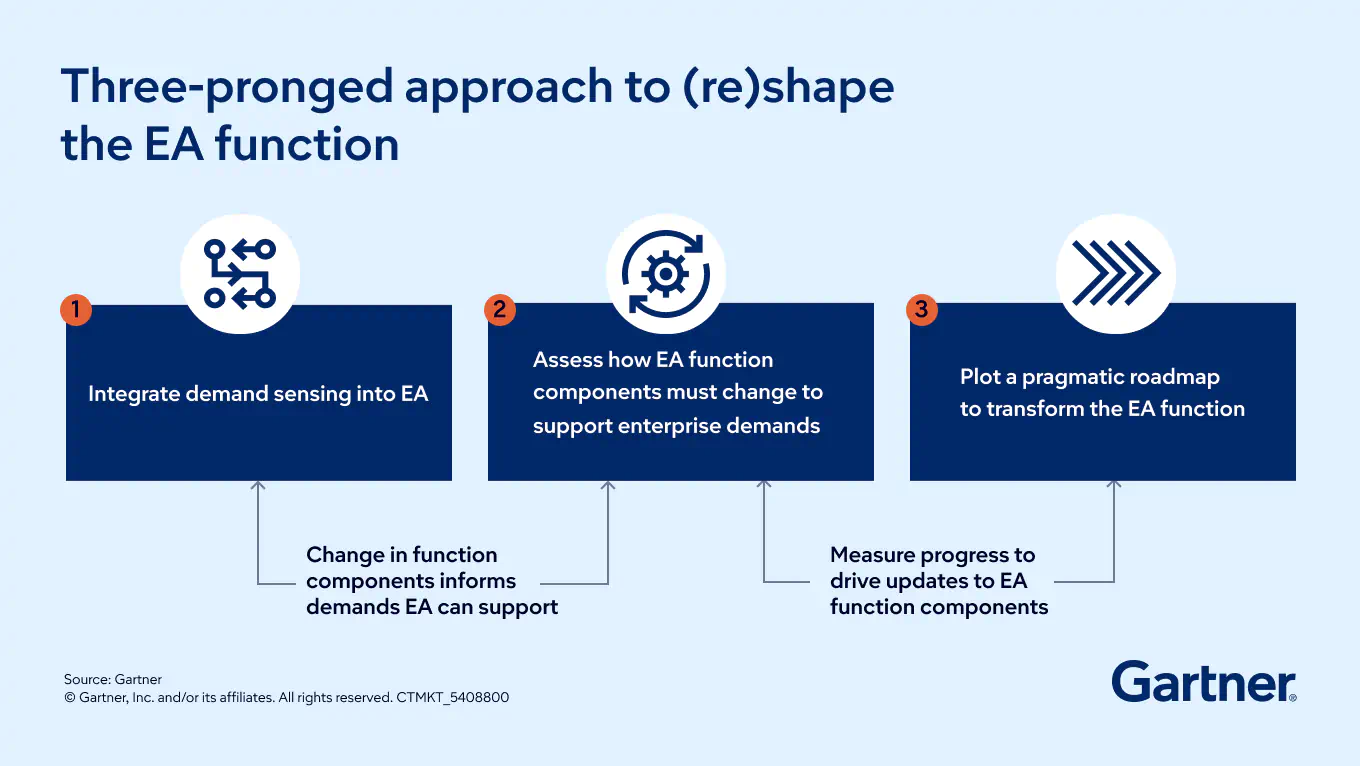
As a result, many EA leaders pursue reinvention without a clear path forward. “Heads of EA who frontload their functional roadmaps with internal EA mechanics rather than business enablement are perceived as roadblocks by stakeholders and often drive themselves to irrelevance,” says Akshay Jhawar, Senior Principal Analyst at Gartner. A pragmatic roadmap starts with sensing enterprise demands and then identifying the EA function components that must evolve to meet those demands. This enables EA to be an engine for business value creation.
You might also like this webinar: Leading EA in 2026: A Guide for AI‑Enabled Transformation
How to build a roadmap that enables sustainable EA reinvention
A successful EA roadmap does more than document planned initiatives. It helps leaders prioritize change, manage risk and align the evolution of the EA function with business needs. The most effective roadmaps combine continuous planning with incremental reinvention, ensuring the function can adapt as enterprise priorities shift.
Address common roadmapping barriers before they derail progress
Many EA roadmaps fail because they overlook practical barriers to execution. Strategic alignment, stakeholder engagement, resource planning and performance measurement all influence whether a roadmap delivers meaningful outcomes. EA leaders should ensure every initiative connects to a clear business objective, whether that objective is operational efficiency, innovation, compliance or transformation.
Defining the appropriate level of detail is equally important. Overly complex roadmaps can slow decision making, while oversimplified views can conceal critical dependencies. Clear metrics and targets help leaders to measure progress and demonstrate value, while collaboration across infrastructure, security, data and analytics, DevOps and product management helps keep architectural decisions grounded in business realities.
Prioritize incremental change over large-scale disruption
One of the most common EA reinvention mistakes is attempting too much at once. Large-scale change may appear ambitious, but it often creates confusion, strains resources and undermines stakeholder confidence. Gartner recommends balancing short-term improvements with longer-term transformation goals.
Early initiatives that improve operational efficiency can establish credibility and create visible wins. Those successes can then inform broader changes to investments, organizational structures and engagement models. Incremental reinvention also creates opportunities to learn and adapt as business needs evolve, allowing EA leaders to maintain momentum without overwhelming teams or stakeholders.
Treat the roadmap as a living guide for continuous evolution
Reinvention is not a one-time project. A roadmap that remains fixed for years can quickly become disconnected from changing business priorities, technology developments and market conditions. Instead, heads of EA should treat the roadmap as a living document that evolves alongside the organization.
Successful roadmaps also account for multiple horizons of change:
- Short-term wins build trust through visible outcomes.
- Midterm adjustments refine how the function operates and engages stakeholders.
- Long-term changes strengthen the EA operating model, develop new competencies and prepare the function to support the organization’s future needs.
Roadmaps should also account for people, not just processes and tools. Gartner cautions that modernization efforts that overlook human capital and architect capability development are unlikely to succeed. Heads of EA must help architects evolve from technology experts into trusted advisors who can influence business outcomes.
By sequencing change across multiple horizons and investing in both capability and credibility, heads of EA can create a practical path to long-term and continuous reinvention.
EA roadmap FAQs
Why do many EA functions struggle to deliver strategic impact?
For most EA functions the struggle is due to systemic misalignment between architecture practices and broader business objectives. Many EA teams lack a clear value proposition tied to strategic business outcomes and remain bureaucratic gatekeepers, overly focused on tactical technology delivery.
Why do many EA reinvention efforts fail?
Heads of EA often gravitate toward perfecting frameworks, strict governance models and complex reference architectures. Because often the reinvention focuses too heavily on internal EA mechanics rather than business enablement, the function is perceived as a roadblock rather than an accelerator.
Why is an incremental approach to EA reinvention important?
According to Gartner, frontloading a roadmap with too many large-scale changes can overwhelm EA teams and create a chaotic perception of the function. Incremental improvements help deliver quick wins while building the foundation for longer-term transformation.
How should heads of EA manage their roadmap over time?
Gartner insights recommend treating the roadmap as a living document rather than a fixed multiyear plan. Regular updates aligned with demand-sensing cycles help ensure the EA function remains responsive to changing business needs, technology shifts and market trends.
Attend a Conference
Accelerate growth with Gartner conferences
Gain exclusive insights on the latest trends, receive one-on-one guidance from a Gartner analyst, network with a community of your peers and leave ready to tackle your mission-critical priorities.

Drive stronger performance on your mission-critical priorities.