Most enterprise architecture (EA) roadmaps miss the mark. Here’s how you can create one that is essential for investment and drives real business outcomes.
- Gartner client? Log in for personalized search results.
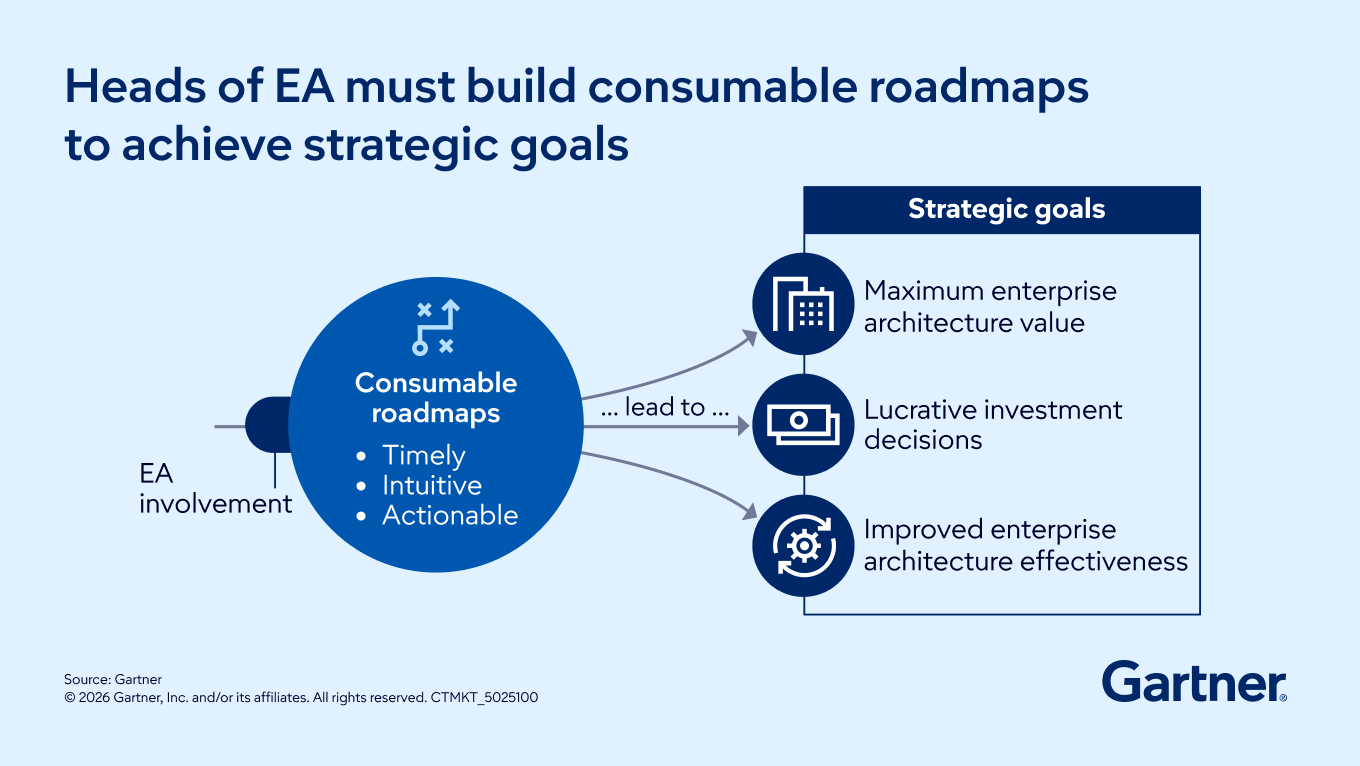
Why EA roadmaps often fail to drive strategic outcomes
Many EA leaders struggle with roadmaps that gather dust; static, overly detailed and disconnected from business needs. According to Gartner, 41% do not provide consumable guidance, which weakens strategy execution and investment outcomes. The result? Lost credibility for EA teams and missed opportunities for the enterprise. EA leaders need a living, outcome-driven asset that guides real decisions.
How to build dynamic EA roadmaps that deliver business value
Most EA roadmaps aren’t built for change. They’re too complex and stakeholders struggle to use them at the moment decisions are made. Defined, consistent and outcome-driven roadmapping practice flips the script — making them concise, actionable and tailored for every stakeholder.
Use standard templates and shared taxonomies.
Consistency matters. High-performing EA teams use standard templates and a common language to make roadmaps easy to understand and update, thus reducing inconsistency and cognitive load. This improves stakeholder engagement and speeds up decision making.
Leverage collaborative tools for ongoing updates.
Static documents can’t keep up with business change. EA leaders succeed when they use collaborative platforms that support real-time updates and feedback. This keeps roadmaps relevant and ensures everyone is working from the same playbook. For example:
Business capability roadmaps translate strategy into required capabilities
- Portfolio roadmaps define midterm plans to deliver those capabilities
- Project or product roadmaps guide near-term execution
This hierarchy ensures alignment from strategy to delivery. It also allows stakeholders at different levels to make decisions using the same data but at the right level of detail. Designing for communication rather than documentation ensures the enterprise architecture roadmap remains intuitive and actionable.
Integrate roadmaps into governance processes.
Roadmaps should be tied directly to portfolio management and investment governance. Linking initiatives to funding decisions increases roadmap credibility and impact.
Make traceability and outcomes visible.
Stakeholders want to see the line from strategy to results. Build traceability into your roadmaps. Show how every initiative supports business objectives and delivers measurable outcomes. This transparency allows leaders to evaluate trade-offs, assess risk, and understand how investments support strategic objectives and drive trust and buy-in. It also helps organizations identify what to stop, start or continue as conditions change.
Take action: Institutionalize repeatable roadmapping
Don’t leave roadmapping to chance. Institutionalize a structured, repeatable process for building and updating EA roadmaps. Train your team, set clear standards and review roadmaps regularly to keep them aligned with business priorities. Start with a concise, accessible roadmap and keep it short, focused and easy to access. Prioritize clarity and actionability over exhaustive detail. Concise roadmaps are more likely to be used — and to drive results.
What’s next in EA roadmap design?
Designing roadmaps for rapid change is a mission-critical priority as organizations move away from static, highly detailed roadmaps toward living, outcome-driven assets that support decision making. By improving traceability, enabling ongoing updates and linking roadmaps directly to governance and investment processes, EA teams can better align strategy with execution and business outcomes.
EA roadmap FAQs
What is an enterprise architecture roadmap and why does it matter?
An enterprise architecture roadmap is a structured plan that connects business strategy to capabilities, initiatives and outcomes. Critically, it guides investment decisions and execution. Roadmaps only deliver value when they are timely, intuitive and actionable, enabling stakeholders to align priorities and make informed decisions.
How can EA leaders make roadmaps more actionable?
EA leaders can make roadmaps actionable by using standard templates, collaborative tools and integrating roadmaps into governance processes. Gartner analysts recommend focusing on traceability — showing how each initiative supports business goals and delivers measurable outcomes.
What’s the best way to keep EA roadmaps relevant?
The best way to keep EA roadmaps relevant is to institutionalize a repeatable roadmapping process. Use collaborative platforms for real-time updates, review roadmaps regularly and ensure they stay aligned with changing business priorities. Gartner business and technology insights show that dynamic roadmaps drive better results.
Attend a Conference
Accelerate growth with Gartner conferences
Gain exclusive insights on the latest trends, receive one-on-one guidance from a Gartner analyst, network with a community of your peers and leave ready to tackle your mission-critical priorities.

Drive stronger performance on your mission-critical priorities.