Organizations want more freedom from enterprise software vendors, but AI may deepen dependence before it reduces it.
- Gartner client? Log in for personalized search results.
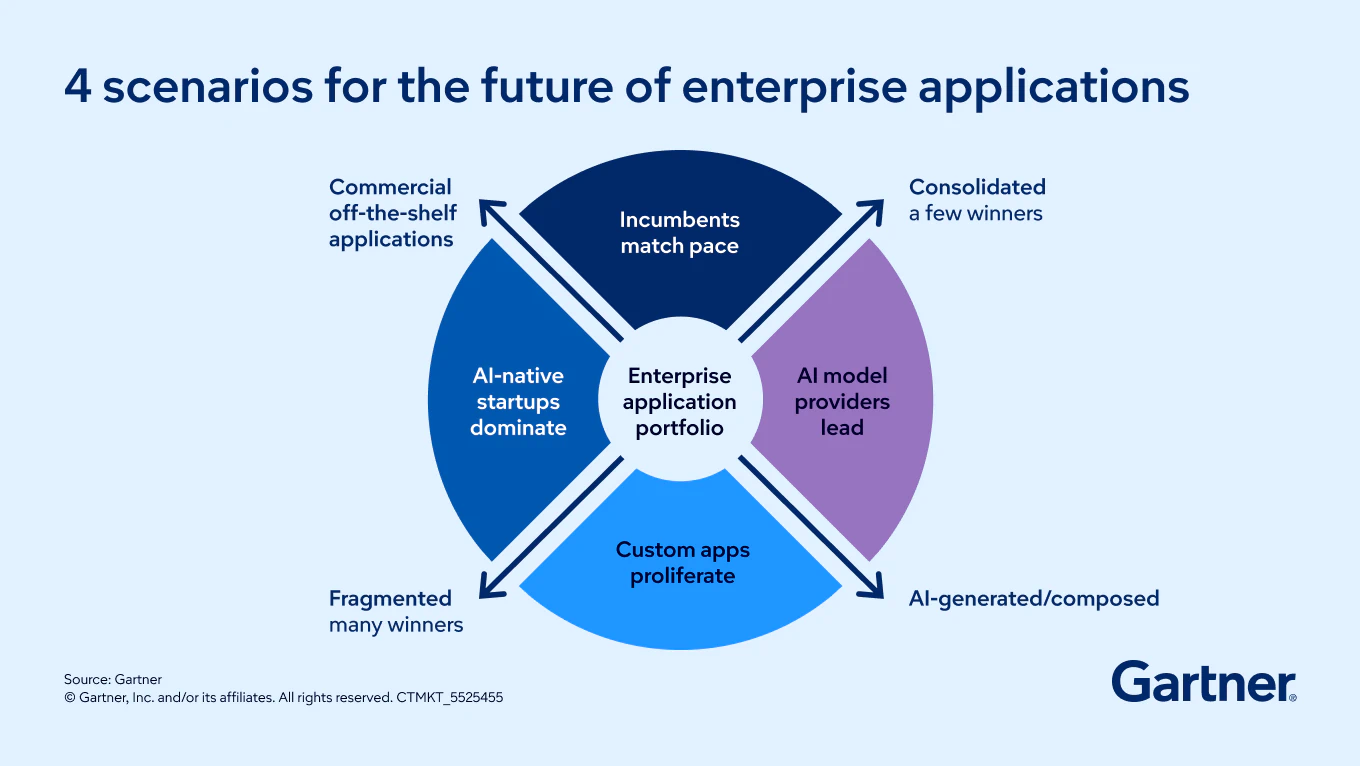
AI is not replacing SaaS any time soon
The enterprise applications market is changing rapidly, with 91% of IT leaders anticipating disruption to current SaaS models. As frustration grows with current pricing, feature bloat and vendor lock-in, many assume AI will accelerate the decline of traditional enterprise applications, but the death of core enterprise applications by 2030 is greatly exaggerated. While organizations are increasingly reevaluating niche applications, only 22% are reconsidering major systems such as ERP and CRM, compared with 51% reassessing point solutions.
“Many organizations see AI agents as a path away from SaaS lock-in. The paradox is that today’s AI agents depend on the very systems of record organizations are trying to escape. For the next several years, AI is more likely to strengthen incumbent enterprise application vendors than disrupt them,” says Patrick Connaughton, Vice President Analyst at Gartner.
You might also like this webinar: The Future of Enterprise Applications: Navigating AI, SaaS Disruption and Vendor Lock-In
Prepare for a future where AI and systems of record coexist
The biggest mistake leaders can make is planning for a rapid replacement of core enterprise applications. A more likely future is one in which organizations expand the use of AI agents while continuing to rely on established systems of record.
Focus replacement efforts where they are most realistic
Despite excitement around AI-native startups, there are currently no viable AI-native providers capable of replacing major enterprise systems like an ERP at large, global organizations at scale. These providers often lack the institutional trust, procurement maturity and enterprise-grade compliance and security capabilities required by large organizations.
Instead of treating every application as a replacement candidate, focus on where AI can deliver practical value today:
- Identify which applications to keep, augment or replace. Assess where AI agents can realistically create value across your application portfolio.
- Prioritize point solutions first. Focus replacement and modernization efforts on niche applications where AI-driven customization and automation can deliver near-term benefits.
- Build a phased roadmap. Distinguish between systems that can evolve quickly and systems of record that will likely remain in place for years.
Use contract cycles to create future flexibility
Many organizations hope AI will reduce vendor dependence. However, AI agents often rely on vendor-controlled data, APIs and compliance frameworks, creating new forms of lock-in. Leaders must also prepare for unpredictable API consumption costs as agent-driven processes expand.
Use upcoming SaaS renewals to improve your strategic flexibility:
- Negotiate reduced seat-count commitments. Create room to shift users toward AI-driven experiences over time.
- Secure access to embedded AI capabilities. Push for AI functionality without significant additional licensing costs.
- Remove barriers to integration. Seek API access and pricing structures that support future AI agents and external models.
Shift your focus from applications to data foundations
The long-term future of enterprise applications is not application-free. Beyond 2030, users will interact increasingly with AI-driven mission control centers while systems of record continue to provide the data, business rules and compliance controls that autonomous workflows depend on.
Prepare now by shifting your focus from applications to the foundations beneath them:
- Prioritize access to critical data and business rules. Ensure the information AI agents will depend on remains secure, compliant and accessible.
- Manage systems as data foundations. Evaluate applications based on the value of the underlying data and processes, not just the user interface.
- Build agentic expertise through software engineering. Use AI-assisted coding and agentic workflows to develop governance, trust and orchestration capabilities that can scale across the organization.
Enterprise applications FAQs
Will AI replace enterprise applications by 2030?
No. The death of core enterprise applications by 2030 is greatly exaggerated. While disruption is occurring across the SaaS market, most organizations are focusing on reevaluating niche applications rather than replacing major systems such as ERP and CRM.
Why do AI agents increase reliance on enterprise applications?
AI agents require access to the data, business context, workflows and compliance controls contained within systems of record. Even when organizations adopt headless architectures, the agents still depend on those underlying systems to execute work.
How should organizations prepare for the future of enterprise applications?
Gartner recommends evaluating which applications are realistically replaceable by AI agents, negotiating greater contractual flexibility over the next three to six years and managing enterprise systems as strategic data foundations that can support future agentic experiences.
Attend a Conference
Experience Information Technology conferences
With exclusive insights from Gartner analysts on the latest trends, sessions curated for your role and unmatched peer networking, Gartner conferences help you accelerate your priorities.
7 – 9 Dec 2026
Gartner Identity & Access Management Summit
Las Vegas, NV

Drive stronger performance on your mission-critical priorities.