ORLANDO, Fla., Orlando 28, 2024
- Gartner client? Log in for personalized search results.
HR Leaders Should Evaluate Three Foundational Building Blocks Before Implementing AI in Performance Management
Q&A with Laura Gardiner

Laura Gardiner
Director Analyst, Gartner
Performance management is one area that is ripe for improvement by integrating new technologies like AI. While AI can improve efficiency in performance management, it comes with risks and challenges.
We spoke with Laura Gardiner, Director Analyst in the Gartner HR practice, at the Gartner ReimagineHR Conference in Orlando about the ingredients – technology, processes, and people initiatives – HR leaders must have in place to mitigate risk and successfully implement AI in the performance management process.
Journalists who would like to speak with Laura regarding this topic can contact Mary.Baker@gartner.com or Gerri.Weinberger@gartner.com. Members of the media can reference this material in articles with proper attribution to Gartner.
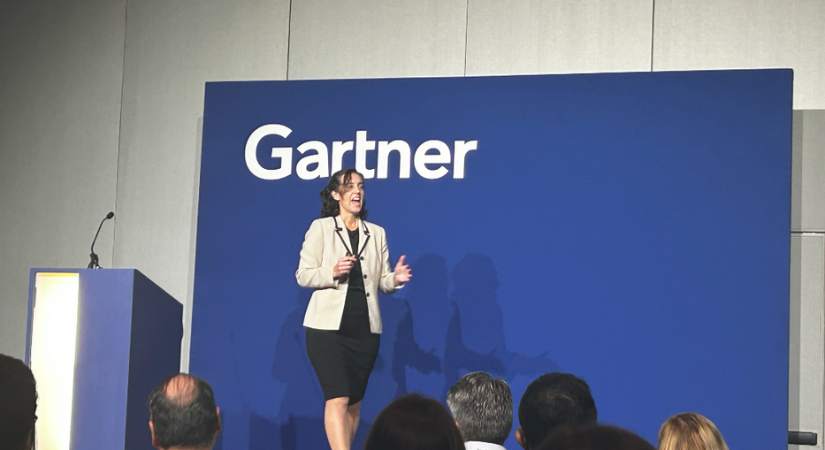
Laura Gardiner, Director Analyst at Gartner, presenting during the Gartner ReimagineHR Conference in Orlando.
Q: What should HR leaders be doing to prepare for the successful integration of AI in performance management?
A: To start their journey of adopting AI within performance management, HR needs to think about building a strong performance management foundation – irrespective of technology. With a strong foundation, AI can enhance the process, but without a strong foundation AI will be a distraction at best and a liability at worst.
There are three foundational building blocks HR leaders need to consider (see Figure 1):
Quality performance data: AI requires quality inputs in order to produce meaningful outputs. Within performance management, the main input is performance feedback, but organizations often struggle to get employees to provide continuous feedback in performance management systems.
To ensure better quality data for AI to learn from, HR leaders should consider formalizing expectations and processes for performance feedback. Additionally, HR should put mechanisms in place for capturing “invisible data,” including verbal interactions and behaviors and data from systems outside the performance management system, such as sales or customer relationship management systems.
Manager effectiveness: AI adds another layer of distrust when many employees already question the fairness and transparency of the performance review process. HR leaders can help managers build trust with employees around the use of AI, establish accountability (i.e. requiring managers and employees to edit AI outputs), and prepare managers to contextualize and customize AI content.
AI can save time and administrative burden, but it does not absolve managers of the responsibility to play an active role in managing their employees’ performance.
Employee mindsets: Employees want to use AI in their own work, but few are comfortable with AI in performance management. HR leaders can address concerns by actively involving employees early in the process and finding use cases that solve employees’ pain points, like writing goals.
Figure 1: Three Building Blocks to Prepare for AI in Performance Management
![[Image Alt Text for SEO]](https://emt.gartnerweb.com/ngw/globalassets/en/newsroom/images/graphs/ai_in_pm_three_building_blocks.png)
Source: Gartner (October 2024)
Q: Are organizations using AI in performance management? What are the benefits and risks?
A: Some organizations have implemented AI into their performance management processes, mostly to assist with summarizing peer feedback and drafting performance reviews. Those moving forward hope to realize time-savings benefits, increased equity and improved quality.
Much like with other applications of AI, many leaders have considered potential data privacy, legal, security, and bias concerns. However, to realize the potential benefits of AI in performance management, they must also plan to address often overlooked concerns, like the need for foundational performance data to draw from, the reliance on managers learning how to adopt the new technology and augment their work responsibly, and employee willingness to using AI in this context.
Q: What are some common performance management challenges that AI can help with?
A: My colleague, Colleen Malley, Senior Principal Analyst in the Gartner HR practice, has researched this extensively. Colleen, can you please provide your perspective here?
Colleen: Thanks Laura. Two common challenges that many organizations face with performance management are:
- How time consuming it can be
- The potential for bias
Time Consuming: No matter how streamlined, performance management is time-consuming and serves as another task and added stressor to already burnt-out managers, whose responsibilities have vastly increased post-pandemic. People leaders must spend time documenting accomplishments, soliciting and analyzing feedback and evaluating a year’s worth of work before conveying their evaluations effectively. AI can save managers time by summarizing and analyzing performance feedback and data, producing first drafts of performance reviews and drafting and updating goals.
Biased Processes: Although many organizations have worked hard to reduce bias in performance management, it usually still relies on the judgment of managers who have personal relationships with employees, unconscious biases as all humans do, and inconsistent perceptions of what good performance looks like. If carefully applied, there is potential for AI to reduce human bias within the performance management process by applying a standard, non-human, unbiased first look at performance data/feedback.
About the Gartner ReimagineHR Conference
The Gartner ReimagineHR Conference is the premier event for CHROs and HR leaders to learn from the latest research and Gartner experts covering talent acquisition, diversity, equity and inclusion, learning and development, total rewards, talent analytics, and HR technology. Gartner ReimagineHR is taking place October 28-30 in Florida and December 4-5 in Sydney. Follow news and updates from these events on X using #GartnerHR.
About Gartner for HR Leaders
The Gartner HR practice brings together the best relevant content approaches across Gartner to offer individual decision makers strategic business advice on the mission-critical priorities that cut across the HR function. Additional information is available at https://www.gartner.com/en/human-resources/products/gartner-for-hr. Follow news and updates from the Gartner HR practice on X and LinkedIn using #GartnerHR.
Media contact
Mary Baker
Gartner
mary.baker@gartner.com
Gerri Weinberger
Gartner
gerri.weinberger@gartner.com


Latest releases
About Gartner
Gartner (NYSE: IT) delivers actionable, objective business and technology insights that drive smarter decisions and stronger performance on an organization’s mission-critical priorities. To learn more, visit gartner.com.