U.K., London, November 19, 2024
- Gartner client? Log in for personalized search results.
Gartner IT Infrastructure, Operations & Cloud Strategies Conference 2024 London: Day 1 Highlights
It’s not too late to join the conference
Overview
We are bringing you news and highlights from the Gartner IT Infrastructure, Operations and Cloud Strategies Conference, taking place this week in London. Below is a collection of the key announcements and insights coming out of the conference.
On Day 1 from the conference, we are discussing how to lead infrastructure & operations (I&O) into a future where intelligent infrastructure is everywhere, exploring the top 10 pitfalls of a cloud strategy, discussing how to approach cloud cost forecasting, and examining the future of data centers. Be sure to check this page throughout the day for updates.
Key Announcements
Gartner Opening Keynote: Your AI-Augmented Future
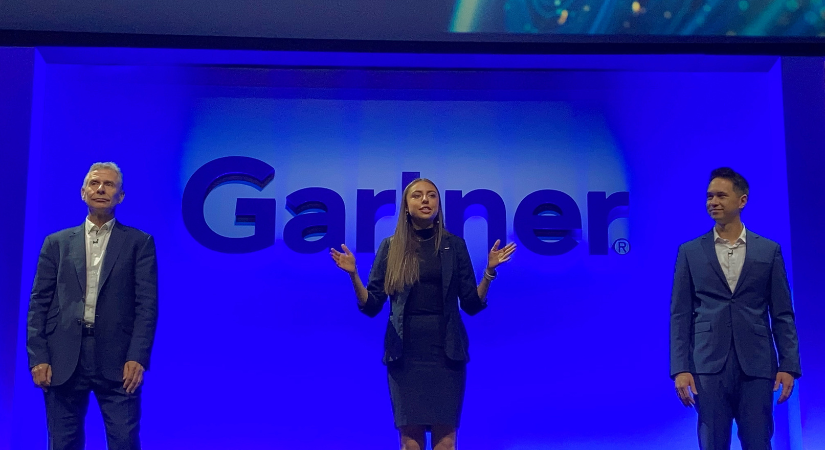
Presented by Gartner Experts Autumn Stanish, Joe Rogus and Mark Cleary
When confronted with a constant stream of new AI tools, it can be stressful to make "the best choice," and leaders can easily get lost in the hype of "the next big thing". In this keynote, Gartner experts Autumn Stanish, Joe Rogus and Mark Cleary, discussed how infrastructure and operations (I&O) leaders can maximize the benefits of AI augmentation, and how to equip business leaders to leverage I&O’s full potential.


Key Takeaways
“Within I&O, 70% of GenAI investments so far have exceeded or greatly exceeded leadership expectations for productivity.”
“I&O teams spend 60% of time each week to set up the infrastructure and IT operations to enable GenAI across the enterprise.”
“The best heads of I&O aren’t just keeping up; they’re setting the pace by mastering the art of adaptation for an AI-augmented future. They focus on three areas - Adaptive Agility; Adaptive Delivery and Adaptive Resourcing.”
“I&O leaders evolve their infrastructure with infrastructure platform engineering (IPE) and site reliability engineering (SRE) to ensure adaptive delivery and resilience.”
- “Prioritize skills that contribute directly to upcoming business objectives. We call it: connecting “learning to earning.”
Journalists can receive additional information and/or request an interview with the Gartner expert by contacting Laurence Goasduff at laurence.goasduff@gartner.com.
Avoiding the Top Mistakes in Your Cloud Strategy
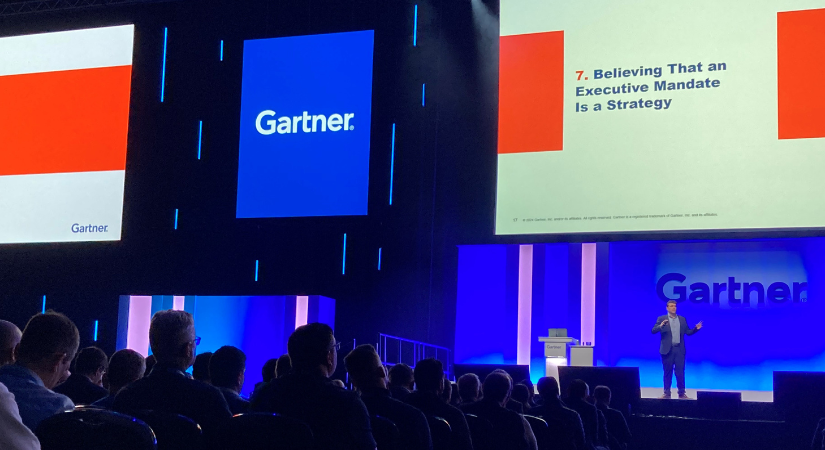
Presented by Ted McHugh, Sr Director Analyst, Gartner
Many organizations think they have a working cloud strategy or are lacking one altogether. They often consider IT needs without input from other parts of the organization. In this session, Ted McHugh, Sr Director Analyst at Gartner, discussed the top mistakes Gartner sees most often when reviewing cloud strategy documents.


Key Takeaways
- “The most common mistake is assuming a cloud strategy concerns only IT. It’s about producing new business outcomes resulting from the availability of new services and models.”
“Many organizations don’t believe they need an exit strategy, yet it’s vital to the success of any cloud strategy. It’s like having an insurance policy that you’ll hopefully never need to use.”
“A cloud strategy is often confused with an implementation plan. It’s important to keep them separate so the strategy sets the foundations and direction, while the implementation plan puts that strategy into effect.”
“Many believe it’s too late to devise a cloud strategy as they’ve been using the cloud for years. Driving adoption without it will cause resistance from those not aligned on key drivers and principles, which will slow down adoption and potentially jeopardize the entire project.”
“Outsourcing a cloud strategy may sound attractive, but avoid doing so as outsourcers don’t know as much about your business strategy as you do.”
Journalists can receive additional information and/or request an interview with the Gartner expert by contacting Laurence Goasduff at laurence.goasduff@gartner.com.
The Secrets of Accurate Cloud Cost Forecasting
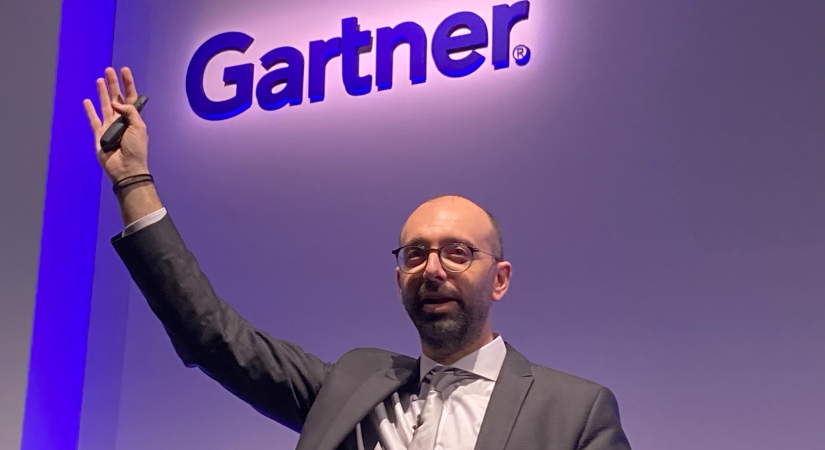
Presented by Marco Meinardi, VP Analyst, Gartner
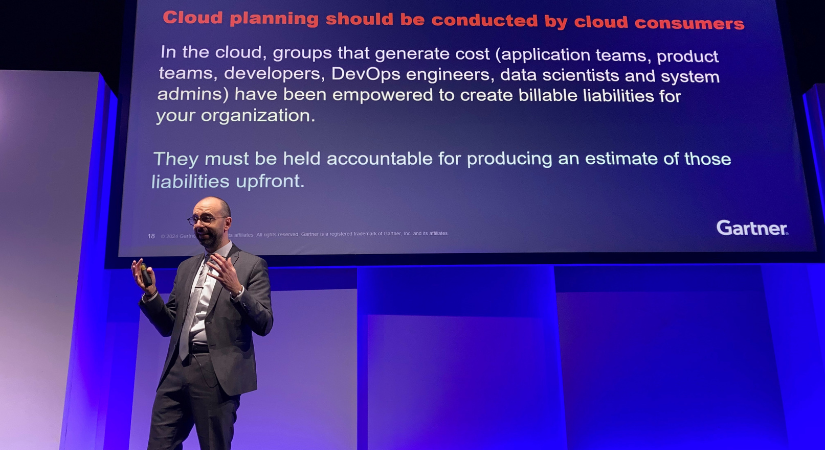
Forecasting public cloud costs is a major challenge for organizations due to multiple factors, such as continuous billing and the decentralized consumption model of cloud computing. In this session, Marco Meinardi, VP Analyst at Gartner, explained how to approach cloud cost forecasting from an organizational perspective and provided tools and techniques to help address this complex task.

Key Takeaways
“To support continuous and frequent changes in cloud forecasts, organizations need a structured and efficient process for budget variance analysis and adjustments to maintain agility and pivot financially based on emerging cost patterns.”
“Ensure all cloud cost-generating teams are empowered to create upfront estimates of billable liabilities for the organization.”
“Develop a collaborative relationship between FinOps teams and cloud-consuming teams to ensure accurate and up-to-date demand forecasts.”
“Organizations must use the Fermi estimation technique to estimate costs for complex cloud systems that are not fully understood in its design.”
“If organizations plan to make significant changes to an application before moving it to the cloud, they may need to use other techniques to capture cloud costs that have no comparison point in the existing on-premises version.”
Journalists can receive additional information and/or request an interview with the Gartner expert by contacting Laurence Goasduff at laurence.goasduff@gartner.com.
The Future of Data Centers: What’s Next for 2024 and Beyond
Presented by Tony Harvey, Sr Director Analyst, Gartner
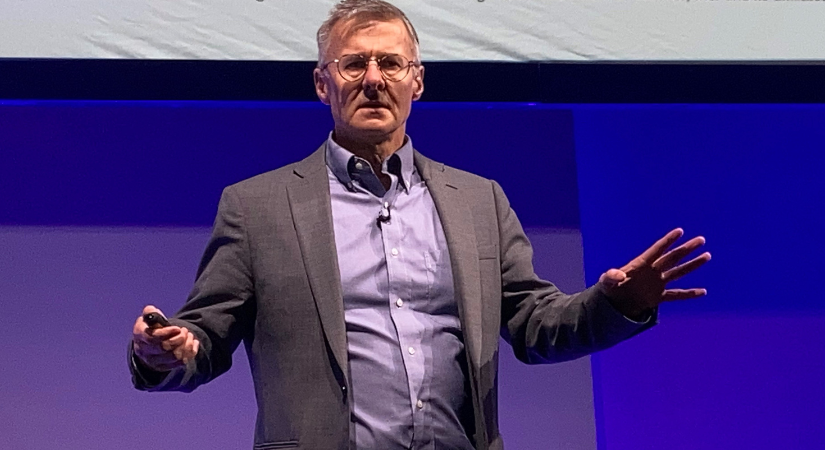
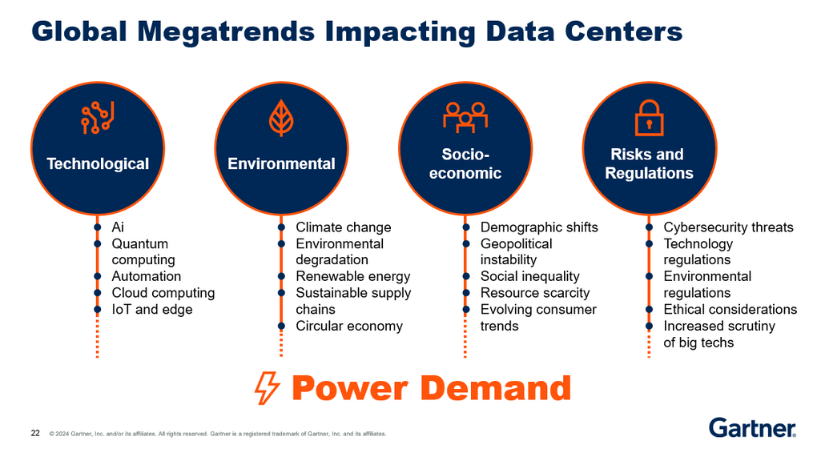
Data centers are experiencing significant transformations driven by AI, sustainability, infrastructure platforms, automation, and various emerging technologies and trends. In this session, Tony Harvey, Senior Director Analyst at Gartner, discussed the evolution of data center infrastructures and what to anticipate in the coming years.

Key Takeaways
- “The synergy of four fundamental areas — cloud, AI, edge computing, and automation — forms the foundation of both modern and future data centers.”
“Sustainability, a key focus for CEOs, is one of the most important aspects of how data centers are being transformed today.”
Key principles of future data centers include:
- Scalability and Flexibility- Resilient Architectures and Advanced Security
- Modularity and Efficiency
“Power is the number one factor driving most emerging technologies in the data center industry today.”
“Liquid Cooling is an emerging technology in data centers increasingly implemented in large facilities due to AI and higher energy density requirements.”
Journalists can receive additional information and/or request an interview with the Gartner expert by contacting Laurence Goasduff at laurence.goasduff@gartner.com.

It’s not too late to join the conference


About Gartner
Gartner (NYSE: IT) delivers actionable, objective business and technology insights that drive smarter decisions and stronger performance on an organization’s mission-critical priorities. To learn more, visit gartner.com.