Orlando, Fla., October 28, 2024
- Gartner client? Log in for personalized search results.
Gartner ReimagineHR Conference, North America: Day 1 Highlights
It’s not too late to join the conference
Overview
We are bringing you news and highlights from the Gartner ReimagineHR Conference taking place today through Wednesday, October 30, in Orlando, Florida. Below is a collection of the key announcements and insights coming out of the conference.
On Day 1 from the conference, we are highlighting the Opening Keynote, how to navigate workplace change, leadership development, and talent management for core performers.
Be sure to check this page throughout the day for updates.
Key Announcements
Gartner Opening Keynote: Making Work Better – The Reset-Ready Organization
Presented by Jessie Knight, Vice President, Research, Gartner, and Russ McCall, Director, Advisory, Gartner
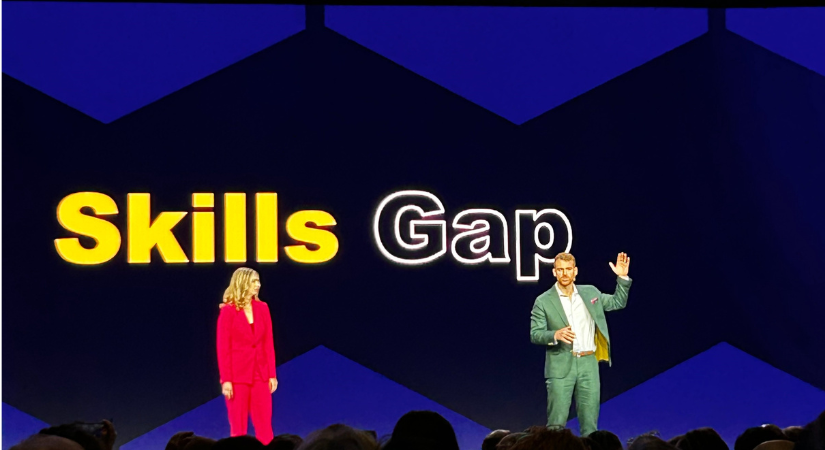
Organizations are on the cusp of a major reset, with expectations that new technology-fueled business models will unlock productivity and innovation, while AI-powered tools will reduce drudgery and unleash new capabilities. In this opening Gartner keynote, Jessie Knight, Vice President, Research, Gartner, and Russ McCall, Director, Advisory, Gartner, explored the pivotal role HR leaders play in building reset-ready organizations by making work better.

Key Takeaways
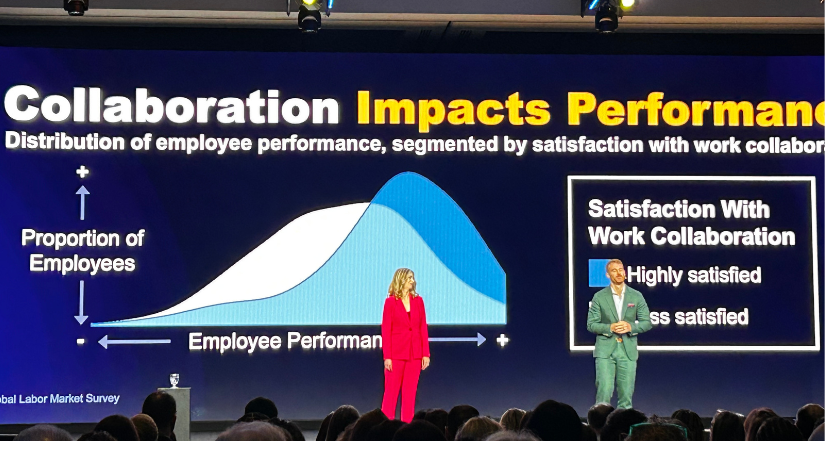
“HR has the opportunity to address three persistent gaps — in collaboration, skills, and technology — that are holding organizations back from achieving the strategic reset ahead:
Guided Collaboration: Resetting the needs and norms around how people interact with their colleagues to generate value
Collective Intelligence: Harnessing the collective ‘brain’ of the organization to make the entire workforce more ready for what’s next
Human-first AI: Reconfiguring how people interact with technology to produce more productive work.”
“HR needs to be an active and strategic coach to employees, giving them guidance on how to identify their collaboration needs, while reinforcing effective collaboration norms. Guided collaboration drives higher retention and overall profitability.”
“To tackle skills gaps and prepare for what’s next, organizations must build collective intelligence – a more efficient pathway between the employees who have critical skills and employees who need those skills."
“Rather than starting with AI and its capabilities, HR must lead their organization to a new approach – human-first AI, which starts with what the human is trying to do and then pursuing how technology can support that.”
“When organizations take a human-first AI approach, employees are 1.5 times more likely to be high performers and 2.3 times more likely to be highly engaged.”
Learn more in the Gartner press release Gartner HR Research Finds Organizations Are in the Midst of a Reset; Most Are Not Prepared.
When the Change Experience Becomes the Employee Experience
Presented by Jerome Mackowiak, Director, Advisory, Gartner
The average employee experiences four times as many organizational changes as they did eight years ago. While continuous change is taxing for employees, it also presents opportunities to enhance the employee experience. In this session, Jerome Mackowiak, Director, Advisory, Gartner, explained how to positively impact the employee experience by including employees in key moments of change.


Key Takeaways
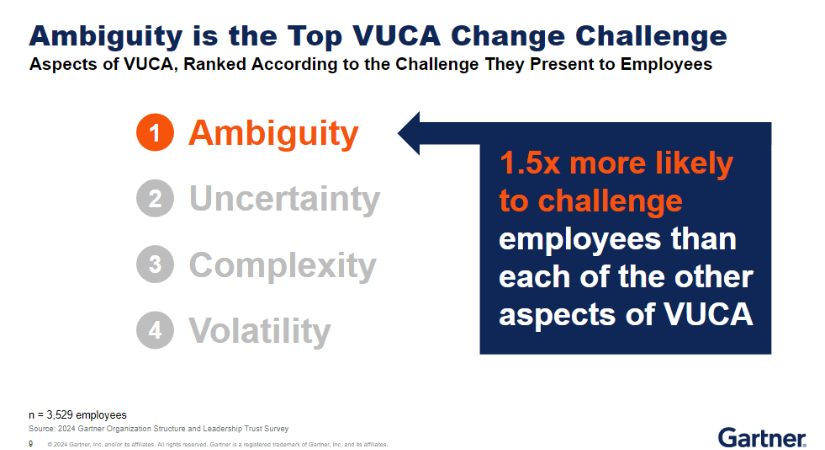
“Employees – in addition to organizations – must navigate today’s unpredictable business environment, namely four main factors: Volatility, Uncertainty, Complexity, and Ambiguity (VUCA).”
Change creates more ambiguity, which is the most challenging aspect of VUCA for employees. Ambiguity is 1.5 times more likely to challenge employees than any other aspects of VUCA.”
“To mitigate ambiguity for employees during change, HR leaders should do three things:
Identify information gaps early that impede employee understanding of the change.
Gauge employee readiness for change to determine timing of change and how to optimize change efforts.
Empower teams to contextualize the change so that they can create clarity around what the change looks like for them.
Journalists can receive additional information and/or request an interview with the Gartner expert by contacting Mary Baker at mary.baker@gartner.com or Gerri Weinberger at gerri.weinberger@gartner.com.
Leverage Connection as an Engine of Leadership Development
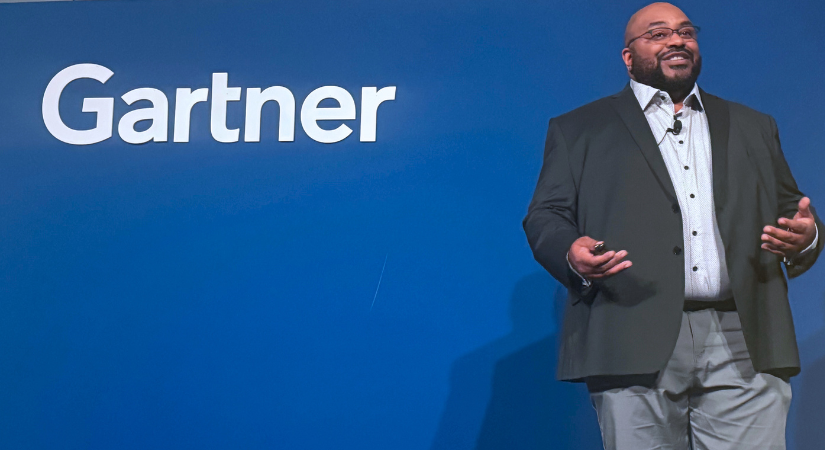
Presented by Dominique Waters, Director, Advisory, Gartner
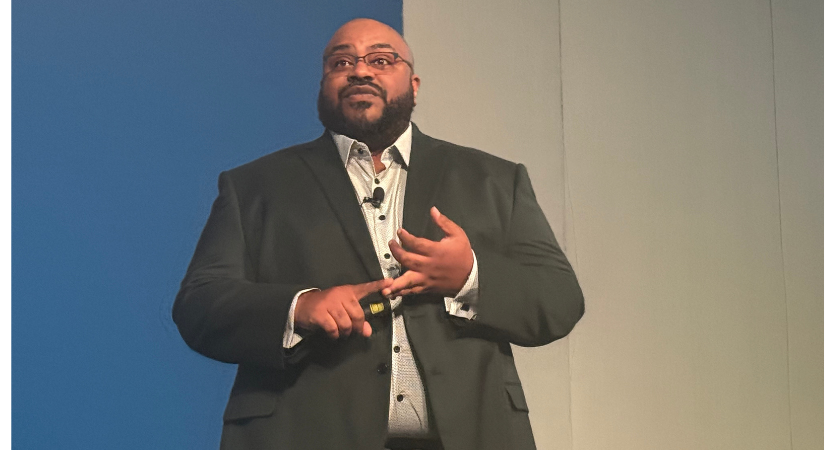
Only 23% of HR leaders are confident that their organization has rising leaders who can meet the future needs of the organization. In this session, Dominique Waters, Director, Advisory, Gartner, discussed how to boost leader effectiveness by making social connections the engine for their development.

Key Takeaways
“Over the past two years, network performance – the way employees and leaders get work done together – has declined 18%.”
“Organizations need to develop enterprise leaders who lead their teams to high performance while contributing to and leveraging the performance of other teams, via connection-based learning.”
“Leaders who have utilized peer connection-based learning experiences are 18% more likely to be enterprise leaders.”
“Organizations must focus on creating connections-based learning that builds both trusted and strong relationships. Who leaders connect with, and when they connect matters.”
“HR leaders can employ two strategies to empower leaders to create trusted connections with the right peers that they can leverage in support of their ongoing development:
Create diverse learning cohorts with leaders from different levels, geographic locations and business units, so leaders are exposed to different perspectives but are still comfortable being candid and honest.
Intersperse social interactions between development sessions to enable leaders to build trusted connections based on repeated social touchpoints.”
Journalists an receive additional information and/or request an interview with the Gartner expert by contacting Mary Baker at mary.baker@gartner.com or Gerri Weinberger at gerri.weinberger@gartner.com.
Don’t Neglect Your Core Performers
Presented by Benjamin Loring, Director, Research, Gartner
Organizations are built on core performers – and the majority of the workforce falls into this category. However, performance management processes are often designed in a way that disengages and undervalues core performers. In this session, Benjamin Loring, Director, Research, Garter, discussed how organizations can ensure their performance management approach engages this critical employee group.


Key Takeaways
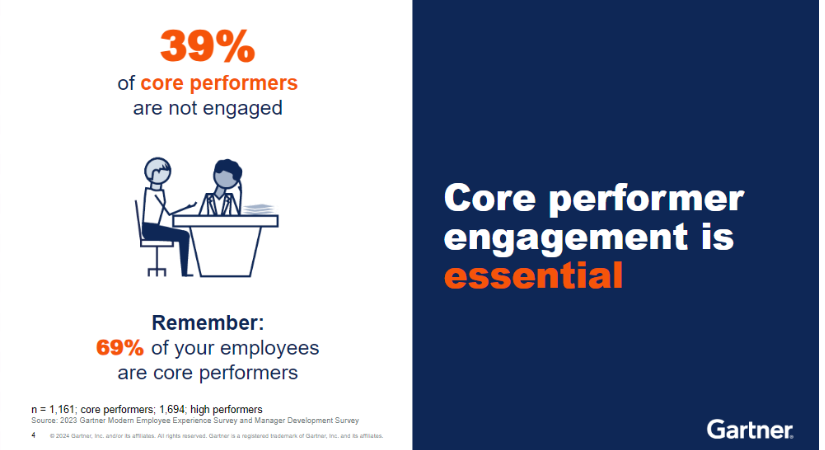
“Sixty-nine percent of employees are core performers, receiving a ‘meets expectations’ rating. Thirty-nine percent of them are not engaged.”
“Core performers who are not engaged are costly for organizations as they demonstrate 9% lower discretionary effort and 11% higher change fatigue.”
“Traditional talent management approaches disengage core performers: 42% of core performers believe that they are appropriately recognized for their contributions while 43% are satisfied with career development at their organizations.”
“To engage core performers HR leaders must:
Help employees understand the bar for high performance. Understanding the bar for high performance predicts 18% higher engagement.
- Recognize a broad range of behaviors and accomplishments and embed recognition in leaders’ workflows. Core performers who feel recognized show 22% higher engagement.
Support core performer growth by focusing on what they value in career conversations and enabling diverse in-role experiences. Satisfaction with development opportunities can result in up to 25% higher engagement for core performers.”
Journalists can receive additional information and/or request an interview with the Gartner expert by contacting Mary Baker at mary.baker@gartner.com or Gerri Weinberger at gerri.weinberger@gartner.com

It’s not too late to join the conference
Thanks for following along!
Media contact
Mary Baker
Gartner
mary.baker@gartner.com
Gerri Weinberger
Gartner
gerri.weinberger@gartner.com


Latest releases
About Gartner
Gartner (NYSE: IT) delivers actionable, objective business and technology insights that drive smarter decisions and stronger performance on an organization’s mission-critical priorities. To learn more, visit gartner.com.