Most I&O leaders report AI success but struggle to demonstrate value. Here’s how to bridge the gap.
- Gartner client? Log in for personalized search results.
Why AI value perceptions threaten I&O innovation
Despite strong results from AI investments, heads of infrastructure and operations (I&O) face a persistent challenge: convincing executives of AI’s true business value. Most I&O leaders report their AI initiatives are meeting or exceeding expectations, particularly in IT service management and cloud operations. Still, CIOs are more than twice as likely as I&O leaders to view these investments as underperforming. This perception gap puts future innovation at risk and can erode executive support.
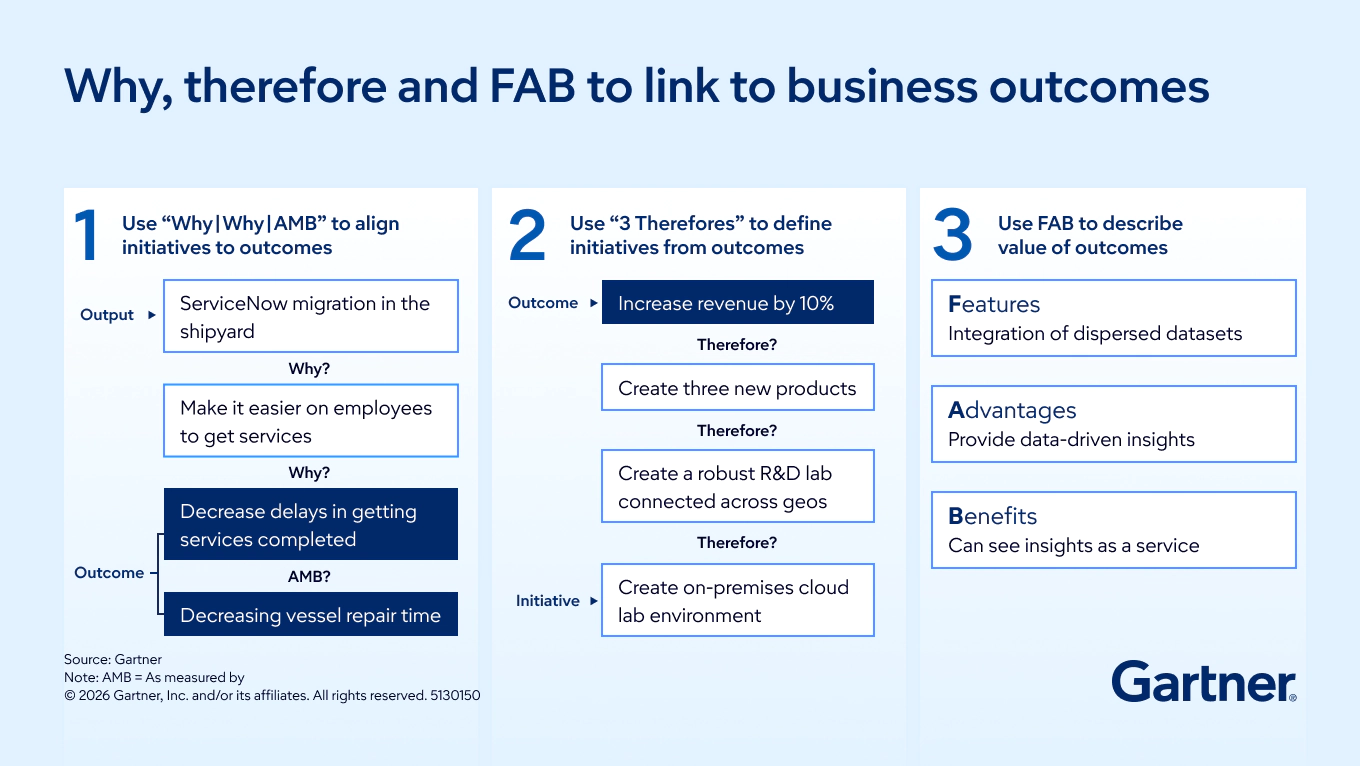
To protect their credibility and sustain momentum, I&O leaders must translate AI’s benefits into business language that resonates with executives. The solution? Use employee rewards and gamification programs not only to boost adoption but also to capture and communicate real-world value stories (see the graphic above).
You might also like this webinar: 2026 Technology Adoption Roadmap for Infrastructure and Operations
How rewards and gamification drive stronger AI outcomes
Bridging the AI value gap requires more than technical success. Leaders must generate and communicate compelling examples of impact.
Build the storyline: Define and align AI value with executive priorities
Start by clarifying what “value” means for your organization — whether it’s cost savings, productivity gains, revenue growth or risk reduction. Define these priorities upfront to ensure your measurement and storytelling align with what matters to executives. Rewards and gamification programs provide a natural mechanism for collecting these value stories, as employees are incentivized to innovate and share their successes.
Structure incentives: Link rewards to AI engagement and outcomes
Design your rewards program to reinforce the behaviors and results you want to see. Offer incentives at both the individual and team level. For individuals, use badges, spot bonuses or public recognition to motivate personal achievement — such as automating a process that saves hours of work. For teams, reward collaboration and collective wins, like deploying a new AI solution that improves response times. Tier your incentives so that more complex or impactful outcomes receive greater recognition. Make sure every reward ties back to your core value drivers, such as “Cost-Saving Innovator” or “Productivity Champion.”
Scale learnings: Share success stories and democratize recognition
Every recognition moment should spark broader learning. Capture success stories in newsletters, internal case studies or all-hands presentations to spread best practices. Encourage peer-to-peer recognition through dedicated channels, ensuring that good work is visible across the organization. Empower employees to propose and lead new AI use cases, accelerating innovation from the ground up. The more stories you collect and share, the easier it becomes to demonstrate AI’s tangible impact to leadership.
Communicate value: Translate stories into executive-ready metrics
With your program in place, quantify and communicate the outcomes. Track metrics like cost savings, productivity gains, adoption rates and employee satisfaction. Assign values to each reward category and map them to business results — such as reduced operational spend or avoided downtime. Use dashboards and scorecards to present these metrics over time. Apply proven communication techniques like “Why, 3 Therefores and FAB” to connect technical achievements to strategic business goals, making your case data-driven and compelling. As Director Analyst Autumn Stanish notes, “This approach turns anecdotal evidence into a compelling, data-driven narrative.”
Actions for closing the perception gap
To maximize the impact of AI investments and build executive support, I&O leaders should:
- Contextualize AI value in terms executives care about.
- Structure and tier incentives to encourage engagement and innovation.
- Enable employees to identify and lead new AI use cases.
- Measure and communicate value stories using clear business metrics regularly.
Keep your measurement and recognition system dynamic
Continuously refine your rewards program and communication strategy as your organization evolves. Update recognition categories, track new metrics and celebrate both big wins and “intelligent failures.” Present value stories in leadership forums to maintain momentum and reinforce the link between AI initiatives and business outcomes.
What’s next in reinventing I&O
By aligning rewards, recognition and policies to AI-driven outcomes, I&O leaders can foster an AI-first culture and better demonstrate AI business value. This is a critical step in the mandate to reinvent I&O as an enabler of AI value.
AI value in I&O FAQs
What is the AI value perception gap in I&O?
The AI value perception gap refers to the disconnect between I&O leaders, who see strong results from AI investments, and executives like CIOs, who are more likely to view these investments as underperforming. Closing this gap is critical for sustaining executive support and future innovation.
How do rewards and gamification improve AI value in I&O?
Rewards and gamification motivate employees to adopt and innovate with AI, leading to measurable outcomes. They also help capture success stories that can be translated into business value, making it easier for I&O leaders to communicate AI’s impact to executives.
What metrics should I&O leaders track to demonstrate AI value?
I&O leaders should track efficiency metrics, adoption rates, productivity gains, financial impact, employee satisfaction, and retention rates. These metrics, combined with qualitative success stories, provide a comprehensive view of AI’s business value.
Attend a Conference
Join Gartner analysts and your peers to accelerate growth
Gather alongside I&O leaders in Las Vegas to gain insight on emerging trends, receive one-on-one guidance from Gartner experts and create a strategy to tackle your priorities head-on.
8 – 10 Dec 2026
Gartner IT Infrastructure, Operations & Cloud Strategies Conference
Las Vegas, NV

Drive stronger performance on your mission-critical priorities.